1971-1980

  • François Truffaut – La nuit américaine AKA Day For Night (1973)

    1971-1980ComedyFranceFrançois TruffautRomance

    29f7c043f76a2bde437fd0d52a185152

    Quote:
    Known to English-speaking audiences as Day for Night, La nuit américaine was director François Truffaut’s loving and humorous tribute to the communal insanity of making a movie. The film details the making of a family drama called “Meet Pamela” about the tragedy that follows when a young French man introduces his parents to his new British wife. Truffaut gently satirizes his own films with “Meet Pamela”‘s overwrought storyline, but the real focus is on the chaos behind the scenes. One of the central actresses is continually drunk due to family problems, while the other is prone to emotional instability, and the male lead (Truffaut regular Jean-Pierre Leaud) starts to act erratically when his intermittent romance with the fickle script girl begins to fail. In addition to all this personal drama, the film is besieged by technical problems, from difficult tracking shots to stubborn animal actors. The inspiration for future satires of movie-making from Living in Oblivion to Irma Vep, La nuit américaine was considered slight by some critics in comparison to earlier Truffaut masterworks, but it went on to win the 1973 Oscar for Best Foreign Film.Read More »

  • Volker Schlöndorff – Die Blechtrommel AKA The Tin Drum [Director’s Cut] (1979)

    1971-1980DramaGermanyVolker SchlöndorffWar

    29f7c043f76a2bde437fd0d52a185152

    Quote:
    “A country unable to mourn,” Volker Schlöndorff wrote in his journal as he adapted Günter Grass’ novel, The Tin Drum. “Germany, to this day, is the poisoned heart of Europe.” When the film premiered in West German cinemas in early May 1979, it figured within a country’s larger (and, in many minds, long overdue) reckoning with a legacy of shame and violence. Indeed, the Nazi past haunted the nation’s screens, more so than it ever had since the end of World War II. The American miniseries Holocaust aired that year on public television in February and catalyzed wide discussion about Germany’s responsibility for the Shoah. Later that month, Peter Lilienthal’s David gained accolades at the Berlin Film Festival for its stirring depiction of a young Jewish boy living underground in the Reich’s capital during the deportations to the camps. History returned as film; retrospective readings of the Third Reich by Rainer Werner Fassbinder, Alexander Kluge, Edgar Reitz, Helma Sanders-Brahms, and Hans-Jürgen Syberberg (among others) would become the calling card of the New German Cinema and bring this group of critical filmmakers an extraordinary international renown. In 1979, The Tin Drum won the Palme d’Or at the Cannes Film Festival. A year later, it would become the first feature from the Federal Republic of Germany (FRG) to receive an Oscar for best foreign film.Read More »

  • Wes Craven – The Hills Have Eyes (1977)

    1971-1980HorrorThrillerUSAWes Craven

    29f7c043f76a2bde437fd0d52a185152

    Quote:
    Sandwiched between his notorious saga of rape, revenge, and realist horror, Last House on the Left (1972), and his franchise-initiating fairytale of supernatural serial killing, A Nightmare on Elm Street (1984), Wes Craven’s The Hills Have Eyes tends to get lost in critical discussion of America’s reigning horror auteur. This may be truer today than ever, considering Craven’s meteoric rise to mainstream respectability after the staggering box office success of his Scream trilogy (1996, 1997, 2000), for which he was ‘rewarded’ with the opportunity to direct a Miramax melodrama (Music of the Heart, 1999). A relentless chronicle of violence against and within the bourgeois family unit, Hills usually occupies the role of Craven’s ‘cult classic’ – celebrated by the director’s hardcore fans, appreciated for its low-budget aesthetic, generating semi-ironic readings which praise its archetypal allusions as well as its exploitation movie themes.Read More »

  • Tatsumi Kumashiro – Akasen tamanoi: Nukeraremasu AKA Street of Joy (1974)

    1971-1980DramaEroticaJapanTatsumi Kumashiro

    29f7c043f76a2bde437fd0d52a185152

    It’s the evening before the day all brothels must be shut-down, according to the new law, in 1958. At the Kofukuya’s (literally, the house that sells happiness), five prostitutes decide to celebrate the day. Erotism, drama, and comedy mix as each hour, and a different event passes, in which all the women’s stories come to the surface. (IMDb)

    With humor and tenderness, this film explores the lives of four Japanese prostitutes in the time just before that lifestyle was outlawed in 1958. All four take some pride in their work, though one of them responds to aging with a suicide gesture. ~ Clarke Fountain, RoviRead More »

  • Colin Eggleston – Long Weekend (1978)

    1971-1980AustraliaColin EgglestonHorrorThriller

    29f7c043f76a2bde437fd0d52a185152

    Quote:
    Now this is want you call a man vs. nature film! And a real merciless one too! This low-budget, under-appreciated (if forgotten) Australian gem is far from your typical excursion into horror with a melodramatic backdrop involving the couples’ martial problems, but the way the insightful story folds out you can’t deny that this isn’t one horrifying exercise when nature finally unleashes its devastating power with such an claustrophobic strangle hold. You might think the idea in this particular sub-genre would be hokey and overall, a campy b-grade animal feature, but here that’s not the case because there’s nothing cheap about the story and thrills, as it goes for some old fashion spookiness and slow grinding suspense, where we are asked to think about the couples’ careless actions towards nature and the environmental message. There’s a little bit more going on in the film’s material and visuals then you might think and it does play on your mind with it’s disorientating atmosphere.Read More »

  • Massimo Dallamano – Cosa avete fatto a Solange? AKA What Have They Done to Solange? (1972)

    1971-1980GialloItalyMassimo DallamanoMystery

    29f7c043f76a2bde437fd0d52a185152

    SYNOPSIS
    Enrico “Henry” Rossini (Fabio Testi), is a teacher in an all-girl Catholic school in London and he is having an affair with one of his students Elizabeth (Cristina Galbó). The two lovers are on a rowing boat floating down the river. When Elizabeth thinks she sees a young girl being chased by a mysterious figure wielding a knife in hand. Enrico later finds out that ones of his students has been murder and when more students fall victim in the same way Enrico becomes the police’s #1 suspect. Will Enrico solve these horrific crimes and clear his name and will he discover who is Solange and what have they done to her?Read More »

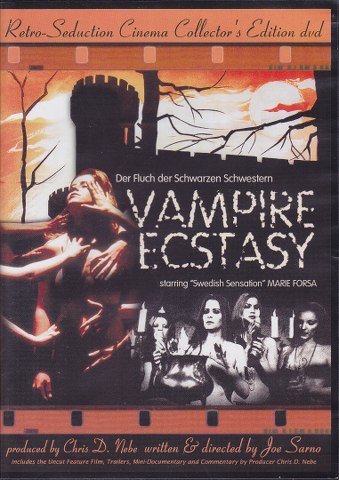
  • Joseph W. Sarno – Vampire Ecstasy [+Extra] (1973)

    1971-1980EroticaHorrorJoseph W. SarnoSweden

    29f7c043f76a2bde437fd0d52a185152

    In the mountains of Germany stands a grim and secluded castle – the haunted legacy of the beautiful medieval vampire Baroness Varga. Put to death for her ravenous hunger for female blood, the Baroness uttered a curse that she would one day return to forever satisfy her unnatural lust and that day has finally come. Four women have gathered at the castle unaware that its darkly seductive housekeeper is a satanic high priestess presiding over a coven of delectable servants who each night perform sensual rituals and profane acts to keep the Baroness’ spirit alive. As the women are drawn deeper into the ultra erotic nightmare, it will be the most uninhibited among them who shall serve as the vessel into which the Baroness passes to continue her unholy reign of terror.
    Read More »

  • Jang-ho Lee – Byeoldeului gohyang AKA The Stars Heavenly Home (1974)

    1971-1980DramaJang-ho LeeRomanceSouth Korea

    29f7c043f76a2bde437fd0d52a185152

    A woman slowly drinks herself to death as she is physically and emotionally used by one man after another.Read More »

  • William Friedkin – Cruising (1980)

    1971-1980CrimeExploitationQueer Cinema(s)USAWilliam Friedkin

    29f7c043f76a2bde437fd0d52a185152

    A 1980 psychological thriller film directed by William Friedkin and starring Al Pacino. The film is loosely based on the novel of the same name, by New York Times reporter Gerald Walker, about a serial killer targeting gay men, in particular those associated with the S&M scene.
    Poorly reviewed by critics, Cruising was a modest financial success, though the filming and promotion were dogged by gay rights protesters. The title is a play on words with a dual meaning, as “cruising” can describe police officers on patrol and also cruising for sex.Read More »

Back to top button