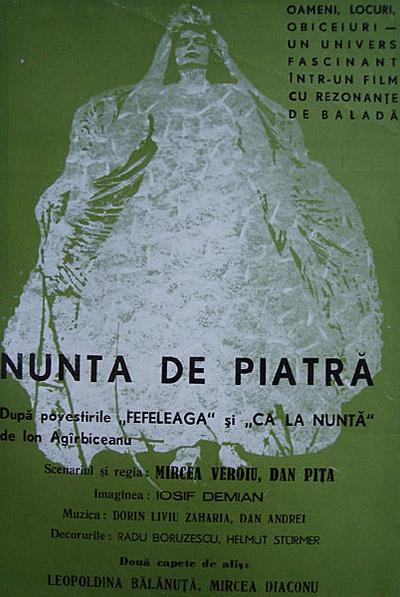
Stone Wedding (Nunta de piatra) is made of two distinct segments directed by two different directors. The first part (M. Veroiu) depicts the miserable life of a widow in Romania at the beginning of the century. The second part (D. Pita) is about a bride on the day of her wedding. The best part of both movies is the soundtrack by Dorin Liviu Zaharia, Dan Andrei Aldea and Sfinx.Read More »
1971-1980
-
Dan Pita & Mircea Veroiu – Nunta de piatra AKA The Stone Wedding (1973)
1971-1980ArthouseDan Pita and Mircea VeroiuDramaRomania -
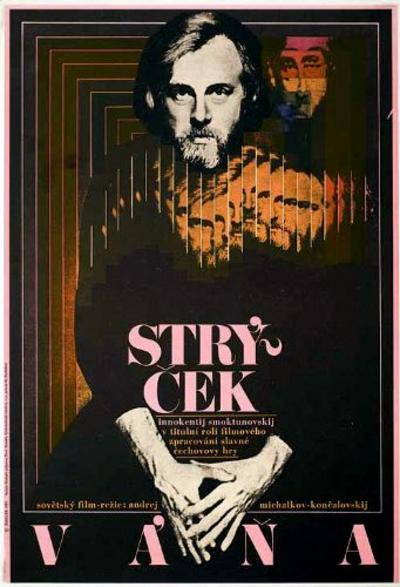
Andrey Konchalovskiy – Dyadya Vanya AKA Uncle Vanya (1971)
1971-1980Andrey KonchalovskiyDramaUSSRSynopsis
A retired professor has returned to his estate to live with his beautiful young wife, Yelena. The estate originally belonged to his first wife, now deceased; her mother and brother still live there and manage the farm. For many years the brother (Uncle Vanya) has sent the farm’s proceeds to the professor, while receiving only a small salary himself. Sonya, the professor’s daughter, who is about the same age as his new wife, also lives on the estate. The professor is pompous, vain, and irritable. He calls the doctor (Astrov) to treat his gout, only to send him away without seeing him. Astrov is an experienced physician who performs his job conscientiously, but has lost all idealism and spends much of his time drinking. The presence of Yelena introduces a bit of sexual tension into the household. Astrov and Uncle Vanya both fall in love with Yelena; she spurns them both. Meanwhile, Sonya is in love with Astrov, who fails even to notice her. Finally, when the professor announces he wants to sell the estate, Vanya, whose admiration for the man died with his sister, tries to kill him.Read More » -
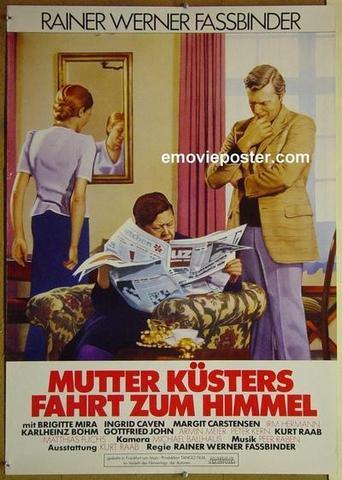
Rainer Werner Fassbinder – Mutter Küsters’ Fahrt zum Himmel (1975)
1971-1980DramaGermanyPoliticsRainer Werner FassbinderQuote:
Like all of Fassbinder’s best films, Mother Küsters Goes to Heaven is many things at once. It is simultaneously a deeply compassionate portrait of a working-class woman and a scathing satire of her exploitation; emotionally rich but politically and intellectually dense, filled with arguments and counter-arguments galore; psychologically astute yet highly stylized and visually lush. It is a comedy, a drama, and much more. It is also an excellent example of how Fassbinder uses image and sound, often in subtle ways, to develop – and play with – his themes.Read More » -
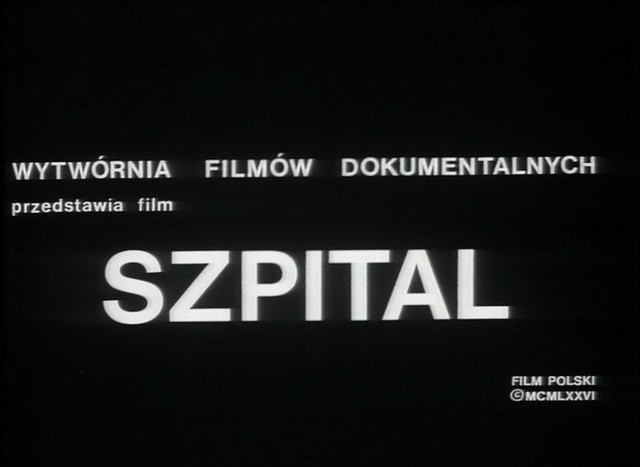
Krzysztof Kieslowski – Szpital AKA Hospital (1976)
1971-1980DocumentaryKrzysztof KieslowskiPolandShort FilmQuote:
A film made in the emergency room of the traumatic surgery hospital located on Barska Street in Warsaw. Doctors attempt to help the injured in the face of frequent power shortages typical of the Polish People’s Republic. @culture.pl
Read More » -
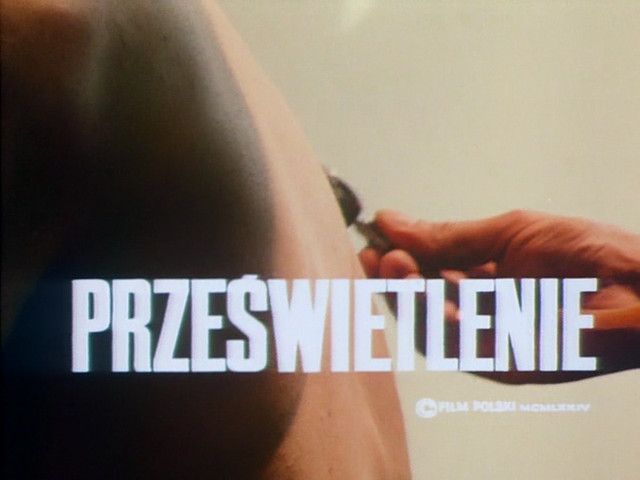
Krzysztof Kieslowski – Przeswietlenie AKA X-Ray (1974)
1971-1980DocumentaryKrzysztof KieslowskiPolandShort FilmQuote:
Made at the sanatorium of Sokolowsko in Lower Silesia, this film looks at individuals suffering from pulmonary disease and is a moving portrait of those living with illness. @culture.plQuote:
In this short film, Kieslowski tries to penetrate the world of people affected by lung disease. In style, this picture closely resembles a documentary completed four years earlier titled I Was a Soldier which gives voice to veterans who had lost their sight to war, whereas in this picture, it’s the lung disease patients whose stories we hear. The entire movie is composed of their tales. The only binding element of the story is the buckle of the movie’s landscape which places the story at a physical location, indicating its threshold – going home after their stay at the sanatorium. The statements are made directly into the camera; the director uses close up on their faces. He listens.Read More » -
Krzysztof Kieslowski – Klaps AKA Slate (1976)
1971-1980DocumentaryKrzysztof KieslowskiPolandShort FilmQuote:
A short impression composed of outtakes from Krzysztof Kieślowski’s feature film titled The Scar / Blizna (1976). @culture.plQuote:
Slate (1976, color, 6 min.): While some of these outtakes (from The Scar) are “bloopers”, other do not appear so. The film becomes something of an editing experiment, unified by the musical rhythm of the clapping slate.
– Joseph G. Kickasola, The Films of Krzysztof Kieslowski, 2006Read More » -
Rainer Werner Fassbinder – Die bitteren Tränen der Petra von Kant AKA The Bitter Tears of Petra von Kant (1972)
Drama1971-1980ArthouseGermanyRainer Werner Fassbinder

A successful fashion designer abandons a sado-masochistic relationship with her female assistant in favor of a love affair with a beautiful young woman.Read More »
-
Jean-Luc Godard & D.A. Pennebaker – One P.M. (1972)
1971-1980D.A. PennebakerDocumentaryExperimentalJean-Luc GodardUSAFrom Time Out Film Guide:
In 1968, Godard began work on a film in America (One AM or One American Movie) dealing with aspects of resistance and revolution. Dissatisfied with what he had shot, he abandoned the project. Pennebaker here assembles the Godard footage, together with his own coverage of Godard at work (One PM standing for either One Parallel Movie or One Pennebaker Movie). Although it may be dubious to show stuff that Godard had rejected, the film does manage to convey how he got his results. You can draw your own conclusions about his approach and why he abandoned the film.Read More » -
Elisabeta Bostan – Ma-ma AKA Rock’n Roll Wolf (1976)
1971-1980CultElisabeta BostanFranceMusicalQuote:
The Big Bad Wolf and his friends are plotting to kidnap and ransom Mrs. Rada the Goat’s children for a bag full of gold.Read More »