1971-1980

  • Jalal Moghadam – Farar az Taleh AKA Escape From The Trap (1971)

    1971-1980CrimeDramaIranJalal Moghadam

    29f7c043f76a2bde437fd0d52a185152

    Quote:
    A great Iranian film , unfortunately unknown in and out of Iran, 23 April 2008
    Author: Armand Erfanian from United Kingdom

    *** This review may contain spoilers ***

    Farar az Tale is an unknown film out of Iran. Even in Iran nobody remembers of this beautiful little masterpiece. There are so many successful visual and musical devices all along the film. The first one is just at the opening and before the opening credits. A man is dropped on the street. Another man tries to see if he is still alive. In finding that he is not, he turns his head towards Morteza (Behrooz Vosooghi) and by his eye expression lets him know that. All that in silent cinema and taking only 23 seconds. That is truly cinema, The art of image! Then the opening credits start, during which we see Morteza in prison, his moustaches are little by little growing. This is economy of great cinema. Using the time of the credits for letting us know that he is in prison and making us feel the length of his stay. The proper plot will begin now, when he comes out of prison and looks for his beloved woman Mehri (Nilufar). Another great moment of the film is when Morteza is looking for a solution to find somehow the 10 000 tomans that he needs to give to the man who married his beloved to get her divorce. Now wandering in the city and its outskirts he walks, stops and sits and looks at people working. Great music of Rubik Mansuri covers this sequence, and still shots or pans get dissolved to each other and gives us impression of boring time that Morteza is experiencing under the hot sun of the South. Iranian cinema is full of so great films… It is a pity that they don’t get any chance to be known… The actors, Behrooz Vosooghi, Davood Rashidi and Abbas Nazeri are absolutely great.Read More »
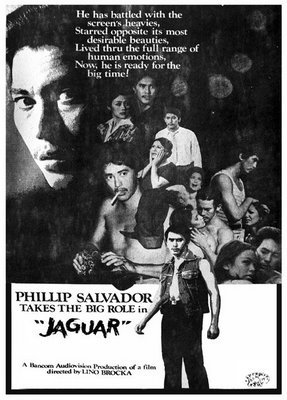
  • Lino Brocka – Jaguar (1979)

    1971-1980CrimeDramaLino BrockaPhilippines

    29f7c043f76a2bde437fd0d52a185152

    Poldo, a lowly security in a publishing firm, dreams to be rich. He becomes the personal bodyguard to his employer’s son, Sonny, when he impresses the latter with his courage and skills during a quarrel where Poldo defended Sonny. Poldo gets a taste of his boss’ carefree and extravagant lifestyle and thinks that he accepts him as a friend. In one of the nightclubs they frequent, Sonny is smitten by dancer Cristy and aggressively pursues her despite a warning from San Pedro, the movie director with whom Cristy has an affair. When they chance upon each other, Sonny and San Pedro fight. Poldo comes to his boss’ rescue and guns down San Pedro. In subsequent circumstances, Poldo would soon arrive at a bitter realization. As he could not see in Sonny the benefactor that he pictured him to be, Poldo finds himself alone, abandoned and betrayed. Read More »

  • Chantal Akerman – Les rendez-vous d’Anna AKA Anna’s Meetings (1978)

    1971-1980ArthouseChantal AkermanDramaFrance

    29f7c043f76a2bde437fd0d52a185152

    Quote:
    In the years between Je tu il elle and her fourth feature, Les rendez-vous d’Anna (1978), Chantal Akerman had become an art-film sensation, thanks to Jeanne Dielman, 23, quai du Commerce, 1080 Bruxelles. Her ultimate expression of the reassurance and anxiety of routine and her most evocative visual exploration of space and time, Jeanne Dielman tied Akerman’s distinct long-duration camera approach to a challengingly drawn-out narrative of domestic confinement. Made with an entirely female crew and focusing on the stultifying household routines of an isolated woman, it was hailed in Europe and America as possibly the greatest, purest feminist film ever made, even if Akerman insisted that was not her intention.Read More »

  • Ingmar Bergman – The Serpent’s Egg [+ commentary / extras] (1977)

    Drama1971-1980ArthouseGermanyIngmar Bergman

    29f7c043f76a2bde437fd0d52a185152

    Following the suicide of his beloved brother and deaths of even the most distant acquaintances, Abel Rosenberg attempts to discover the truth while facing depression, alcoholism, and anti-semitism.

    Vincent Canby wrote:

    BERLIN, NOV. 3-11, is a city without sunlight. Mostly it rains. It snows occasionally but it’s the kind of snow that is already gray by the time it reaches the cobblestones. Everything is damp, chilled. No winter coats anywhere. People cling to one another for warmth, but there is none. In effect, life is over in Ingmar Bergman’s new film, “The Serpent’s Egg.” What we witness are involuntary twitches, the glazing of eyeballs—the onset of rigor mortis.Read More »

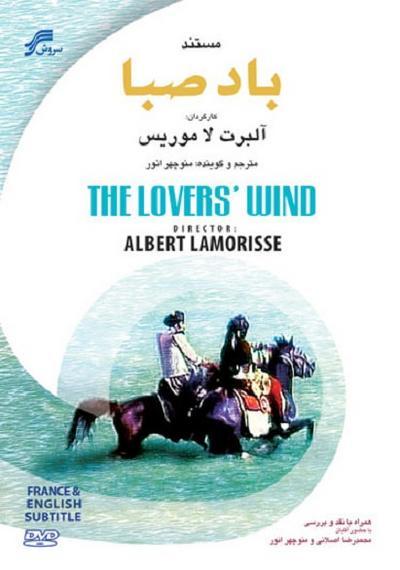
  • Albert Lamorisse – Bade-h Saba AKA Le vent des amoureux AKA The Lovers’ Wind (1978)

    1971-1980Albert LamorisseArthouseDocumentaryIran

    29f7c043f76a2bde437fd0d52a185152

    Quote:
    This is Albert Lamorisse’s last film. At the last stages of finishing the shooting in Iran, his helicopter crashed in the mountains of northern Iran, and the extremely talented and poetic filmmaker got killed immediately. Lamorisse, “Under the auspices of Iran’s Ministry of Culture and Art, produced the poetic film “Lovers’ Wind” (1969). Eighty-five percent of this dramatically visual film is shot from a helicopter, providing a kaleidoscopic view of the vast expanses, natural beauty, historical monuments, cities and villages of Iran. The “narrators” of the film are the various winds (the warm, crimson, evil and lovers’ winds), which according to folklore, inhabit Iran. They sweep the viewers from place to place across the Iranian landscape, introducing the incredible variety of life and scenery in Iran. Read More »

  • Krzysztof Kieslowski – Gadajace glowy AKA Talking Heads (1980)

    1971-1980DocumentaryKrzysztof KieslowskiPolandShort Film

    29f7c043f76a2bde437fd0d52a185152

    In Talking Heads, Kieślowski interviews 40 different people ranging from a one-year-old to a one-hundred-year-old simply asking them three questions: “What year were you born?”, “Who are you?” and “What would you like?”
    Read More »

  • Various – Deutschland im Herbst AKA Germany in Autumn (1978)

    1971-1980DramaGermanyVarious

    29f7c043f76a2bde437fd0d52a185152

    Quote:
    Germany in Autumn does not have a plot per se; it mixes documentary footage, along with standard movie scenes, to give the audience the mood of Germany during the late 1970s. The movie covers the two month time period during 1977 when a businessman was kidnapped, and later murdered, by the left-wing terrorists known as the RAF-Rote Armee Fraktion (Red Army Faction). The businessman had been kidnapped in an effort to secure the release of the orginal leaders of the RAF, also known as the Baader-Meinhof gang. When the kidnapping effort and a plane hijacking effort failed, the three most prominent leaders of the RAF, Andreas Baader, Gudrun Enslin, and Jean-Carl Raspe, all committed suicide in prison. It has become an article of faith within the left-wing community that these three were actually murdered by the state. The movie has several vignettes, including an extended set of scenes with the famous director Rainer Werner Fassbinder discussing his feelings about Germany’s political situation at the time. Fassbinder’s scenes almost seem to be candid documentary footage, but aren’t. Other scenes include documentary footage of the joint funeral of Baader, Enslin, and Raspe.Read More »

  • Jon Jost – Last Chants for a Slow Dance (1977)

    Drama1971-1980ArthouseUSA

    29f7c043f76a2bde437fd0d52a185152

    Quote:
    Somewhere along a desolate highway in Western Montana where the scorched grass burns brown and cotton-ball clouds dissolve into an endless ocean of white, a decrepit old pick-up truck speeds along. The driver, a shifty, uneasy man named Tom Bates fidgets and cackles a rapid, kookaburra laugh. “I mean, what you ever get the feeling that everything was just, just going by you like WHOOSH — just going by, it’s all, all too fast. You can’t, can’t see anything,” he philosophizes to a lanky hitch-hiking hippie sitting in the passenger seat. “I guess, well I guess what I got to do is sort through some of this shit, y’know, just get some of this shit outta my life,” he continues as his passenger sits in solemn silence.Read More »

  • Mario O’Hara – Tatlong taong walang Diyos aka Three Godless Years (1976)

    1971-1980ArthouseMario O'HaraPhilippines

    29f7c043f76a2bde437fd0d52a185152

    Quote:
    What makes Tatlong Taong Walang Diyos (Three Years without God), about the Japanese Occupation of the Philippines during World War II, such a great film? O’Hara’s style is thrillingly simple: each scene begins and ends like any other scene in a well-shaped drama. But there’s a quiet undercurrent that builds, sequence upon sequence, with the smoothness and power of a rising tsunami, until it pulls your feet out from under you, breaking high over your head, overwhelming you.Read More »

Back to top button