1971-1980

  • Maurice Pialat – La maison des bois (1971)

    Maurice Pialat1971-1980FranceTVWorld War One

    Quote:
    Made in 1971 for French TV, the epic LA MAISON DES BOIS
    comes from early in the Pialat’s belated
    feature-filmmaking career. Rather like Loach’s DAYS OF
    HOPE (Cinémathèque 2004) or Edgar Reisz’s HEIMAT
    series, it begins in costume drama and an ethnographic
    view of rural French life during World War One, and in
    an apparently sentimental tale of war orphans. But
    then it irises out from costume drama conventions into
    the transcendental, exploring Pialat*s spiritual
    themes, as well as the social dynamics, trauma and
    collective experiences of war.Read More »
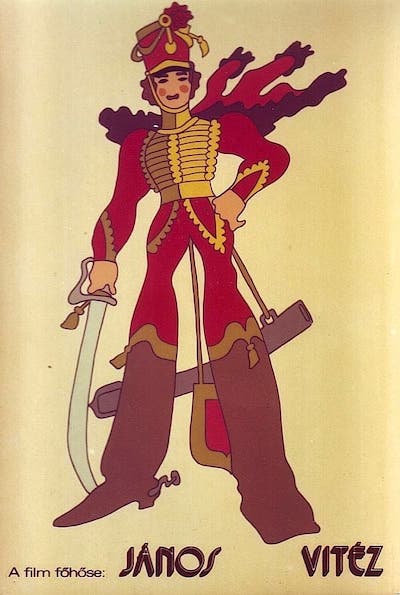
  • Marcell Jankovics – János vitéz AKA Johnny Corncob (1973)

    Marcell Jankovics1971-1980AnimationHungary

    Quote:
    A traditional Hungarian poetic fairytale that describes the epic adventures of a young shepherd through love, war, magic, and death.Read More »

  • Robert Enrico – Le vieux fusil AKA Vengeance One by One AKA The Old Gun (1975)

    Robert Enrico1971-1980FranceThrillerWar

    In Montauban in 1944, Julien Dandieu in a surgeon in the local hospital. Frightened by the German army entering Montauban, he asks his friend Francois to drive his wife and his daughter in the back country village where Julien has an old castle. One week later, Julien decided to meet then for the week end, but the Germans are already occupying the village.Read More »

  • Hong-joon Kim & Joo-ho Hwang – Seoul 7000 (1976)

    1971-1980ExperimentalHong-joon KimJoo-ho HwangShort FilmSouth Korea

    Quote:
    According to the information written in the credit roll of “Seoul 7000,” the film was filmed in Seoul in November 1976 with an ‘Elmo 108’ 8mm camera using Kodachrome 40 film. It was also stated that “it was filmed frame by frame, and the shooting speed was adjusted differently for each shot,” and “the number 7000 in the title of this film represents the total number of frames in all parts except for the title.”Read More »

  • Newsreel (Geri Ashur, Peter Barton, Marilyn Mulford, Stephanie Pawleski) – Janie’s Janie (1971)

    1971-1980DocumentaryGeri AshurMarilyn MulfordPeter BartonShort FilmStephanie PawleskiUSA

    In this personal documentary, Jane Giese, a working class woman in Newark, comes to realize that she has to take control of her own life after years of physical and mental abuse.

    One of the most moving documentaries of the era, Newsreel’s Janie’s Janie breaks with their usual format for a more personal approach, following one woman’s journey to self-determination, or as Janie says, “First I was my father’s Janie, then I was my Charlie’s Janie, now I’m Janie’s Janie.”Read More »

  • Warren Steibel – Firing Line: What have We Learned From the Failure of Socialisim (1977)

    1971-1980TVUSAWarren Steibel

    Taped on July 25, 1977. In Mrs. Thatcher’s second appearance on Firing Line, two years before she would take up the reins of government, the conversation turns to the state of democracy in present-day Britain. We get even more of a feel than in her first appearance (S0199) of why she would become so admired, and so reviled: “For years now in British politics you have needed to use the word ‘consensus.’… It’s a word you didn’t use when I first came into politics. We had convictions, and we tried to persuade people that our convictions were the right ones, and it’s no earthly good having convictions unless you have the will to translate those convictions into action. Read More »

  • Thierry Zéno – Bouche sans fond ouverte sur les horizons (1971)

    1971-1980ArthouseBelgiumDocumentaryThierry Zéno

    Quote:
    Bouche sans fond ouverte sur les horizons (1971, 26′)
    In 1971 Thierry Zéno creates a fascinating portrait of artist Georges Moinet in the form of a 16 mm medium-length film. A schizophrenic who lives in a psychiatric hospital near Namur, Moinet paints. After being mute for 24 years he chooses this cinematic encounter to explain his artist approach, revealing what lies behind his personal cosmogony. But this long logorrhoea proves disturbing and fails to provide possible clues to understanding his work, gradually becoming a form of music that blends in with the sounds and distant, invisible hubbub of the hospital. With Alessandro Ussai behind the camera and Roger Cambier responsible for the sound, Zéno gets up close to Moinet to better capture him in all his demiurgical excessiveness, his existence on the fringes but also his humanity, deconstructing in a series of very tight shots the man and his canvasses.Read More »

  • Jean Rouch – Ispahan: lettre persane (1977)

    Jean Rouch1971-1980DocumentaryIran

    Jean Rouch’s camera follows his friend, filmmaker/actor/critic Farrokh Ghaffari, as he walks and talks us through the famous Shah Mosque in Esfehan. While guiding him and answering his questions, Ghaffari makes Rouch discover the beauties of the architecture of the mosque and its impact on the city. Throughout the tour, they discuss Islam’s complex relationship with death, sex and cinema.Read More »

  • Med Hondo – Les Bicots-Nègres vos voisins (1974)

    Med Hondo1971-1980ArthouseFrance

    Quote:
    Arguably an outgrowth of Soleil Ô, Les Bicots-nègres analyses the living conditions of African migrant workers in France in the mid-1970s. The film has the potential to be a classic case study of cinematic over-determination. It comprises seven sequences exploring, respectively, the conditions of possibility of cinematic representation in Africa (the opening sequence), historical dissonance through the dialectic of past and present (the post-credit sequence), a flashback to the eve of African independence (the imaginary garden party sequence), the predicaments of the post-colony, an assessment of the living condition of migrant workers and the actions taken to transform these conditions, and a final sequence in a circular mode, which returns to the new cinema.
    In Les Bicots-nègres, Med Hondo engages the dual front of cinema and history through the production of what might be referred to as an indocile image. In the cinema of Med Hondo, the indocile image purports to do, undo and sometimes outdo both cinema and history.Read More »

Back to top button