1941-1950

  • Jacques Tati – Jour de fête AKA The Village Fair [1964 re-edited version] (1949)

    France1941-1950ClassicsComedyJacques Tati

    29f7c043f76a2bde437fd0d52a185152

    Synopsis
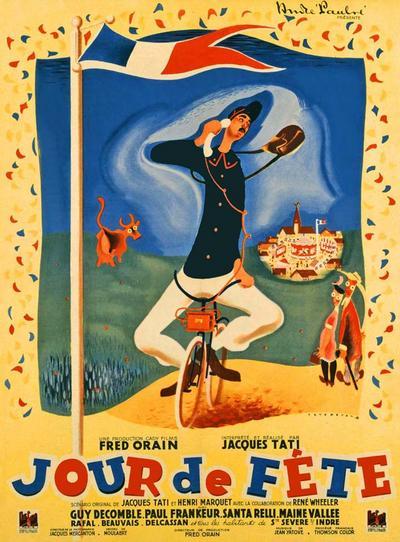
    Jacques Tati’s award-winning feature début – a dazzling blend of satire and slapstick is early evidence of his unique talent. Acclaimed by international critics as an innovative comic masterpiece, Jour de fête is an hilarious exposé of the modern obsession with speed and efficiency, set amidst the rural surroundings of a tiny French village. Tati plays an appealingly self-deluded buffoon a postman who, impressed by the bristling efficiency of the American postal system, makes a wholly misguided attempt to introduce modern methods in the depths of rural France.Read More »
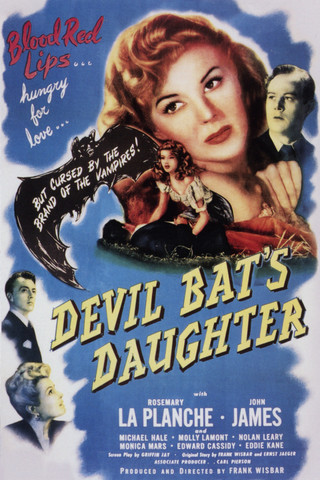
  • Frank Wisbar – Devil Bat’s Daughter (1946)

    1941-1950Frank WisbarHorrorMysteryUSA

    29f7c043f76a2bde437fd0d52a185152

    Synopsis:
    Wishing to dispose of his wife, psychiatrist Doctor Elliott makes his patient Nina think that she suffers from a compulsion to kill. He drugs Nina, murders his wife and leaves evidence that points to Nina. The latter, pre-conditioned by Elliott, also thinks she is guilty.Read More »

  • Akira Kurosawa – Ichiban utsukushiku AKA The Most Beautiful (1944)

    1941-1950Akira KurosawaDramaJapan

    29f7c043f76a2bde437fd0d52a185152

    The Most Beautiful is a wartime propaganda film depicting the efforts of female factory workers in a precision-lens manufacturing plant. It is episodic and anecdotal and very documentary-like. Donald Richie records specific instances of documentary techniques borrowed principally from Russian filmmakers such as the austere and static composition of its scenes. This need not be entertained to any considerable degree: the point is, holistically, the overwhelming impression is one of a document. We see many shots of the lens-making equipment, and through these learn the process of lens manufacture itself. Nearly every scene is segmented with shots of a parade (a military band, a marching platoon of young soldiers, etc.) and the film itself was shot in a real factory, a length to which Kurosawa would rarely go in later work.Read More »

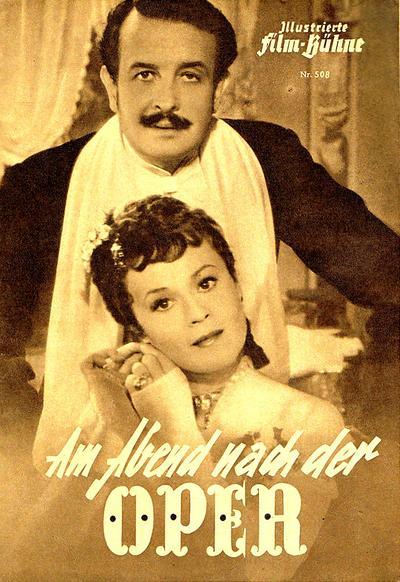
  • Arthur Maria Rabenalt – Am Abend nach der Oper AKA In the Evening After the Opera (1945)

    1941-1950Arthur Maria RabenaltDramaGermanyRomance

    29f7c043f76a2bde437fd0d52a185152

    Quote:
    This totally forgotten film is adapted from a story by Franz Nabl who also provided the basis for Der verzauberte Tag. The story is about a rich murderer (Siegfried Breuer) who killed his wife out of jealousy nd tries to start a new life. He meets a young woman (Gusti Huber) and marries her without telling her the secret directly. She feels there’s something wrong and things get complicated when a dubious individual not only gets the legal papers which prove the husband has been a convict, but also falls in love with the young woman.
    The film not only boasts an intelligent script and great performances, but is very well shot and directed. The lighting is often elaborate, intertwining with the sumptuous set design, while an inquisitive camera slides through the rooms. This one is a must see and should be a strong incentive for German users to consider buying the box.Read More »

  • Maurice Tourneur – La Main du Diable aka Carnival of Sinners (1943)

    1941-1950FantasyFranceHorrorMaurice Tourneur

    29f7c043f76a2bde437fd0d52a185152

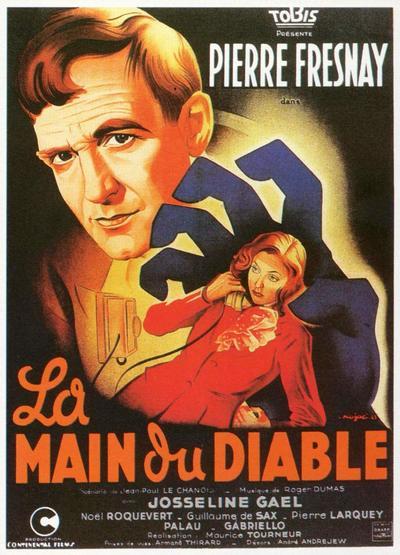
    A man arrives at an isolated mountain inn clutching a small box. The man is panic-struck when, during a sudden blackout, the box disappears. To the assembled guests at the inn he tells his tragic story. The man, Roland Brissot, was once a penniless artist who, one day, bought a talisman from the owner of a restaurant for one franc. The talisman, a severed hand in a box, immediately transformed Brissot’s life and he became a hugely successful artist. Then, one day, he receives a visit from a small man in a suit who tells him that in buying the talisman, he has sold his soul to the Devil…Read More »

  • Byron Haskin – I Walk Alone (1948)

    1941-1950Byron HaskinDramaFilm NoirUSA

    29f7c043f76a2bde437fd0d52a185152

    Quote:
    It’s a mighty low class of people that you will meet in the Paramount’s “I Walk Alone” — and a mighty low grade of melodrama, if you want the honest truth — in spite of a very swanky setting and an air of great elegance. For the the people are mostly ex-gangsters, night club peddlers or social black sheep and the drama is of the vintage of gangster fiction of some twenty years ago.

    True, the premise of the story, which originated with Theodore Reeves in a play done under the title of “Beggars Are Coming to Town,” is that an old-time bootleg mobster who has finished a long stretch in jail can’t use the old-time tactics in muscling in on a welching ex-pal. The theory is that café business and corporation law in this new day are completely against the operation of any old-fashioned strong-arm stuff.Read More »

  • Henri-Georges Clouzot – Manon (1949)

    1941-1950CrimeDramaFranceHenri-Georges Clouzot

    29f7c043f76a2bde437fd0d52a185152

    Quote:
    Henri-Georges Clouzot (“The Raven”/”The Wages of Fear”/”“Diabolique”) directs one of his lesser efforts and co-writes with Jean Ferry an adaptation of Abbe Prevost’s 18th century lusty classic French novel ‘Manon Lescaut.’ It’s updated to immediately after World War II France. It was shoddily made, the characters were sketchily drawn, the lead couple is unlikable, the screenplay was ridiculously inept and the novel’s bawdiness was compromised to make it more Hollywood safe, nevertheless Clouzot’s craftsmanship and style made an impression at the Venice Festival and it won Best Film in 1949. It did a good job capturing the sleazy atmosphere of the low-life underground scene in a post-war Paris.Read More »

  • Henri Decoin – Les Inconnus dans la Maison aka Strangers in the House (1942)

    1941-1950ClassicsCrimeFranceHenri Decoin

    Synopsis:
    Since his wife left him, almost twenty years ago, the once brilliant lawyer Loursat has slumped into a life of despondency and drunkenness. He lives in a vast empty house with his teenage daughter, Nicole, with whom he hardly communicates. One fateful day, something happens which pulls Loursat back from the abyss: he discovers a dead body in his house. When his daughter and her group of rebellious young friends are charged with the murder, Loursat decides to take charge of the case.Read More »

  • Henri-Georges Clouzot – L’assassin habite… au 21 aka The Murderer Lives at 21 [+extra] (1942)

    1941-1950ComedyFranceHenri-Georges ClouzotMystery

    29f7c043f76a2bde437fd0d52a185152

    Eureka, Masters of Cinema wrote:
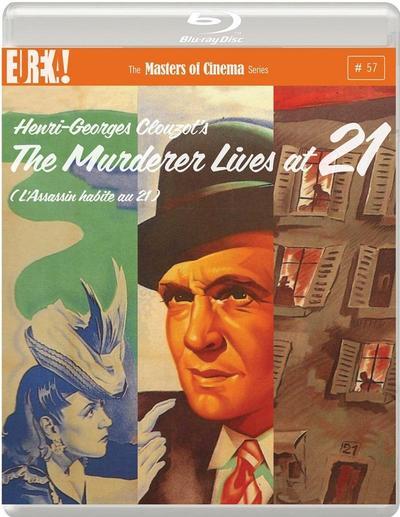
    One of the most revered names in world cinema, Henri – Georges Clouzot, made a remarkably self – assured debut in 1942 with the deliciously droll thriller The Murderer Lives at 21 [L ‘ Assassin habite au 21].

    A thief and killer stalks the streets of Paris, leaving a calling card from “Monsieur Durand” at the scene of each crime. But after a cache of these macabre identifications is discovered by a burglar in the boarding house at 21 Avenue Junot, Inspector Wenceslas Vorobechik (Pierre Fresnay) takes lodging at the infamous address in an undercover bid to solve the crime, with help from his struggling – actress girlfriend Mila (Suzy Delair).

    Featuring audacious directorial touches, brilliant performances, and a daring tone that runs the gamut from light comedy to sinister noir, as well as a subtle portrait of tensions under Nazi occupation, this overlooked gem from the golden age of French cinema is presented in a beautiful new high – definition restoration.Read More »

Back to top button