Quote:
A poor painter, never artistically recognized, meets on the riverside a wealthy young lady. They are both attracted to each other and she invites him to come over to her castle. There they begin an illegal affair (the woman is married to an old grand duke who is absent at that moment). Even when she warns him that their love will be as a big fire, that will be extinguished too quickly, the painter, blinded by passion, accepts. He paints a daring and somewhat manneristic portrait of the woman and sends it to town. At the moment when they read in the newspaper that due to the portrait the painter is finally recognized and praised, the duchess receives a message her husband is returning. Secretly she puts a sleeping powder in the painter’s wine. When he awakes, she is gone and has left him only the money for the painting, that she clearly has bought. Desperately he leaves the castle and wanders around, in search for his beloved. But when he finally encounters her, in company of her husband, she pretends not to know him.Read More »
1911-1920
-
Giovanni Pastrone – Il fuoco (la favilla – la vampa – la cenere) AKA The Fire (1916)
1911-1920ArthouseGiovanni PastroneItalySilent -
D.W. Griffith – Judith of Bethulia (1914)
1911-1920D.W. GriffithEpicSilentThe Birth of CinemaUSA

Quote:
Judith of Bethulia was a 1914 film and starred Blanche Sweet and Henry B. Walthall, and was produced and directed by D. W. Griffith in 1913. This was the first feature-length film made by pioneering film company Biograph, although the second that Biograph released. Shortly after its completion and a disagreement Griffith had with Biograph executives on making more future feature-length films, Griffith left Biograph, and took the entire stock company with him. Biograph delayed the picture’s release until 1914, after Griffith’s departure, so that it would not have to pay him in a profit-sharing agreement they had.Read More » -
Louis Feuillade – La maison des lions AKA House of Lions (1912)
1911-1920DramaFranceLouis FeuilladeSilentAfter he is fired, a real stinker of a servant lets loose his ex-employer’s lions.
Drama ensues and, needless to say, her soirée is ruined.Read More » -
J. Searle Dawley – A Romance of the Cliff Dwellers (1911)
1911-1920DramaJ. Searle DawleySilentUSAEye Filmmuseum wrote:
A short love story set in prehistoric times. A woman with two suitors shoots the one she doesn’t love with her bow and arrow, hitting him in the heart.Read More » -
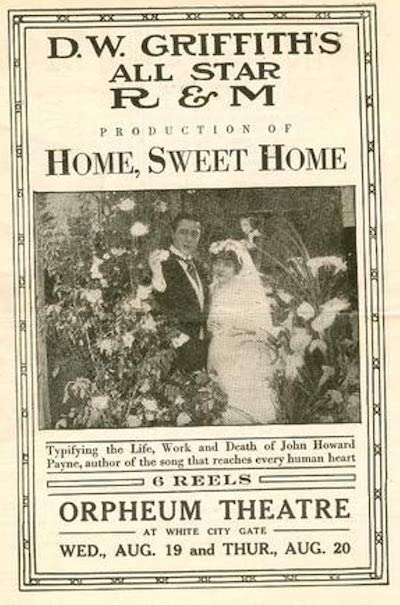
D.W. Griffith – Home, Sweet Home (1914)
1911-1920D.W. GriffithDramaSilentUSA

John Howard Payne leaves home and begins a career in the theater. Despite encouragement from his mother and his sweetheart, Payne begins to lead a life of dissolute habits, and this soon leads to ruin and misery. In deep despair, he thinks of better days, and writes a song that later provides inspiration to several others in their own times of need.Read More »
-
Joris Ivens – De wigwam AKA The Tipi (1911)
1911-1920Euro WesternsJoris IvensNetherlandsSilentWestern

At the age of 13 Joris Ivens was fond of Cowboys and Indians stories, so he decided to invent one himself. He made a script and used a camera from his father’s shop. This became his first film Wigwam, with his own family as cast. Black Eagle, a bad indian, kidnaps the daughter of a farmer’s family. Flaming Arrow, played by the young Joris Ivens, saves the child from the kidnapper and brings it back to her family. No better conclusion than smoking a peace pipe.Read More »
-
Salvador Toscano – Funeral de Emiliano Zapata AKA Sepelio de Emiliano Zapata (1919)
1911-1920DocumentaryMexicoSalvador ToscanoShort FilmSynopsis
A footage showing a crowd coming to Cuautla for the famous revolutionary leader’s funerals.Read More » -
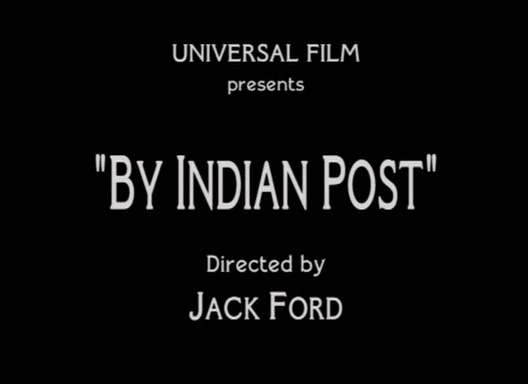
John Ford – By Indian Post (1919)
1911-1920John FordSilentUSAWestern

Synopsis (contains spoilers)
Jode McWilliams wants to marry Peg Owens, but her father (and Jode’s employer) won’t allow it. Jode writes Peg a love letter, but it is stolen by an Indian. The Indian delivers the letter to Peg. Her father finds the letter and kidnaps Jode, he escapes and marries Peg.Read More » -
Karl Heinz Martin – Von morgens bis mitternachts AKA From Morn to Midnight (1920)
1911-1920GermanyHorrorKarl Heinz MartinSilentWeimar Republic cinemaStill shocking even today, From Morn to Midnight remains one of the boldest examples of German expressionist cinema. Based on a play by one of the era’s most respected expressionist writers, Georg Kaiser, the story centres on a bank cashier (Ernst Deutsch) who steals money after becoming enraptured by an elegant customer (Erna Morena). Driven by lust, he begs the customer to come away with him, but she laughs in his face. Distraught at having to return home to his drab family life, the cashier goes on the run, determined to seek out the pleasure and passion he has been missing. But he is continually haunted by visions of death, and his relationship with the stolen money soon sours.Read More »