1911-1920

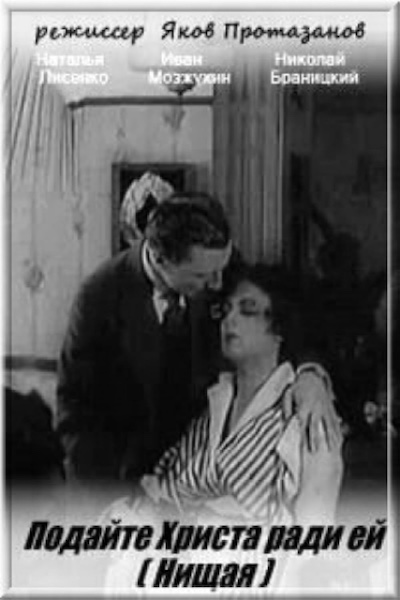
  • Yakov Protazanov – Nishchaya AKA The Beggar Woman (1916)

    Yakov Protazanov1911-1920DramaSilentUSSR
    Nishchaya (1916)
    Nishchaya (1916)

    “This Russian-made picture (distributed in the U.S. by Pathe) is typically gloomy. Prima donna Mary Mar (N.A. Lesienko) is surrounded by admirers. But a poet, Sergius (Ivan Mozukin) wants to be more to her and he proposes. So they marry, and she becomes involved in charity activities. On one of her rounds, she contracts smallpox and is quarantined. Even Sergius cannot enter the house. During her illness another opera star becomes the favorite in her stead. Mary’s face becomes horribly disfigured as a result of the smallpox and she has to auction off her belongings to pay her creditors. Finally Sergius returns. Mary is wearing a veil, and when he lifts it, he is disgusted by the sight of her. So she leaves him and becomes a beggar in the streets, while he goes to his studio and kills himself by drug overdose”
    by ~ Janiss Garza, RoviRead More »
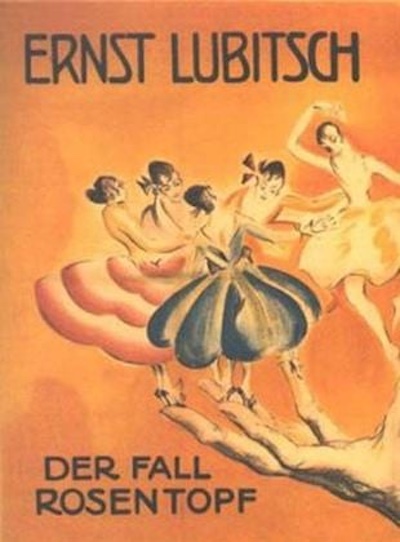
  • Ernst Lubitsch – Der Fall Rosentopf AKA The Rosentopf Case [Incomplete] (1918)

    Ernst Lubitsch1911-1920ComedyGermanyShort FilmSilent
    Der Fall Rosentopf (1918)
    Der Fall Rosentopf (1918)

    Translated from German wikipedia wrote:
    The film was shot in the UFA-Union-Filmstudios, Berlin-Tempelhof. The sets were designed by Kurt Richter. Although the National Film Archive also has designs by Paul Leni for the film, his involvement cannot be confirmed due to rediscovered film credits. The same applies to Ossi Oswalda’s involvement as an actor, as stated by Hermann G. Weinberg in 1977.
    The 1,163-meter-long film was examined by the censors in July 1918. The premiere of the film, which was announced in the Lichtbild-Bühne as Der Fall Rosenblum,[4] was on September 20, 1918 at the U.T. Friedrichstraße in Berlin.Read More »

  • Robert Reinert – Nerven aka Nerves (1919)

    Robert Reinert1911-1920DramaGermanySilentWeimar Republic cinema
    Nerven (1919)
    Nerven (1919)

    Quote:
    In Nerven, writer-director-producer Robert Reinert tried to capture the “nervous epidemic” caused by war and misery which “drives people mad”. This unique portrait of the life in 1919 Germany, filmed on location in Munich, describes the cases of different people from all levels of society: Factory owner Roloff who looses his mind in view of catastrophies and social disturbances, teacher John who is the hero of the masses and Marja who turns into a radical revolutionary. Using different fragments the Munich Film Museum could reconstruct this forgotten German classic which is a historic document and anticipates already elements of the Expressionist cinema of the 1920s.Read More »

  • John S. Robertson – Dr. Jekyll and Mr. Hyde (1920)

    John S. Robertson1911-1920HorrorSilentUSA
    Dr. Jekyll and Mr. Hyde (1920)
    Dr. Jekyll and Mr. Hyde (1920)

    Considered by many to be the first great American horror film, John S. Robertson’s DR. JEKYLL AND MR. HYDE allowed stage legend John Barrymore to deliver his first virtuoso performance on film. Blending historic charm with grim naturalism, this version of DR. JEKYLL AND MR. HYDE is one of the more faithful of the many screen adaptations of Stevenson’s story (though greatly influenced by T.R. Sullivan’s popular stage treatment), recounting a visionary scientist’s ill-fated attempts to unleash the human mysteries that dwell beneath the shell of the civilized self.Read More »

  • Alf Nielsen – Dødsklokken AKA The Death Knell (1914)

    1911-1920Alf NielsenDenmarkScandinavian Silent CinemaSilentWar
    Dødsklokken (1914)
    Dødsklokken (1914)

    Quote:
    Death’s bells toll in tune to the march of war. On top of devastating losses, espionage also cripples General Müller’s army. Young Lieutenant Charley is entrusted with the delivery of Dossier 15, a document of utmost importance to the war effort. After a dangerous journey through enemy territory, Adjutant Bertram betrays him – it turns out that he’s spying for the enemy. Bertram replaces Dossier 15 with a worthless piece of paper which leads to Charley’s arrest. Charley must escape to avoid execution and expose the spy.Read More »

  • Léonce Perret – L’X noir (1915)

    Léonce Perret1911-1920FranceMysterySilent
    L'X noir (1915)
    L’X noir (1915)

    A mysterious evildoer terrifies the French Riviera. That mysterious character, which is hidden under the personality of James Pearce, a diamond-maker, calls himself The Black X. This time, the Black X has noticed the rich jewels of a celebrated singer and, in the company of her henchmen, is preparing to carry out the great robbery.Read More »

  • Holger-Madsen – Ned Med Vaabnene AKA Lay Down Your Arms! (1914)

    1911-1920DenmarkHolger-MadsenScandinavian Silent CinemaSilentWar
    Ned Med Vaabnene (1914)
    Ned Med Vaabnene (1914)

    An upperclass war widow marries again. The new husband is also an officer, and soon he has to go to the next war. At the outbreak, she’s the only one who does not cheer about it. And the terrors of war soon bring almost all of her friends and relatives, among them generals and high government officials to the same conclusion: War does not pay.Read More »

  • Alfred Lind – Il jockey della morte AKA The Jockey of Death (1915)

    1911-1920AdventureAlfred LindItalySilent
    Il jockey della morte (1915)
    Il jockey della morte (1915)

    An acrobatic woman and a man in a skeleton suit are involved in a gypsy plot.

    Quote:
    A little girl seemed to have disappeared into thin air. Fifteen years after, the true reason comes into light. Her cousin Henri makes up his mind and decides it is time for action. In order to help the girl escaping the vigilant gypsy home of ‘Cirque Bartoli’, both get caught and end up being chased by the gypsies. This hot pursuit – crossing sewage channels, roof tops, mountains and rivers – is an excellent piece of the girl’s extraordinary acrobatic skills and Henri’s bravura.Read More »

  • Unknown – Der Heimat Schützengraben AKA Our Homeland’s Trenches (1916)

    Germany1911-1920SilentWar
    Der Heimat Schützengraben (1916)
    Der Heimat Schützengraben (1916)

    Felicity Rash wrote:
    During the war years, film developed as a novel and effective vehicle for primary and secondary war propaganda. Visual images of a heroic Self and a terrifying enemy Other were a popular means of conveying a nationalist message and boosting patriotic sentiment. […] In Der Heimat Schützengraben (1916) a farmer newly returned from the East Prussian front tells of the horror he experienced when fleeing from Russian soldiers. His story brings him sympathy from a group of villagers from whom he is requesting a loan. At the end of the film, children are shown opening up their piggy-banks. An old man makes an emotional speech to the villagers, and hence the film’s audience, telling them to lend money to the state …Read More »

Back to top button