1911-1920

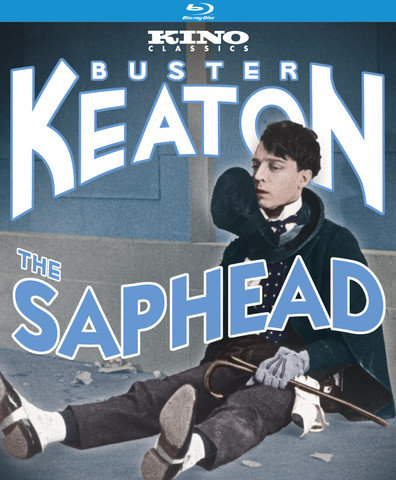
  • Herbert Blaché & Winchell Smith – The Saphead (1920)

    1911-1920ComedyHerbert BlachéSilentUSAWinchell Smith

    29f7c043f76a2bde437fd0d52a185152

    The Saphead is a 1920 comedy film featuring Buster Keaton. It was the actor’s first starring role in a full-length feature and the film that launched his career.

    The plot was a merging of two stories, Bronson Howard’s play The Henrietta and the novel The New Henrietta by Victor Mapes and Winchell Smith, which was meant to be an adaption of Howard’s play.
    Read More »

  • D.W. Griffith – Way Down East (1920)

    1911-1920D.W. GriffithDramaSilentUSA

    29f7c043f76a2bde437fd0d52a185152

    Way Down East (1920) is a silent film directed by D. W. Griffith and starring Lillian Gish. It is one of four film adaptations of the melodramatic 19th century play Way Down East by Lottie Blair Parker. There were two earlier silent versions, and one sound version in 1935, starring Henry Fonda.
    Griffith’s version is particularly remembered for its exciting climax in which Lillian Gish’s character is rescued from doom on an icy river. Some sources, quoting newspaper ads of the time, say a sequence was filmed in an early color process, possibly Technicolor or Prizmacolor.
    Read More »

  • Yakov Protazanov – Otets Sergiy AKA Father Sergius (1917)

    1911-1920DramaSilentUSSRYakov Protazanov

    29f7c043f76a2bde437fd0d52a185152

    One of the few pre-Revolution Russian feature films to survive, Father Sergius is an elaborate picturization of a Tolstoy novel. Ivan Mozzhukin plays a young, libertine officer who thinks nothing of committing casual sins while in the service of the Czar. He comes to regret his misdeeds as he grows older, his past debaucheries manifesting themselves in his wizened face and desiccated body. He wanders up and down the countryside, searching for redemption. Director Feodor Protazanov emphasized the high and low points of Mozhukin’s life by filming in the actual palaces and private clubs described by Tolstoy in his novel. The overall theme of corruption in high places automatically resulted in Father Sergius being banned by the Czarist censors, though the film found a more receptive audience once the government passed into the hands of the revolutionaries. ~ Hal Erickson, All Movie Guide
    Read More »

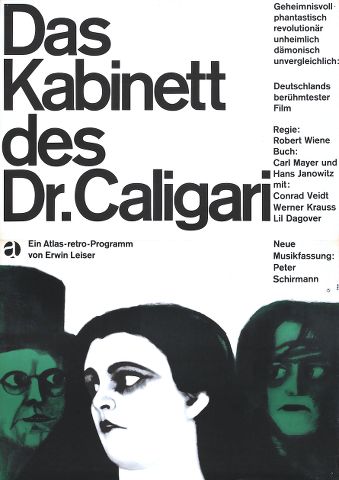
  • Robert Wiene – Das Cabinet des Dr. Caligari AKA The Cabinet of Dr. Caligari [2014 Restored Version] (1920)

    1911-19202011-2020GermanyHorrorRobert WieneSilentWeimar Republic cinema

    29f7c043f76a2bde437fd0d52a185152

    Here is an HDTV rip of the brand new digitally restored version of the absolute masterpiece “The Cabinet of Dr. Caligari”. The film has been restored using the original camera negative, the result premiered on February 9th 2014 at the 64th Berlin International Film Festival.

    New York composer and multi-instrumentalist John Zorn presented a new composition on the Karl Schuke organ at Berlin’s philharmonic to accompany the film. This is the version that has been shown at the festival with his music.
    Read More »

  • Louella Parsons – How to write for the movies (1916)

    1911-1920BooksLouella ParsonsUSA


    Read More »

  • Victor Sjöström – Trädgårdsmästaren AKA The Gardener (1912)

    1911-1920Scandinavian Silent CinemaShort FilmSilentSwedenVictor Sjöström

    29f7c043f76a2bde437fd0d52a185152

    Quote:
    The Gardener is a 1912 Swedish silent drama film directed by Victor Sjöström. It is mostly known for being the first film to ever be banned by the Swedish censor system. It was long thought to have been lost, but in 1979 a copy was found in an archive in the United States. The Swedish premiere followed on 14 October 1980 when it was shown at the cinematheque in Stockholm.

    In Sweden, the film was banned in 1912. The director said, “To the best of my recollection, the wreched faith of my ‘maiden work’ was due to the final scene. The president of the studio was horrified by the grubby, brutal gardener (played by yours truly)-according to him, the public didn’t want to see me tromping around with a big moustache. But I insisted that it was indispensable from an artistic standpoint, and I finally got my way. This particular stubby, brutal gardener lusted after a young lady in his employ, and he seduced- well, he virtually raped- the innocent thing in a lovely greenhouse among beautiful roses and every other flower imaginable. In the final scene, the girl is found dead the next morning on the floor of the greenhouse, with red roses and exquisite blossoms delicately strewn all around her. The marriage of death and beauty, in other words. But the thick-headed censors didn’t understand a thing- they had no feeling for that kind of beauty- and the film was banned.” The official comments of the censors were, “A breach of respectability. The association of death and beauty poses a threat to public order.”Read More »

  • Ernst Lubitsch – Als Ich Tot War (1916)

    1911-1920ComedyErnst LubitschGermanySilent

    29f7c043f76a2bde437fd0d52a185152

    Quote:

    “The most dangerous threat to the happiness of any young married couple, besides matrimony itself, are the mothers-in-law; this terrible feminine lobby, since the dawn of time , has always meddled and tried to disturb the tranquillity of newlyweds and sometimes their evil schemes succeeded in making a contented life impossible for the youngsters.

    The great German director, Herr Ernst Lubitsch, captured pretty well these universal mother-in-law treacherous manoeuvres in “Als Ich Tot War” ( When I Was Dead ) (1916) a two-reel silent comedy shown recently at the Schloss theatre.

    The film depicts the story of a young married couple ( Herr Ernst Lubitsch himself and Frau Louise Schenrich ) who live in the same apartment with their mother-in-law ( Frau Lanchen Voss ), a terrible mistake. At least if the mother-in-law lives far away, her dangerous intentions require more exertion to work. Herr Ernst likes very much to play chess with his pals at the club, a thrilling sport that will bring him a lot of problems ( that’s what happens when you play such weird games ). One night Herr Ernst arrives home late due to one of those exciting and lengthy chess matches and finds the door to his home locked, forcing him to sleep on the stairs. It is not necessary to say that the party responsible for such an evil act is his mother-in-law who continually uses the long chess matches to poison her daughter’s mind against her husband. She finally succeeds and Frau Luise divorces her mate.Read More »
  • Franz Hofer – Hurra! Einquartierung! (1913)

    1911-1920ComedyFranz HoferGermanySilentThe Birth of Cinema

    Free Image Hosting at www.ImageShack.us

    29f7c043f76a2bde437fd0d52a185152

    This film comes from the Schloss Archive of His Highness, Herr Graf Ferdinand von Galitzien:

    Free Image Hosting at www.ImageShack.us

    Quote:
    Born Franz Wygand Wüstenhöfer in Malstatt (Saarland), Hofer began his career as a stage actor and playwright in 1909. A year later he began working as a screenwriter for Messter’s Henny Porten series and for directors such as Viggo Larsen—Die schwarze Katze [The Black Cat] (1910)—and Walter Schmidthässler—Das Weib ohne Herz [The Woman Without a Heart] and Der Zug des Herzens [The Pull of the Heart] (both 1912).Read More »

  • ?-The Christmas Miracle (1912)

    1911-1920DramaFranceSilent

    Image Hosted by ImageShack.us

    29f7c043f76a2bde437fd0d52a185152

    IMDB:
    A poor woman, with no money for Christmas presents, tucks her three children in for the night, on Christmas Eve. Later, a poor, old beggar comes to her door and she lets him in to rest and warm up. When he suddenly leaves, she follows him to the front door of a church, where she finds an abandoned baby. The woman takes the baby home to care for it, even though she has almost nothing. Her acts of kindness are repaid with a Christmas miracle. Written by Detour 1945 Read More »

Back to top button