

Jewish life in Poland before World War II. The Vladimir Medem Sanatorium stood as the embodiment of health and enlightenment in striking contrast to the grim images of urban Polish-Jewish poverty.Read More »
Jewish life in Poland before World War II. The Vladimir Medem Sanatorium stood as the embodiment of health and enlightenment in striking contrast to the grim images of urban Polish-Jewish poverty.Read More »

A filmmaker returns from Kyiv to his rural village to marry the love of his life. He is expected to marry the Rabbi’s daughter, which disrupts the balance of the whole town. In one unflinching shot, this film presents a day in the life of a Jewish village before it disappears. SHTTL is the story of the inhabitants of a Yiddish Ukrainian village at the border of Poland, 24 hours before the Nazi invasion, known as Operation Barbarossa. Today, there are no such villages in existence; the production fully reconstructed a traditional ‘Shtetl’ outside of Kyiv. Following the filming, the set was to be turned into a museum but has since been destroyed in the ongoing political crisis between Russia and Ukraine.Read More »
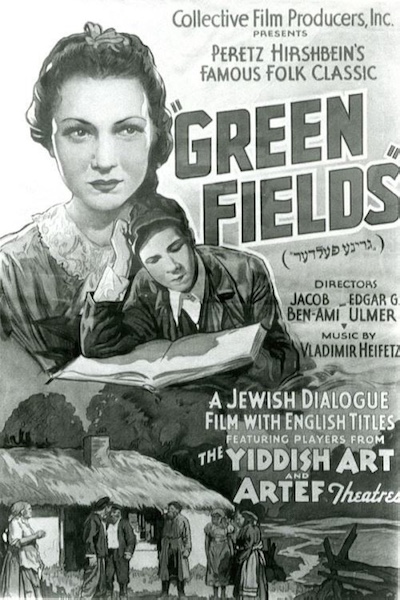
Ulmer’s soulful, open-air adaptation of Peretz Hirshbein’s classic play heralded the Golden Age of Yiddish cinema. When an ascetic young scholar ventures into the countryside, searching for the city of “true Jews,” he learns some unexpected lessons from the Jewish peasants who take him in as a tutor for their children.Read More »

Bruxelles-transit (1982)
Fictional re-enactments about the early years in Belgium of the director’s parents, Jewish immigrants from Poland, and scenes taken in modern Brussels in this elliptical experimental feature.
Quote:
“This is the threnody of rootlessness and marginality, set in the neighbourhood of the Brussels Midi Station. ‘their area, their burrow, their kingdom – today I still have the impression that they are camping there’ (S. Szlingerbaum). The 80 minutes of the film avidly probe this past of his mother’s memories via the voice-over, songs, whispered confidences and a handful of fictional scenes also in Yiddish, ‘a language which is dying out as its last speakers are lost in the city,’ in the words of the director.” – René Michelems.Read More »

In 1930s Poland, it was traditional for some Christian boys to live for a time with Jewish families in order to learn a trade from Jewish craftsmen. For this reason, Ivan has gone to live on a large estate with Abraham and his family, has learned Yiddish, and has become Abraham’s best friend. But the anti-Semitism born of poverty, ignorance, and superstition is fierce in this community of and the two boys run away into the countryside to flee an imminent conflict. Journeying together in a menacing environment, they reveal their innocence and inseparability.Read More »