

Quote:
After the bankruptcy of their father’s stonemasonry firm, brothers Nicola and Andrea emigrate to America to restore their fortunes.Read More »
Quote:
After the bankruptcy of their father’s stonemasonry firm, brothers Nicola and Andrea emigrate to America to restore their fortunes.Read More »

After the fall of Napoleon, the Restoration begins. Fulvio (Marcello Mastroianni, La dolce vita), an aristocrat who has dedicated his life to the revolution has become disillusioned and his cowardice keeps him from joining his comrades. As he struggles to manage his evasion and lies he gets swept up in a suicidal uprising in Southern Italy. Stunningly photographed with lush period detail and featuring the Taviani brothers’ trademark magic realism and absurdist irony, Allonsanfàn has Mastroianni on top form as the reluctant insurgent and one of Ennio Morricone’s finest scores.Read More »
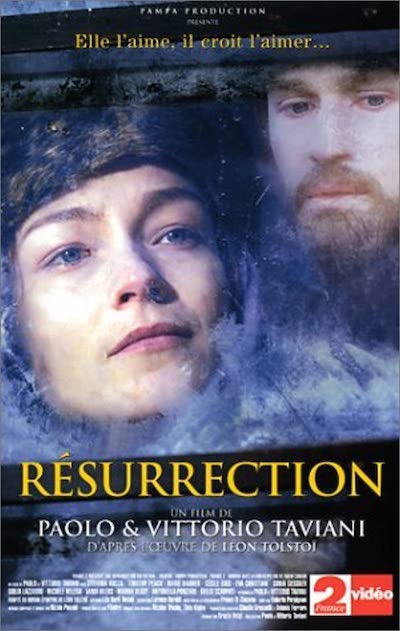
At the end of the XIX century in Russia, Prince Dimitri Necklivdov is called as a jury-man in a trial. The defendant is Katiuscia Maslova, accused of murdering a merchant in order to rob him. Dimitri recognizes Katiuscia: she was the girl he seduced many years before. Dimitri decides to save her.(imdb)Read More »

Salvatore (Gian Maria Volonte) lives in a rural environment on the island, and when he becomes fed up with Mafia tactics, he swings into action. First he convinces the farmers and workers that they can band together, and then he convinces them to go on strike against their exploitative employers. The results bring tragedy in their wake, but the beginnings of a unified stance against the mobsters takes hold.Read More »

Synopsis
The Tavianis’ adaptation of Goethe’s novel may seem strangely restrained compared to their other fables, but it’s still a work of exquisite elegance and precision. Set in Tuscany during the Napoleonic era, it charts the forces of attraction and repulsion that shape the complex relationships between a happily married baron and his wife (Anglade, Huppert), the baron’s architect friend (Bentivoglio) and the wife’s goddaughter (Gillain). If the story itself (engrossing enough) never seems very much more than an unusually formal period romance, the immaculate performances and the Tavianis’ masterly control of colour, composition and music (a poignant but unexpectedly modernist score from Carlo Crivelli) make for absorbing viewing.Read More »

As adapted from the roman by Antonia Arslan and co-directed by legendary Italian brothers Paolo and Vittorio Taviani, The Lark Farm marks one of the few international features to tackle the Armenian genocide head-on. The story (with its thematic parallels, in the early scenes, to De Sica’s 1970 Garden of the Finzi-Continis) concerns the Avakian clan. An Armenian family living an affluent lifestyle and periodically shuttling back and forth between their two comfortable homes, the Avakians feel convinced that the rising tide of Turkish hostility on the horizon means little to them and will scarcely affect their day to day. Read More »

Studies of various married couples, who under Italian law as it stands, are unable to be freed from a painful and unhappy marriage. Read More »
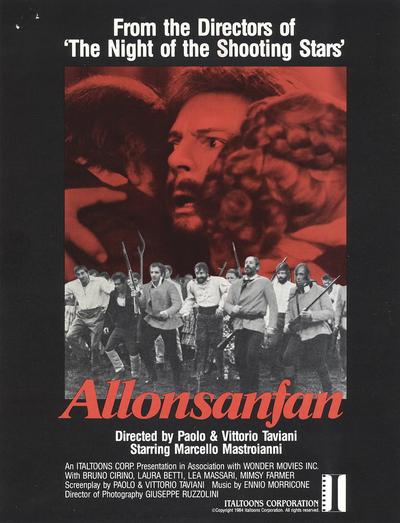
Allonsanfàn
Against the backdrop of the Bourbon Restoration, Lombard aristocrat Fulvio Imbriani, a former political extremist who once served under Napoleon, is finally released from an Austrian jail, after a lengthy sentence for his part in the secret Sublime Brotherhood. He strives to resume normal family life, but his Hungarian lover, Charlotte, together with his ex-comrades, succeeds in convincing him to take part in a revolutionary cause in the south. In fact, Fulvio considers the effort futile and fails to stop his sister Esther from reporting the conspirators. But the trap fails to catch the intended prey and, evading arrest, the comrades meet and bury Charlotte, who was killed in an exchange of fire with the gendarmerie.
Read More »

Quote:
This symbolic film underscores the struggles between a group of visionaries versus the Establishment while wondering about the survival of humankind. A group of young men manage to escape a volcano eruption on their small island. Seeking a new life, they stop at an island between their destroyed island and the mainland. This island is run by Renno, the community leader who offers the men help and a boat to continue their journey. The group conspires to panic the islanders with fear of another volcano eruption in order to take over the abandoned island. Renno has the men jailed for creating a disturbance, but after their terms are served, the men betray Renno by killing off the male population and escaping with the surviving women. The two apparently go off to pursue their utopian ideals where there is one woman for every two men.Read More »