Shinsuke Ogawa

  • Shinsuke Ogawa – Sanrizuka: Dainitoride no hitobito AKA Sanrizuka: Peasants of the Second Fortress (1971)

    Documentary1971-1980JapanShinsuke Ogawa

    Quote:
    Sanrizuka – Peasants of the Second Fortress is the fourth in a series of seven films shot between 1968 and 1977 by Ogawa Productions in the fields of Sanrizuka, documenting the ongoing resistance by the farmers and their allies against the construction of a new international airport. Four years into the conflict, the authorities started the coercive expropriation of the farmlands and the violence escalated. This was met by the farmers and fighting students with a renewed sense of resistance, and with the need to organize, unite and protect themselves and the land from the riot police. They erected barricades and set up fortresses, digging underground tunnels to prepare for a long confrontation.Read More »

  • Shinsuke Ogawa – Sanrizuka: Heta buraku AKA Sanrizuka: Heta Village AKA Narita: Heta Village (1973)

    1971-1980DocumentaryJapanShinsuke Ogawa

    This two-and-a-half-hour documentary by Japanese master Ogawa Shinsuke (1935-1992) is part of his seven-film series in which he documented the fight of students and local peasants against the construction of the monstrous Narita airport, against the expropriation of their farmland and their resettlement and the violent clashes between protesters and the police in the late 1960’s and early 1970’s.Read More »

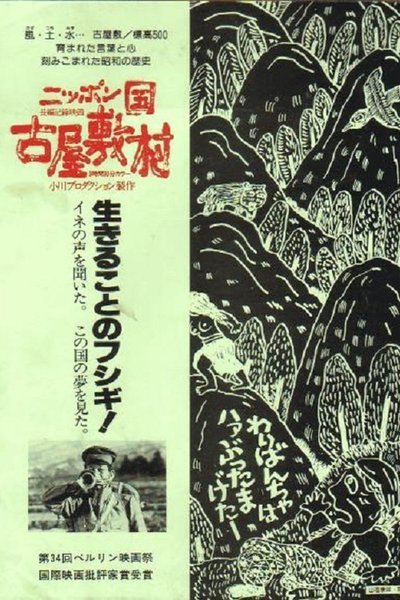
  • Shinsuke Ogawa – Nippon-koku Furuyashiki-mura AKA Furuyashiki: A Japanese Village (1984)

    1981-1990DocumentaryJapanShinsuke Ogawa

    Quote:
    This is Ogawa Productions’ first major film from their Yamagata period. They had already started photography on Magino Village: A Tale but they were drawn to this village deep in the high country above Magino when a particularly cold bout of weather threatened crops. Inevitably, their attention strayed from the impact of weather and geography on the harvest to the “life history” of Furuyashiki Village. On the one hand, Ogawa returns to his roots by playing with the conventions of the science film. At the same time, he discovers a local, peripheral space in which to think about the nation and the state of village Japan. From this “distant perspective” in the very heart of the Japanese mountains, Ogawa discovers a village still dealing with the trauma of global warfare and struggling for survival as their children flee for the cities.Read More »

  • Shinsuke Ogawa – Nippon-koku Furuyashiki-mura aka A Japanese Village (1982)

    Documentary1981-1990JapanShinsuke Ogawa

    Synopsis:
    This is Ogawa Productions’ first major film from their Yamagata period. They had already started photography on Magino Village-A Tale but they were drawn to this village deep in the high country above Magino when a particularly cold bout of weather threatened crops. Inevitably, their attention strayed from the impact of weather and geography on the harvest to the “life history” of Furuyashiki Village. On the one hand, Ogawa returns to his roots by playing with the conventions of the science film. At the same time, he discovers a local, peripheral space in which to think about the nation and the state of village Japan. From this “distant perspective” in the very heart of the Japanese mountains, Ogawa discovers a village still dealing with the trauma of global warfare and struggling for survival as their children flee for the cities.Read More »

  • Shinsuke Ogawa – 1000-nen kizami no hidokei AKA Magino Village: A Tale (1987)

    1981-1990DocumentaryJapanShinsuke Ogawa

    The movie compiles footage taken by Ogawa Production for a period of more than ten years after the collective moved to Magino village. Unique to this film are fictional reenactments of the history of the village in the sections titled “The Tale of Horikiri Goddess” and “The Origins of Itsutsudomoe Shrine”. Ogawa combines all the techniques that were developed in his previous films to simultaneously express multiple layers of time–the temporality of rice growing and of human life, personal life histories, the history of the village, the time of the Gods, and new time created through theatrical reenactment–bring them into a unified whole. The faces of the Magino villagers appear in numerous roles–sometimes as individuals, sometimes as people who carry the history of the village in their memories, sometimes as storytellers reciting myths, and even as members of the crowd in the fictional sequences–transcending time and space.Read More »

Back to top button