

Synopsis: After a race car driver becomes stranded in a village of the French Alps, his partner goes to find help, in this typically quirky comedy from New Wave maverick Moullet.Read More »
Synopsis: After a race car driver becomes stranded in a village of the French Alps, his partner goes to find help, in this typically quirky comedy from New Wave maverick Moullet.Read More »

Actually the comedy of unemployment, which is defined as possibly the worst, or maybe the best, thing that ever happened to this film’s group of protagonists: a middle-aged loan officer, his successful wife, a champion of professional joblessness (and mountain-climbing enthusiast), and the employment agency professional who falls passionately in love with him. This film’s honest work involves potatoes, ditch-diggers, a wheelbarrow, doomed love, jam in bed, and gunfire involving dueling employment agencies. Winner of the Prix Jean Vigo at the 1988 Cannes Film Festival.Read More »

Toto est un marcassin accueilli par Madeleine. La bête va grandir, dans les cœurs, mais sur ses pattes aussi. Vincent affectionne les singes, dont il part retrouver les facéties en Inde. Et le pauvre Joseph souffre de cauchemars causés par la machine artificielle à respirer qu’il est contraint d’utiliser. C’est Pierre qui se trouve à nouer toutes ces aventures. Pierre Creton, ouvrier agricole et cinéaste, qui vit à Vattetot, et qui retrouve ici la veine de L’Heure du Berger (Grand Prix FIDMarseille 2008). Autrement dit avec l’autobiographique teinté de fantastique, avec l’extraordinaire pêché dans l’ordinaire, avec l’affection et l’amour portés aux êtres, humains et animaux confondus, avec l’humour saupoudrant chaque amorce de drame. Read More »
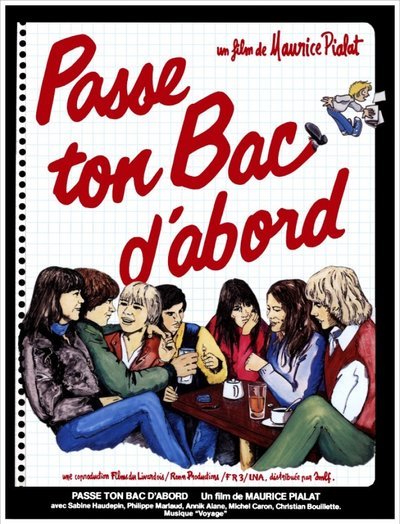
The world sometimes seems divided into two camps: those who recall their teenage years as having been an exhilarating dream, and those who remember them as having been an infernal, nightmarish hell. So it might do to describe Passe ton bac d’abord… [Graduate First… / Pass Your Bac First…] as Maurice Pialat’s “The Best Years of Our Lives”, while bearing in mind all that such a description might suggest: an unsparing portrait of the era when the words ‘sixteen candles’ still might have first conjured the image of flames.Read More »

Paris, 1955. Guy, film critic of the Cahiers du Cinéma, often goes to see the films of Vittorio Cottafavi in a local cinema. One day he notices that Jeanne, film critic of “Positive “, the rival magazine, seems to be following him. He is intrigued.Read More »