Russian

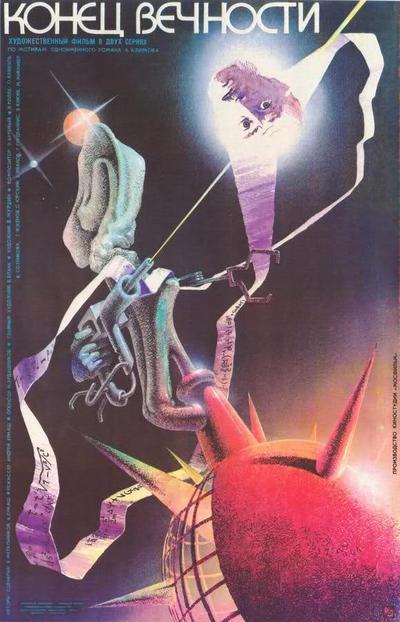
  • Andrei Yermash – Konets vechnosti AKA The End of Eternity (1987)

    1971-1980Andrei YermashSci-FiUSSR

    Quote:
    Based on a novel by Isaac Asimov, the film deals with the idea that some people could get immortality by means of controlling the time periods inside the special lab-city called “Vechnost”. They look like people but they are trained to work for Vechnost forever, as a part of its mechanism. They correct time holes, help people from other times to solve their problems by means of a special mind operating system. Everyone from Vechnost is immortal and they live in a very futuristic looking place in the center of time . As some periods of time get blocked from them, two engineers are sent to solve the problem but the operation starts to go wrong.Read More »
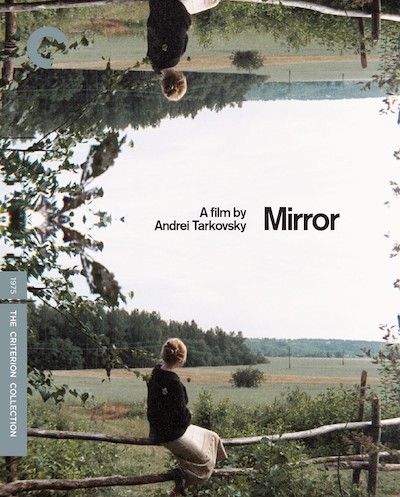
  • Andrei Tarkovsky – Zerkalo AKA The Mirror [+Extras] (1975)

    1971-1980Andrei TarkovskyArthouseDramaUSSR

    SYNOPSIS
    With Zerkalo (The Mirror), legendary Russian filmmaker Andrei Tarkovsky crafts perhaps his most profound and compelling film. What started off for Tarkovsky as a planned series of interviews with his own mother evolved into a lyrical and complex circular meditation on love, loyalty, memory, and history. Time shifts and generations merge as a single extraordinary actress (Margarita Terekhova) plays the narrator’s former wife as well as his mother. Tarkovsky’s memories as well as those of his mother are intermingled as a dark, sumptuous, and dreamlike pre-World War II Russia is evoked, accompanied throughout by the voice of Tarkovsky’s father reading his own elegiac poetry. The spectacle of nature and its ubiquitous and ever-shifting presence is captured by Tarkovsky’s camera as if by magic–the family cabin nestled deep in the verdant woods, a barn on fire in the middle of a gentle rainstorm, a gigantic wind enveloping a man as he walks through a wheat field–all creating indelible images with deep if mysterious emotional resonance. As the timeline shifts between the narrator’s generation and his mother’s, newsreel footage of Russian wars, triumphs, and disasters are juxtaposed with imagined scenes from the past, present, and future, crafting a silently lucid cinematic panopticon of memory, history, and nature. (Rotten Tomatoes)Read More »

  • Andrei Tarkovsky – Segodnya uvolneniya ne budet (Сегодня увольнения не будет) AKA There Will Be No Leave Today (1958)

    Drama1951-1960Andrei TarkovskyThrillerUSSR

    Quote:
    During earthworks, the utility crew discovers a German ammunition depot left over from the war. 30 tons of explosives lay in the ground for 15 years. According to the instructions, it is impossible to demine – it is dangerous to touch them. But it is also impossible to blow up – there are residential areas around. The case is entrusted to the group of Captain Galich. By 10 a.m. the next day, the entire population is evacuated to the outskirts of the city, and in the ominous pit, seven people begin a game with death.Read More »

  • Alla Barabadze, Nana Gongadze, Cora Tsereteli, Gia Bazadze & Juri Mechitov – I am Sergei Parajanov! (1990)

    1981-1990Alla BarabadzeArthouseCora TsereteliDocumentaryGeorgiaGia BazadzeJuri MechitovNana Gongadze

    Synopsis:
    I am Sergei Parajanov! shot a few months after Parajanov’s death. Features archive photographs, his collages, the clips from Sayat-Nova (1968), Ashik Kerib (1988), the making of The Legend of the Surami Fortress (1984) and a few views of the house he lived.Read More »

  • Sergei Yutkevich – Lenin v Polshe AKA Lenin in Poland (1966)

    Drama1961-1970Sergei YutkevichUSSR

    29f7c043f76a2bde437fd0d52a185152

    From wikipedia:
    Lenin in Poland (Russian: Ленин в Польше, translit. Lenin v Polshe) is a 1966 Soviet drama film directed by Sergei Yutkevich. Yutkevich won the award for Best Director at the 1966 Cannes Film Festival.

    From Moscow international FIlm Festival:
    Historical war movie about the events of the first world war in August 1914, when Lenin was in POLAND(at a place called Poronino, the Polish Carpathian mountains). It was there, on the former Austro-Hungarian territory, that the future leader was thrown in prison as a subject of the enemy state. The authors of the movie give the viewer a chance to follow the main character’s train of thought, to compare the foresight and the reality.Read More »

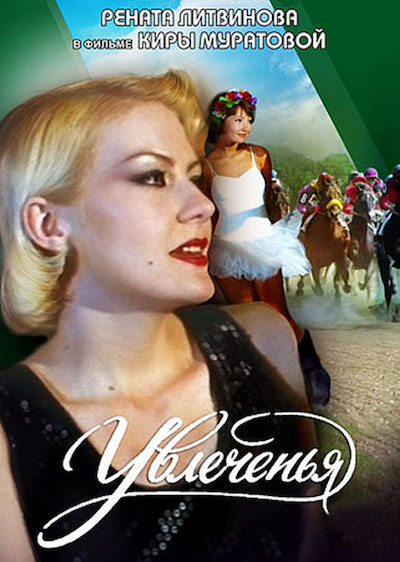
  • Kira Muratova – Uvlecheniya AKA Passions (1994)

    Arthouse1991-2000Kira MuratovaRussia

    Passions is a 1994 romantic comedy by Russian-Ukrainian director Kira Muratova based on the novellas of Boris Dedyukhin.
    Blonde Lilia and brunette Violetta are fascinated by horse racing, and the young racers are more than a little attracted to them, too. However, the worlds of sporting and romance don’t always coexist peacefully as the two girls learn the hard way through a series of touching, surreal, and sometimes heartbreaking encounters. One of the most beautifully photographed Russian films in recent years, this acclaimed modern classic was hailed at numerous film festivals including the Berlin Film Festival and Russia’s Kinotavr Festival, where it won the Jury and Critics Prizes.Read More »

  • Kira Muratova – Lyst do Ameryky AKA Letter To America (1999)

    Arthouse1991-2000Kira MuratovaShort FilmUkraine

    Description: The short is made in a typical Muratova style that merges surrealism and reality into a mesmerizing act full of understatement and metaphor.

    Some trivia: this is nominally Muratova’s first short. However, she herself considers it her fourth – she prefers to think of her Three Stories as three short films instead of a single feature.

    The film was made with no budget whatsoever – all Muratova was given were the camera and the film stock. None of the actors were paid. The rumor has it that the film was shot in Muratova’s own apartment.Read More »

  • Ideya Garanina – Koshka, kotoraya gulyala sama po sebe AKA The Cat Who Walked by Herself (1988)

    1981-1990AnimationIdeya GaraninaUSSR


    29f7c043f76a2bde437fd0d52a185152

    Quote:
    Virtually unknown nowadays, even in its home country of Russia, The Cat Who Walked by Herself is an endearing children’s film directed by Ideya Garanina and produced at the Soyuzmultfilm studio. It is based upon Rudyard Kipling’s short story “The Cat that Walked by Himself,” which was first published in 1902. As far as I’ve been able to tell, the film uses a variety of animation techniques, including puppetry, stop motion and traditional animation, blending it all into an interesting tale of the origin of the civilised human and his millenia-long partnership with several species of domesticated animal. The story is narrated by a seemingly omniscient cat, who reminds a young child of an agreement struck long ago by the Cat and the Woman. The voice of the feline (whom, having absolutely no knowledge of Russian, I have been unable to identify) is a brilliant narrator, her voice at once carrying a sense of quiet arrogance, pride, dignity and everlasting knowledge.Read More »

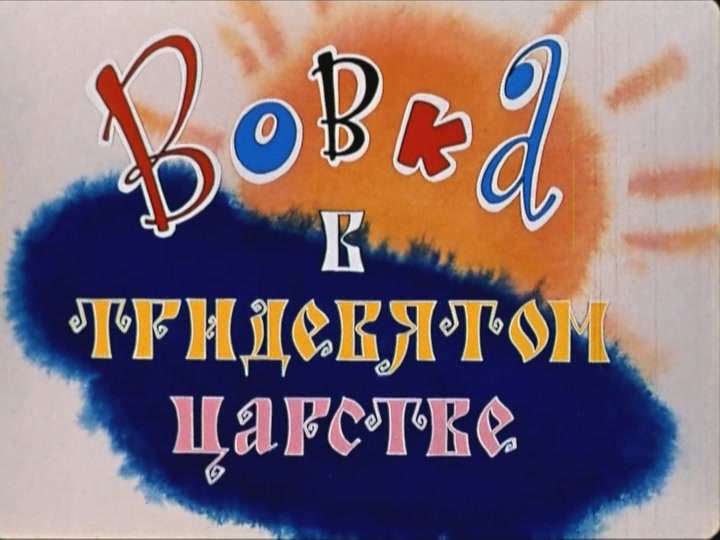
  • Boris Stepantsev – Vovka v Tridevyatom tsarstve AKA Vovka in Far Far Away Kingdom (1965)

    1961-1970AnimationBoris StepantsevUSSR

    http://img259.imageshack.us/img259/6840/vovkavtridevyatomtsarst.jpg

    29f7c043f76a2bde437fd0d52a185152

    19 min. 48 sec.
    SOYUZMULTFILM, 1965

    directed by Boris Stepantsev
    written by Vadim Korostylev
    art directors Anatoly Savchenko, Petr Repkin
    artists O. Ghemmerling, Lev Arkadyev
    animators Anatoly Abarenov, Galina Barinova, Antonina Alyoshina, V. Dolgikh, Youry Butyrin, Leonid Kayukov, Tatiana Taranovich, Victor Arsentiev, Olga Orlova, Anatoly Petrov, S. Zhutovskaya
    cameraman Michael Druyan
    music I. Yakushenko
    sound Boris Filchikov
    script editor Raisa Frichinskaya
    voice artists Emma Treivas, Michael Yanshin (Tsar) , Clara Rumyanova (Vassilissa) , Elena Ponsova (The Old lady and the Librarian) , Rina Zelenaya (Vovka)Read More »

Back to top button