Russian

  • Yulian Kalisher – History of Soviet Puppet animation 24 – The Art of Yulian Kalisher (1983 – 1993) (DVD)

    Arthouse1981-1990AnimationUSSRYulian Kalisher

    Yulian Kalisher ( 1935-2007) was a relative late-bloomer in the field of puppet animation. Coming from the field of puppet theatre, where he had worked in Tasjkent, Uzbekistan and in Moscow. He was hired by the Soviet TV organisation Ecran to direct puppet-plays for TV in 1971. In 1974 he was teamed up with Youri Trofimov and co-directed 3 episodes of The Wizard of Emerald City ( see DVD 17) In 1977 he realized his first solo-direction: a feature film puppet animation after a puppet play. From then on his work always stood out for its originality and inventiveness. “A New Year’s Adventure” on DVD 20 is a good example of his work between 1977 and 1982.
    Russian animation uses the words Puppets and flat Puppets (in English called Cut-out) for stop-motion techniques, and cell animation for drawn animation. Read More »
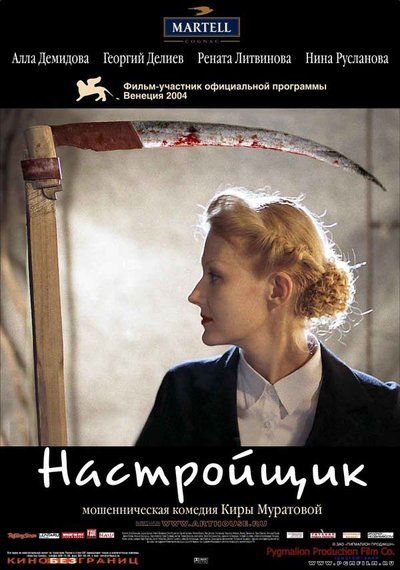
  • Kira Muratova – Nastroyshchik AKA The Tuner (2004)

    2001-2010ArthouseKira MuratovaRussia

    Quote:
    At the heart of Kira Muratova’s newest film, The Tuner (Nastroishchik, 2004), is her characteristic and enduring love of predation—predation for its own sake. Of course, any talk of “the heart of Muratova’s work” is a judgment of anatomy rather than sentiment, as any admirer would attest. With The Tuner, she has produced an extraordinary new film that offers a complex assessment of the human subject, civilization, and the creative act.Read More »

  • Andrei Tarkovsky – Andrey Rublyov (1966) DVD

    Arthouse1961-1970Amos Vogel: Film as a Subversive ArtAndrei TarkovskyEpicUSSR

    Free Image Hosting at www.ImageShack.us

    Presented as a tableaux of seven sections in black and white, with a final montage of Rublev’s painted icons in color, the film takes an unflinching gaze at medieval Russia during the first quarter of the 15th century, a period of Mongol-Tartar invasion and growing Christian influence.

    Commissioned to paint the interior of the Vladimir cathedral, Andrei Rublev (Anatoli Solonitsyn) leaves the Andronnikov monastery with an entourage of monks and assistants, witnessing in his travels the degradations befalling his fellow Russians, including pillage, oppression from tyrants and Mongols, torture, rape, and plague. Faced with the brutalities of the world outside the religious enclave, Rublev’s faith is shaken, prompting him to question the uses or even possibility of art in a degraded world. After Mongols sack the city of Vladimir, burning the very cathedral that he has been commissioned to paint, Rublev takes a vow of silence and withdraws completely, removing himself to the hermetic confines of the monastery.Read More »

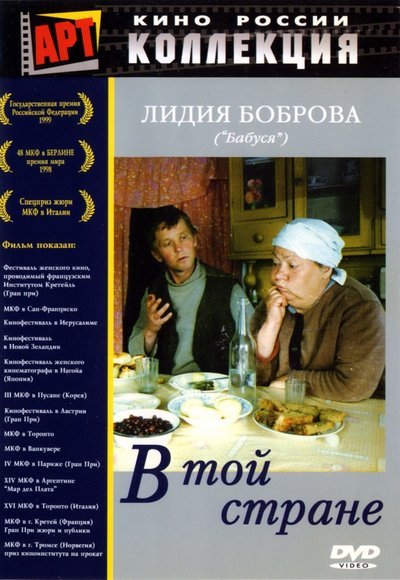
  • Lidiya Bobrova – V toy strane… AKA In That Land… (1998)

    1991-2000DramaLidiya BobrovaRussia

    PLOT:
    In That Land is a rare journey into a world which in many respects has not changed in a hundred years. Its territory is a small village in the north of Russia, a region which for better or worse has been largely overlooked by the probing eyes of the modern world. The film centres around three main characters who come to signify the essence of the Russian soul. Chapurin is the village’s team-leader who takes care of the people, yet will betray them for the right price. A shepherd, Skuridin, feels the weight of a difficult family life and harsh political realities on his shoulders. Lastly there is Zaika, a talented soul wasting his life on alcohol. Facing an unforgiving landscape, they embrace life and death in ways unique to their circumstances, universal in spirit.Read More »

  • Andrey A. Tarkovskiy – Andrey Tarkovsky. A Cinema Prayer (2019)

    2011-2020Andrey A. TarkovskiyDocumentaryRussia

    The documentary recounts Tarkovsky’s life and work, letting the director tell the story himself, as he shares with us his memories, his view of art and his reflections on the destiny of the artist and the meaning of human existence.Read More »

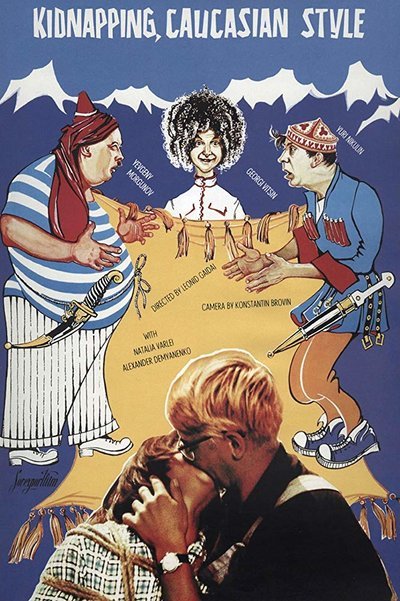
  • Leonid Gaidai – Kavkazskaya plennitsa AKA Kidnapping, Caucasian Style (1966)

    1961-1970ComedyCrimeLeonid GaidaiUSSR

    Leonid Gaidai’s irreverent comedy updates a Leo Tolstoy story for modern Soviet times, in the Caucasus region. Shurik, a naive Russian student mired in his own clumsy Soviet culture, sets off to the Caucasus to write down the folk culture of this region: its traditions, legends, sayings, and toasts.Read More »

  • Nadezhda Kosheverova – Staraya, staraya skazka AKA A Very Old Story (1968)

    1961-1970FantasyNadezhda KosheverovaUSSR

    A young puppeteer tells a story about a soldier who falls in love with a rude princess. Based on fairy tales by Hans Christian Andersen.Read More »

  • Larisa Shepitko – Ty i ya AKA You and Me (1971)

    1971-1980ArthouseDramaLarisa ShepitkoUSSR

    Synopsis:
    Peter, a former medical scientist, suddenly quits his cushy job as a doctor at the Russian Embassy in Sweden and returns to Moscow. 3 years ago his team stood on the threshold of a vital break-through in neurosurgery, but the experimental work was cut short when Peter left for Stockholm. Peter tries to pick up the threads of his old life, fails and runs still further away, to a small town in Northern Russia where he takes a job as a district doctor. But the past would not relinquish its hold on him even there.Read More »

  • Rustem Abdrashev – Podarok Stalinu AKA The Gift to Stalin (2008)

    2001-2010DramaKazakhstanRustem Abdrashev

    A Jewish child deported to Kazakhstan is saved and adopted by Kasym, an old Kazakh railway-man. Kasym gives him a Kazakh name, Sabyr, that in Kazakh language means humble. The child grows up in the small Kazakh village along with other deportees Vera, a traitor’s wife, and Ezhik a Polish doctor. The Soviet militia harasses the poor peasants and Vera suffered the harassment of a bully cop: Bulgabi. Finally Vera accepts the marriage proposal of Ezhik but the jealous Bulgabi tries to prevent the marriage. The result is a fight in which Ezhik shoots himself accidentally. The old Kasym decides that Sabyr is now old enough to go to seek his real parents. At the end Sabyr, now an adult, decides to return to the village, but the village no longer exists because it was destroyed by a Soviet nuclear test.Read More »

Back to top button