Raizô Ichikawa

  • Tokuzô Tanaka – Teuchi (1963)

    Tokuzô Tanaka1961-1970DramaJapan
    Teuchi (1963)
    Teuchi (1963)

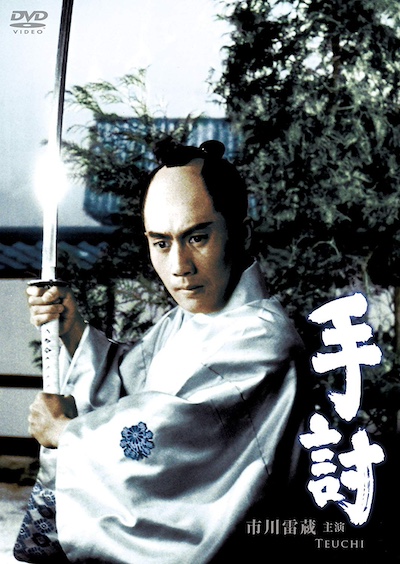
    The shogun’s vassal Harima Aoyama and a chamber maid are in love with each other, but they cannot be together due to a difference of their status. Soon, an offer of marriage is brought to Harima. Trying to test his love, Okiku breaks one of the plates of the family treasure of the Aoyama family, but Harima doesn’t notice. However, someone surrounding her witnesses the moment Okiku breaks the plate on purpose.Read More »

  • Yasuzô Masumura – Koshoku ichidai otoko AKA A Lustful Man (1961) (HD)

    Yasuzô Masumura1961-1970AsianComedyJapan
    Koshoku ichidai otoko (1961) (HD)
    Koshoku ichidai otoko (1961) (HD)

    Fascinated with women from an early age, Yonosuke (Ichikawa Raizo) had his first sexual encounter at the age of seven. From that day on, he recklessly and forwardly pursues women, feeding his fascination and experience. As Yonosuke’s salacious behavior brings much cause for shame to the family, his father eventually breaks relations with him. Expelled from the family, 19-year-old Yonosuke embarks on a pilgrimage of lust, traveling far and wide to acquaint himself with women of all walks.Read More »

  • Kon Ichikawa – Hakai AKA The Outcast AKA The Broken Commandment (1962)

    Drama1961-1970JapanKon Ichikawa
    Hakai (1962)
    Hakai (1962)

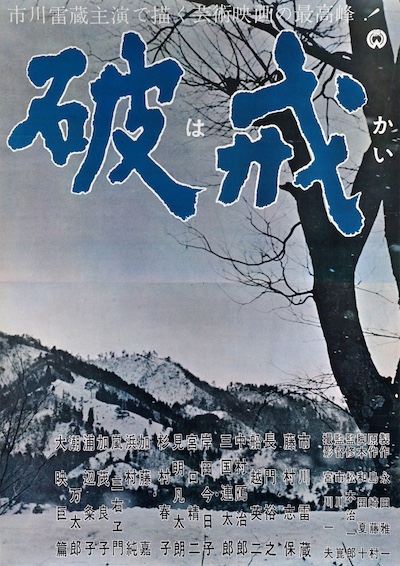
    PLOT: A young man struggles to come to terms with his true identity in a remote caste-based village in early 20th century Japan.Read More »

  • Yasuzô Masumura – Rikugun Nakano gakko AKA Nakano Spy School (1966)

    1961-1970AsianJapanThrillerYasuzô Masumura

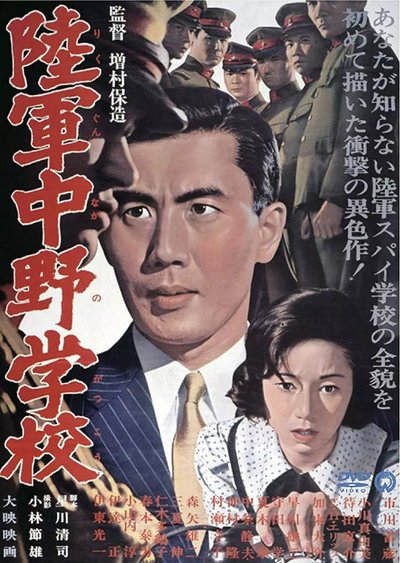
    How a young second lieutenant becomes your basic Bond is the subject of this spy-vs.-spy noir set in 1938 at the start of the Sino-Japanese War. Jiro (Raizo Ichikawa) leaves his fiancée for a mysterious military assignment — he and a few good men are to be trained as special agents at the newly established Nakano Spy School, based on the British model. (The girlfriend, meanwhile, becomes involved in the machinations of the British themselves.) A True Fiction-style narrative offers both lessons in spying (bring your notepad, and a sense of humor) and the lessons of spying: for all its worldly ideals, and even without uniforms, the Spy School is a microcosm of a closed society.Read More »

  • Kazuo Ikehiro – Nakayama shichiri AKA In A Ring Of Mountains (1962)

    Drama1961-1970AsianJapanKazuo Ikehiro

    Quote:
    This movie is probably as close to a chick flick as Raizo ever made! But there’s still good action and a very inventive sword fight at the end. Raizo fans cannot resist him any way. Info is sparse on this film, just recently translated into English, and once again, I rely on Paghat the Ratgirl for a review of this film:

    Kiba-no-Masakichi, Masa for short, is a lumber worker who falls in love with Oshima (Tamao Nakamura) almost at first sight, in The One & Only Girl I Ever Loved (Nakayama shichiri, 1962).Read More »

  • Kazuo Ikehiro – Hitori okami AKA Lone Wolf Isazo (1968)

    1961-1970AsianDramaJapanKazuo Ikehiro

    Synopsis:
    Isazo (Ichikawa Raizo), often called ‘The Ripper’, is a living legend in the world of the Yakuza. Known for his swordsmanship and bravery, but also for his polite manners, and a gifted talent in gambling. One late fall, while staying at an inn near Fukushima, Isazo befriends a young boy whose mother turns out to be his old love Yoshino, with whom he was unable to marry due to the class differences between them.Read More »

  • Tokuzô Tanaka – Daisatsujin orochi aka The Betrayal (1966)

    1961-1970AsianCultJapanTokuzô Tanaka

    Synopsis:
    A naively honorable samurai (played by Raizo) comes to the bitter realization that his devotion to moral samurai principles makes him an oddity among his peers, and a very vulnerable oddity in consequence. He takes the blame for the misdeeds of others, with the understanding that he will be exiled for one year and restored to the clan’s good graces after the political situation dies down. As betrayal begins to heap upon betrayal, he realizes he’ll have to live out his life as a master-less ronin, if not hunted down and killed.
    — Letterboxd.Read More »

  • Kon Ichikawa – Bonchi (1960)

    1951-1960AsianDramaJapanKon Ichikawa

    29f7c043f76a2bde437fd0d52a185152

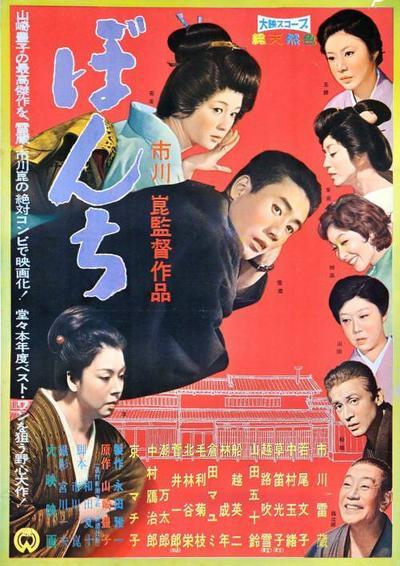
    Where Ichikawa skewered patriarchal family values in Her Brother, in this savage satire he hoists the matriarchal system on its own apron strings. Raizo Ichikawa (“in his best role yet”-Variety) is the scion of an Osaka merchant family whose traditional power is matrilineal. Instructed by his overbearing mother and grandmother to give them an heiress for the family business, he stands by helplessly as wife after wife is thrown out of the house for producing sons. Driven to a life of dissipation-his mistresses also fail to produce daughters-in the end he is just too tired to care. Ichikawa’s frighteningly funny picture of the matriarchy’s efforts to perpetuate itself was received as antifeminist, if not downright misogynistic, but Joan Mellon suggests that the target once again is “the institution of the family [which] places its own survival ahead of the needs and feelings of individuals.” If this looks forward to The Makioka Sisters, so does Donald Richie’s comment, “We find this cruel matriarchal story…told in terms of the most transcendental beauty.”Read More »

  • Kon Ichikawa – Enjo aka The Temple of the Golden Pavilion (1958)

    1951-1960AsianJapanKon IchikawaPhilosophy
    Enjô (1958)
    Enjô (1958)

    Quote:
    Yukio Mishima’s acclaimed 1956 novel Kinkakuji (The Temple of the Golden Pavilion) was inspired by an actual incident in 1950 when a disturbed monk burned down one of Kyoto’s most beautiful temple buildings. The temple requested that the name be changed to Shukakuji for this adaptation, which opens out the book’s internal monologue, structuring the anguished protagonist’s progress towards final conflagration through flashbacks as the police piece together their investigation. Raizo Ichikawa’s central performance attracts sympathy for this stuttering temple acolyte from a broken family, who sees in the Golden Pavilion a purity of beauty in direct contrast to his own imperfect existence. It’s a purity in danger of being defiled, however, as post-war occupation and reconstruction open the site to tourism, so he resolves to destroy pavilion in order to preserve it. Ichikawa’s fragmented direction draws together this awful logic, leaving the audience dangling exquisitely between understanding and outright horror as flames obliterate a priceless cultural monument. The director’s favourite among his own films.Read More »

Back to top button