Polish

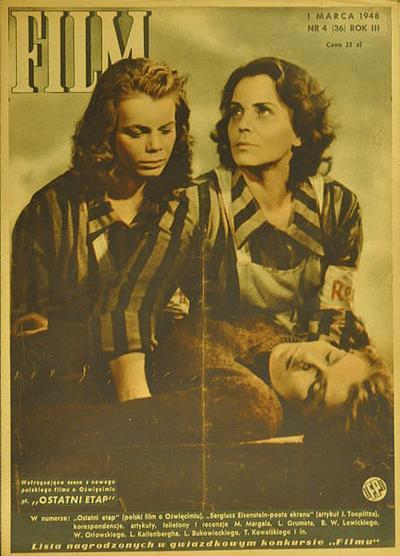
  • Wanda Jakubowska – Ostatni etap AKA The Last Stage (1948)

    1941-1950DramaPolandThe Female GazeWanda JakubowskaWar

    Martha Weiss, a Jew, is sent to Auschwitz concentration camp with her family. On the first day of their arrival Martha is, by a coincidence, chosen as an interpreter, but her entire family is killed. Waiting for the Red Army to deliver them from the prison camp, the film depicts Martha and her friends’ struggling life under the tyranny of camp guards and equally bad ‘capos’, administrative personnel chosen from among the prisoners.Read More »

  • Andrzej Wajda – Popiól i Diament AKA Ashes and Diamonds (1958)

    1951-1960Andrzej WajdaDramaPolandWar

    As WWII and the German occupation ends, the Polish resistance and the Russian forces turn on each other in an attempt to take over leadership in Communist Poland.Read More »

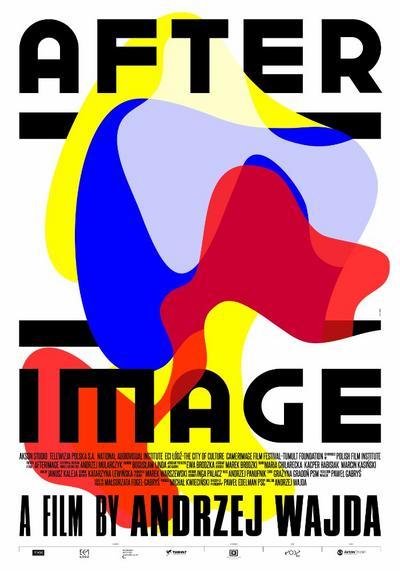
  • Andrzej Wajda – Powidoki AKA Afterimage (2016)

    2011-2020Andrzej WajdaDramaPoland

    29f7c043f76a2bde437fd0d52a185152

    Quote:
    While he’s exercising filmmaking muscles that are mighty spry for a 90-year-old, no one will mistake Andrzej Wajda’s latest feature for an expression of joie de vivre: “Afterimage” is a somber portrait of a Polish artist who, unlike his portraitist here, was defeated by the fickle shifts of political ideology imposed on art. This respectable if somewhat monotonous drama won’t be an easy sell to offshore audiences for whom its subject, avant-garde artist Wladyslaw Strzeminski is hardly a household name. Moreover the film references his defining triumphs just in passing, focusing instead on bleak later years when he was persecuted for failing to tow the Party aesthetic line. The result is another significant chapter in Polish history from Wajda, albeit one unlikely to travel as widely as some of his past subjects.Read More »

  • Krzysztof Kieslowski – Przypadek AKA Blind Chance [+Extras] (1987)

    Drama1981-1990Krzysztof KieslowskiPoland

    29f7c043f76a2bde437fd0d52a185152

    Quote:
    Krzysztof Kieslowski’s Blind Chance is a powerful political fable that provides an early glimpse at the unique style that would later lead to acclaimed international successes like the Three Colors Trilogy and The Double Life of Veronique. As with the later films, Kieslowski displays a deeply erotic, sensual sensibility and a warm humanism that inflects every facet of this complex film. He also shows signs of the spiritual outlook and interest in fate and overlapping chronologies that is especially prevalent in the films he’s best known for. Blind Chance begins with a brief, elliptical precis of the early life of Witek (Boguslaw Linda), starting with a few childhood scenes, his first love, his days in medical school, and finally the death of his father. Many of these earlier memories will later be shown to be false or at least incomplete, hazily remembered scenes from the distant past that have taken on iconic status in Witek’s mind even if the particulars aren’t quite accurate.Read More »

  • Andrzej Zulawski – Szamanka AKA Chamanka [+Extras] (1996)

    Drama1991-2000Andrzej ZulawskiArthousePoland

    Free Image Hosting at www.ImageShack.us

    29f7c043f76a2bde437fd0d52a185152

    ANDRZEJ ZULAWSKI’S adaptation of Manuela Gretkowska’s provocative and hugely successful novel reaches new extremes in the depiction of brutality, sex, and passion as it tells the story of a young(ish) anthropologist driven by the mystery surrounding the death of a recently discovered shaman; and his growing obsession with an enigmatic yet violently perverse beauty known as “The Italian”.SZAMANKA (She-Shaman) is a film ‘without brakes’. Above all else, it is a ‘demonic’ film where characters are battlegrounds in the war between demons and angels, where angels are agents of God and demons are those of the Devil. This pulpy, sexually charged tale with its deranged erotic futurism underlines Zulawski’s commitment to stretch the limits of aesthetic expression by exploring themes beyond the pale in conventional cinema. Violence, exuberance and sexuality are its key ingredients. Through hysteria, possession and hallucination we see what the Polish writer Stanislaw Przybyszewski called ‘naked soul’. Read More »

  • Jerzy Stefan Stawinski – Pingwin (1965)

    1961-1970DramaJerzy Stefan StawinskiPolandRomance

    29f7c043f76a2bde437fd0d52a185152

    A story about love and the life of the youth of the sixties. A film saturated with insightful psychological observations and the warm, affectionate relationship of the central character.Read More »

  • Agnieszka Smoczynska – Córki dancingu AKA The Lure (2015)

    2011-2020Agnieszka SmoczynskaFantasyMusicalPoland

    Quote:
    An erotic, body-violent new wave rock opera about wayward sirens. The Lure mashes up folklore, vampiric mermaids, ‘80s hair and body horror to create a bewitching and surprisingly touching musical drama.

    Sirens Silver and Golden (Marta Mazurek and Michalina Olszanska respectively) loiter on the shores of Warsaw in 1980s Poland, hoping to catch unwitting humans to take as food. But on this occasion, Silver refrains from dinner, instantly falling for a young guitarist (Jakub Gierszal) singing on the beach.Read More »

  • Magdalena Szymków – Mój dom AKA My House Without Me (2012)

    2011-2020DocumentaryMagdalena SzymkówPoland

    29f7c043f76a2bde437fd0d52a185152

    Quote:
    Two women, one house. An intimate story about a Pole and a German placed by war on enemy sides and their parallel lives accidentally brought together.

    The film reflects on the concepts of invaders, victim, guilt and forgiveness. It confronts different experiences and their paradoxical similarities. It deals with the controversial subject of the post-war accountings.

    The visual narration is flowing, guided by memories and archives. Traditional documentation confronts experimental use of archival footage in the cinematic impression about displacement.Read More »

  • Andrzej Wajda – Walesa. Czlowiek z nadziei AKA Walesa: Man of Hope (2013)

    2011-2020Andrzej WajdaDramaPolandPolitics

    29f7c043f76a2bde437fd0d52a185152

    The depiction of the life of Nobel Peace Prize winner and founder of Poland’s Solidarity movement, Lech Walesa, as events in the 1970s lead to a peaceful revolution.

    Quote:
    Wałęsa, an electrician at the Gdańsk Shipyards, participated in local demonstrations during the 1970s. Following the bloody aftermath, which remains with Wałęsa, he concentrates on his day-to-day duties. Ten years later, a new uprising occurs and he becomes an unexpected and charismatic leader of Polish dockworkers.Read More »

Back to top button