

The adopted son of a preacher comes upon a village that is under the thumb of a deranged ex-Confederate officer, who is – among other things – stealing land from the locals with phony land grants.Read More »
The adopted son of a preacher comes upon a village that is under the thumb of a deranged ex-Confederate officer, who is – among other things – stealing land from the locals with phony land grants.Read More »

1963: The Mondo Libero newsreel by Gastone Ferranti and other material found in Czechoslovakia, the Soviet Union and England became, for Pier Paolo Pasolini, the basis for a lyrical and polemical analysis of the social phenomena and conflicts affecting the modern world, from the Cold War to the Economic Boom, with commentary consisting of a “poetical voice” (Giorgio Bassani) and a “prosaic voice” (Renato Guttuso).
While Pasolini was working on editing “La Rabbia”, the producer, with either political and/or commercial motives, decided to turn the movie into a four-handed work, and entrusted Giovannino Guareschi with a part of it, following the well known journalist-like scheme “seen by right, seen by left.”
Pasolini reacted with irritation to this forced co-habitation, but in the end he acquiesced, giving up the first part of his movie to make room for Guareschi’s segment.Read More »

Quote:
A wealthy Italian household is turned upside down when a handsome stranger arrives, seduces every family member and then disappears. Each has an epiphany of sorts, but none can figure out who the seductive visitor was or why he came.Read More »

Quote:
The Ashes of Pasolini is nothing more than a… selfportrait of Pier Paolo Pasolini. It is a documentary film, a collection of material that has been chosen and organized with philological acumen and historicalcritical rigor. It is strongly marked by a subjective, poetic flow and structure. It is a documentary film of poetry where the documents are not suppressed under the authoritarian voice over of the ‘Expert’ who guides and reduces everything into a reassuring hierarchical pyramid of explanations. The Ashes of Pasolini is thus Pasolini’s autobiographical narration of his own human and artistic adventure, the contradictory and irreducible complex lived out by the greatest Italian postwar poet under the impulse of the extreme Mayakovskian shout: ‘Professor, if you would take off your bicycleeyeglasses, I myself will tell you about the weather, and about myself’.Read More »

Quote:
The concluding part of Pier Paolo Pasolini’s “Trilogy Of Life”, following The Decameron and The Canterbury Tales, Arabian Nights corrects many of the mistakes found in the latter, noticeably its ramshackle, uneven approach, and returns to the charming territory of the former. Indeed, the film is as good as The Decameron, if not better, and is generally considered to be the trilogies crowning moment and one of Pasolini’s finest films (critic Tony Rayns recently included it amongst his choices for Sight and Sound’s 2002 Top Ten Critics’ Poll).Read More »
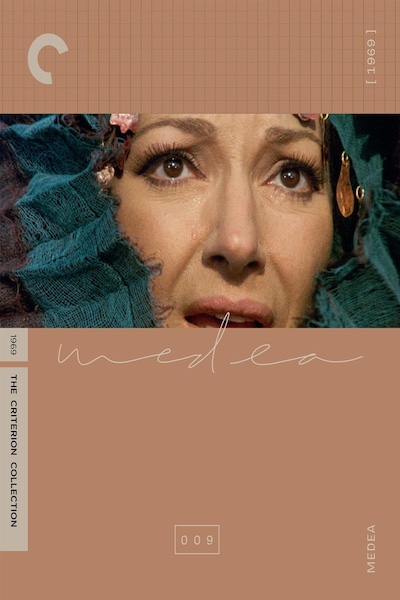
it’s a movie about a woman who beheads her brother, stabs her children, and sends her lover’s wife up in flames. For Maria Callas, it’s a natural.
Based on the plot of Euripides’ Medea. Medea centers on the barbarian protagonist as she finds her position in the Greek world threatened, and the revenge she takes against her husband Jason who has betrayed her for another woman.Read More »
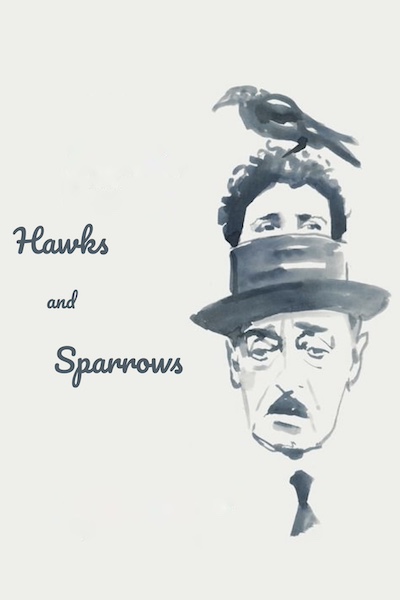
A man and his son take an allegorical stroll through life with a talking bird that spouts social and political philosophy.Read More »

Anna Masecchia wrote:
With her 16mm camera in hand, the optical prosthesis of a 20th-century flâneuse, Agnès Varda filmed 42nd Street in 1967, shooting a crowdof passersby to the beat of The Doors. Pier Paolo Pasolini is with her, getting lost in the lights, bodies, faces and chaos of a crowded and multicultural New York. Opening in soft focus and closing on Pasolini’s blurred face, the images shot in a direct style and without audio are merged with a dense dialogue between the two artists and intellectuals, which was recorded later. Prompted by Varda, Pasolini reflects on the relationship between reality and fiction, the Christian figurative tradition and the function of audiovisual language in contemporary society. All of which is enhanced by the audio-visual décalage that simultaneously reveals the camera as a device while emphasising the real and political information of the images, which emerges from the background and comes into the foreground. In a matter of minutes,Varda’s art captures Pasolini talking about himself and the essence of cinema as a whole, which for both is an expression of reality itself.Read More »

New, restored high-definition digital transfer, with uncompressed monaural soundtrack on the Blu-ray edition
The notorious final film from Pier Paolo Pasolini, Salò, or The 120 Days of Sodom has been called nauseating, shocking, depraved, pornographic . . . It’s also a masterpiece. The controversial poet, novelist, and filmmaker’s transposition of the Marquis de Sade’s eighteenth-century opus of torture and degradation to Fascist Italy in 1944 remains one of the most passionately debated films of all time, a thought-provoking inquiry into the political, social, and sexual dynamics that define the world we live in.Read More »