

The story of an addicted woman Mahsa who thinks that her girl is dead but when finds out that she is alive and lives by her father (Mahsa’s ex-husband) decides to take her back. This put her to face her ex-husband and his new wife.Read More »
Persian
-
Behrouz Shoaybi – Darkoob AKA Axing (2018)
2011-2020Behrouz ShoaybiDramaIranThriller -
Mohammad Rasoulof – Keshtzar haye sepid AKA White Meadows (2009)
2001-2010ArthouseDramaIranMohammad Rasoulof
Quote:
In this dreamlike yet earthbound film, Rahmat the boatman navigates the increasingly brackish waters of a coastal land, collecting the heartaches and tears of its inhabitants. But he remains powerless against their misguided attempts to appease the gods and make the land green again, whether by offering a bride to the sea or forcibly “treating” the eyes of a painter who sees in different colors. Drawing first-hand on the challenges faced by Iranian artists today, writer-director Mohammad Rasoulof’s deeply atmospheric and poetical film is a gorgeous allegory of intolerance, brutality, and mystified routine that resonates far beyond any one state’s borders.Read More » -
Mohammad Rasoulof – Lerd AKA A Man of Integrity (2017)
2011-2020DramaIranThriller
A former university professor now living as a goldfish farmer in a Northern Iranian village, Reza quietly tends to his own affairs alongside his wife Hadis, a principal at a local girls’ school, and their young son. After his river-sourced water supply is cut off, Reza’s goldfish begin dying. His attempt to reopen his sluice is met with a violent attack by thuggish local Abbas, a strongman for a shadowy organization known as simply “the company.” Reza refuses to compensate Abbas for a fake injury, or bribe his way out of mounting legal problems, but he quickly discovers the steep price to be paid for holding on to principles in a system where money trumps morality.
-
Ali Asgari – Disappearance (2017)
2011-2020Ali AsgariDramaIran
Synopsis:
On a cold winter’s night in modern Tehran, a couple of young lovers run into a serious problem, and they have just a few hours to come up with a solution. They go from hospital to hospital in search for help, but none of the hospitals will admit the young woman and provide her with the medical attention she desperately requires. While they try hard to find a way to solve the problem, they have to hide what is happening from their parents. Moreover, their relationship is facing a crisis and will suffer dire consequences. Caught between conservative traditions and modern day desires, the couple must face their uncertain future.Read More » -
Panahbarkhoda Rezaee – Cheraghi dar meh AKA A Light in the Fog (2008)
Drama2001-2010IranPanahbarkhoda Rezaee
Quote:
A widow and her father live alone and make a living by mending oil lamps and making charcoal.Read More » -
Mohsen Makhmalbaf – Sokout AKA The Silence (1998)
Drama1991-2000IranMohsen MakhmalbafMusical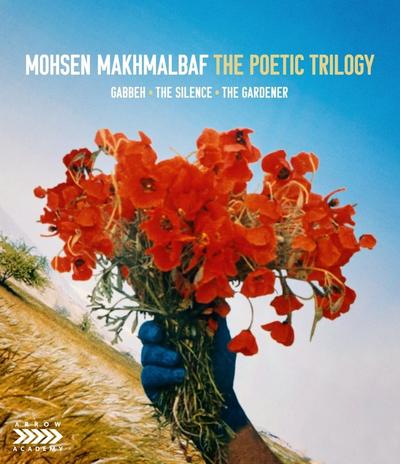
Quote:
The Silence (Sokhout), a startlingly fresh and elegant work, is about a ten-year-old boy, Khorshid, who is blind. Khorshid’s father, in Russia, has abandoned him and his mother, who in order to sustain their existence fishes in the river on which the rural dwelling that includes their threadbare apartment is situated. This woman has no other choice but to rely on Khorshid’s meager income for rent. It is not enough, however, and in a few days’ time they will be evicted by the landlord, a greedy, powerful presence whom we never see except for, once, as a hand knocking at the door. A strange, elliptical film of haunting, limpid visual beauty, The Silence ends with two events: the eviction, as the mother, who is calling for her son, and her one great possession, a wall mirror, symbolic for art and inspiration, that is, humanity’s spirit, are rowed across the river, the mirror’s reflection in the water symbolically linking human spirituality and Nature; and the boy, as usual off on his own, passing forever into a life of the imagination in which he is able to orchestrate sounds in his environment—to which his blindness has made him acutely sensitive and receptive—into a finished piece, one in fact familiar to us as the opening movement of Beethoven’s Fifth Symphony. Only a fool could miss the social and political implications of such a film, and the government, not at all fooled in this regard, responded brusquely. The Silence was banned in Iran.Read More » -
Ebrahim Golestan – Ganjine-haye gohar AKA The crown jewels of Iran (1965)
1961-1970DocumentaryEbrahim GolestanIran
Quote:
Made for the Central Bank of Iran to celebrate the collection of precious jewels kept in the treasury, this film remains filmmaker Ebrahim Golestan’s most visually dazzling work, embellished with terrific camera movements.Some of the most iconic landscape photography in the history of Iranian cinema can be found within a minute after the opening credits, in which peasants of various ethnicities and tribes are quickly reviewed, all posed in a graceful manner, like kings without being kings. Like a work of musical composition, a simple act of ploughing is spread across shots of various size and angle, creating an intimate visual symphony. And then appears one of Golestan’s allegorical match-cuts: a farmer seen on the horizon before a cut to a diamond on a dark background – the farmer is the jewel.Read More »
-
Mania Akbari – 10 + 4 (Dah be alaveh chahar) (2007)
2001-2010ArthouseDocumentaryIranMania Akbari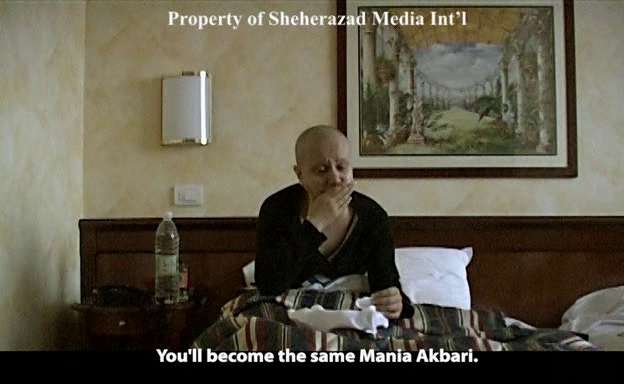
After casting painter and video artist Mania Akbari as the central figure of his groundbreaking Ten (2002), and then witnessing her outstanding debut as a feature film director in 20 Fingers (2004), Abbas Kiarostami urged her to direct a sequel to the film. In Dah be alaveh Chahar (10 + 4), though, circumstances are different: Mania is fighting cancer. She has undergone surgery; she has lost her hair following chemotherapy and no longer wears the compulsory headscarf; and sometimes she is too weak to drive. So the camera follows her to record conversations with friends and family in different spaces, from the gondola she had famously used in her first feature to a hospital bed. Yet, while he body shows the effects of the disease, Akbari is as tough, charismatic, and argumentative as in her previous screen appearances her luminous presence all the more alluring and precious as it becomes a sign of how fragile life itself is. Her cinematic language has been expanded and refined from the rigorous explorations of 20 Fingers, to take into account the unexpected aspects of facing simultaneously death and survival, social stigma and sympathy. Treading an elegant line between documentary and fiction, Akbari takes a daring look at complex social situations that arise in the face of mortality and emerges with a new zest for life.Read More »
-
Masud Kimiai – Reza Motori AKA Reza the Motorcyclist (1970)
1961-1970ActionDramaIranMasud Kimiai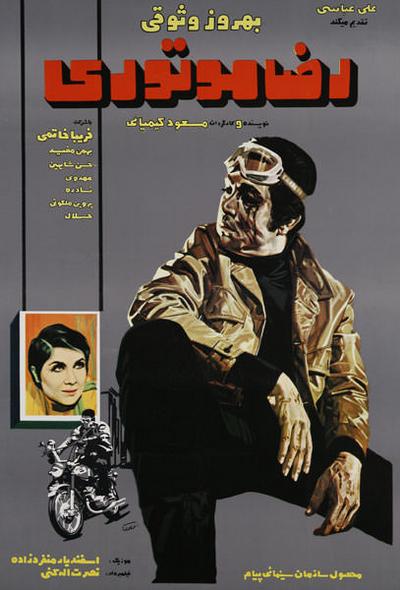
Reza Motori, who has feigned madness, escapes from an asylum and robs a factory, with the aid of a friend. Afterwards, a young writer, who looks exactly like Reza, visits the asylum in order to write about inmates. There he is mistaken for Reza and detained. Meanwhile, Reza assumes the identity of the writer. Reza falls in love with the writer’s fiancée and decides to give up the money he has stolen from the factory, but his friends prevent him from doing so. Received the best actor and best music prizes at the Third Iranian National Film Festival “Sepas” in 1971. Read More »
