Nagisa Ôshima

  • Nagisa Oshima – Seishun Zankoku Monogatari AKA Cruel Story of Youth (1960)

    1951-1960AsianDramaJapanNagisa Oshima

    Nagisa Oshima’s groundbreaking film opens with young, attractive Mako and her friend hitching a ride from an old man. After her friend leaves, the man tries to rape her, and she is saved only by the handsome Kiyoshi. Later, against the background of the tumultuous 1960 U.S./Japan Security Treaty demonstrations, Kiyoshi and Mako walk along a grungy seaside lumberyard while talking about sex. He attempts to kiss her, she slaps him, and he throws her in the water. She cries out that she can’t swim. When she continues to refuse his advances, he steps on her fingers as she clings to a log. Read More »
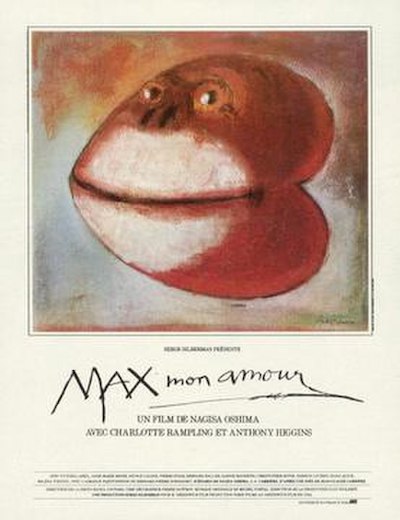
  • Nagisa Ôshima – Max mon amour AKA Max My Love (1986)

    1981-1990CultFranceNagisa OshimaRomance

    “Just tell me one thing frankly. Is this monkey really your lover?”

    It is and it isn’t unlikely material for Nagisa Ôshima. The element of transgressive love is here, but this time, it’s in a dry comedy whose centerpiece is a diplomat’s wife’s extramarital affair with a sensitive, somewhat unstable chimpanzee (aren’t they all?). Charlotte Rampling is the woman, Anthony Higgins is the diplomat, and Victoria Abril is the housekeeper who develops a mysterious allergy, probably but not necessarily to the titular Max.Read More »

  • Nagisa Ôshima – Tôkyô sensô sengo hiwa AKA The Man Who Left His Will on Film (1970)

    1961-1970Amos Vogel: Film as a Subversive ArtArthouseDramaJapanNagisa Oshima

    Quote:
    Aesthetic and political rebel, Oshima is one of the most original directors now working in Japan. This is a metaphysical tale of a radical student filmmaker who succumbs to the illusion that he has committed suicide and left a film as his testament. Attempting to
    “decipher” this film and the “dead man’s” life, he rapes his own girl (who plays along with the illusion to cure him) and retraces the “other man’s” life by means of the film, only to find himself in his own birthplace. The film testament proves incomprehensible. He therefore refilms it, intending to create a work superior to that of his illusory rival; but his girl, to save him, willfully interrupts and changes each scene.Read More »

  • Chris Marker – Level Five (1997)

    Documentary1991-2000Chris MarkerFrance

    29f7c043f76a2bde437fd0d52a185152

    Re-view 1: Memories of a Hyperstitional Practitioner
    A review of a Chris Marker ‘event’? One is never enough. Not only because Chris Marker is, as we were told this weekend more than once, more than one. But also because re-viewing, seeing again, looking back is so integral to the Marker experience.
    Chris Marker is a systematic con-fuser of fact and fiction, best known for La Jetee (1962) and Sans Soleil (1982), explorations of time, memory, images and revolution (terms whose contiguity – and near synonymy – is a consistent theme of his work). The form that Marker perfected in the rightly celebrated Sans Soleil has been called the ‘film-essay’, though this does little justice to the astonishing singularity of his theory-fictional time-travelogues, which conjoin politics, pop culture and ethnography in a breathtakingly lyrical but intellectually clear-eyed plane of consistency.
    Read More »

Back to top button