

A film adaptation of the novel of the same title written by Hiroshi Hatayama (畑山博).Read More »

Summary:
From Samuel Sloan@IMDB:
The summer of 1936. Shirou was on the way to Paris as the honeymoon with Madoka. He could marry her on one condition: he gave up pursuing a career as jazz musician. But he planned to stay in Shanghai to enjoy the jazz life. When Madoka found out about it, they were already in trouble which made impossible to get out of Shanghai. They began working in a dance hall, enjoying jazz and freedom. But the war was coming near… (The term ‘bansu king’ in the title derived from ‘advance king’, which means a person who always gets advance of his/her payment.)Read More »

Quote:
Keiko, a high school girl from private Yotsuba Gakuen. It may not be her own responsibility that the 17-year-old girl, who is about to enter college, is suddenly out of the way. Poor couples, uncomfortable homes, teachers of the highest grade, high school life that seems to be breathless. One day, Keiko, who had a head-on conflict with her teacher, began to go to snacks and discos with the invitation of a delinquent group, and eventually fell off the road to runaway, drinking, marijuana, dating with gangsters, prostitution, and drugs. To go–.Read More »

Three centuries ago, a precious sword has been stolen by Kazamatsuri — the sword, which historic and symbolic value is priceless for the clan (Shogun Tokugawa donated it to clan 80 years before that, at the same time that he established them as the local rulers). Lord’s counselor’s young son Heishiro goes to retrieve the sword himself to protect the clan from the shame or possible demise. He is accompanied with two friends, Shintaro and Tadasuke, and followed by the ninjas of the clan. After Kazamatsuri wounds Heishiro and kills one of his friends, the young aristocrat still wants revenge more than sword itself, but meanwhile have to recover from his wounds, in the small forest house of a lonely samurai and his daughter. At the same time, Kamazatsuri stays in nearby town in the entertainment center run by Okatsu and falls into her. The older samurai tries to dissuade Heishiro from fighting with Kamazatsuri, but is himself gradually drawn into the conflict.Read More »
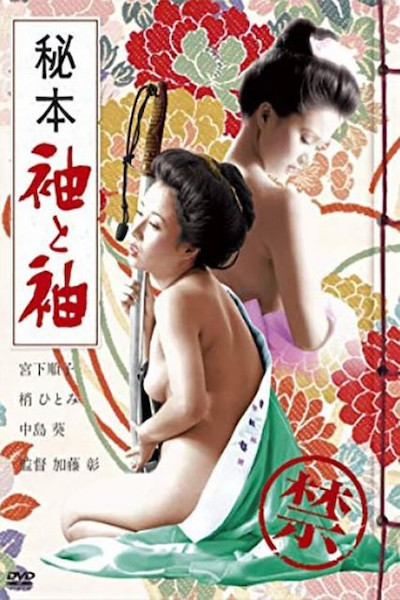
Writer and ladies-man Yonosuke, who gives inept English lessons (using Shakespeare’s Romeo and Juliet), is ushered into a lonely woman’s house one rainy night. Her husband is at the front in the war with Russia and, as our hero will soon discover, she’s wearing a chastitity belt…Read More »
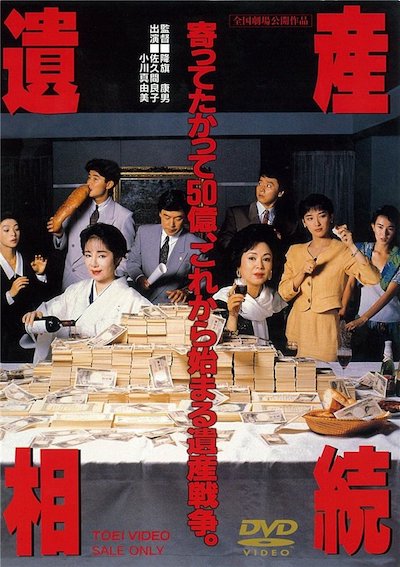
The unexpected death of Fujishima Motoharu, president of a medium-sized firm, triggers a fierce battle over his estate inheritance among family members.Read More »

Kamata kôshinkyoku (1982)
Quote:
The English title Fall Guy is fitting – this is a film about a stuntman who takes several plunges for his movie star friend – but there’s a clever touch of subversion in the less obvious Japanese title. Kamata Koshin-Kyoku refers to Shochiku studio’s theme song. But this film about the production of a samurai epic on the Toei studio lot in Kyoto is hardly a fawning tribute to the world of cinema. It’s a film by Kinji Fukasaku. Like the director’s masterpiece, Battles Without Honor and Humanity, Fall Guy exposes the injustices visited on honest, hard-working men serving corrupt and undeserving bosses; all he has done is change the setting. In the place of low-ranking yakuza are stuntmen, the foot soldiers of the entertainment industry. In the place of Japan’s criminal underground is a movie set.Read More »

Summary:
Based on the book by Keiko Ochiai, “The Rape” details the struggles and determination of a young woman who is attacked and raped on her way home from her lover’s and shows how she comes to terms with the crime and the perpetrator in life and in court.
Awards:
Nominated – Award of the Japanese Academy (1983) – Best Actress Yûko TanakaRead More »

Harada is a successful scenario writer, and his best buddy has just announced an intention to propose to Harada’s ex-wife. Recovering from the shock, Harada indulges in melancholy, mainly on his failure as a husband and father, and goes to a ‘Rakugo’ (sit-down comedy) show, where a friendly man in the audience invites him home. Harada is puzzled at the strong resemblance of this man and his wife to his own parents, who were killed nearly 30 years ago when he was twelve. He visits the couple repeatedly, and greatly enjoys the happy atmosphere there, which was much like his childhood, and such a contrast to his current existence, which is lonely and tortured. But he is no longer alone.Read More »