

Two teenagers on the margins of society and estranged from their families run away. Their parents are interviewed, while the children are filmed in their idleness in the countryside.Read More »
Two teenagers on the margins of society and estranged from their families run away. Their parents are interviewed, while the children are filmed in their idleness in the countryside.Read More »
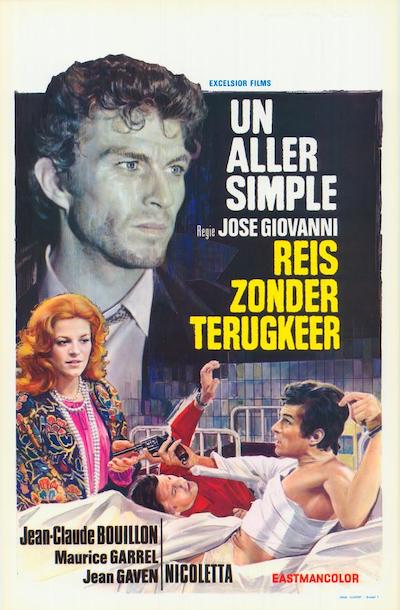
A small-time criminal wants to give up his life of crime. He performs a robbery with a friend, with similar feelings, and things go sour.Read More »

Synopsis
Antoine, an unsuccessful writer, is taken aback when his girlfriend, Solange, leaves him for another man. Usually, it is he who ends a relationship, not his partner. In a fit of pique, he decides to take his revenge, not against Solange, but against all womankind. Jean, an ageing book dealer, suggests that Antoine should avenge his wounded male pride by seducing a woman selected at random and then, once she is in love with him, coldly dumping her. Read More »

a title with a comma in the middle for a film divided in two parts. A film in black and white with a dark side and a jovial side. The first part of the title evokes politics, as the story recalls the days of the Algerian War of Independence; the second part represents the mood that hovers over the eminently painful images. There isn’t even a hint of daylight in the freedom of the title. It only lives metaphorically in the darkness and languor of the night. — description by Violeta Kovacsics in the book “Philippe Garrel: Filmmaking Revealed”Read More »

Nico is an ethereal poet haunting the gaps between scenes of Jean-Pierre Kalfon, Bulle Ogier, Laurent Terzieff, and Garrel’s father, Maurice, discussing the filmmaker’s staple topics: love, psychoanalysis, and the failures of May ’68.Read More »

A hangdog, middle-aged painter falls in love with a tender young college student after he leaves his philandering wife and his children in this romantic French drama. To console himself, the fundamentally bohemian Phillippe finds comfort in the arms of various prostitutes, especially Valeria. It is while searching for her that he meets lovely Justine, the student. Sparks fly and they move into together. Things go well until Phillippe begins pining for his children. This makes insecure Justine terribly jealous and tumult erupts until the aging artist is able to discover the true source of his anxieties.Read More »