Quote:
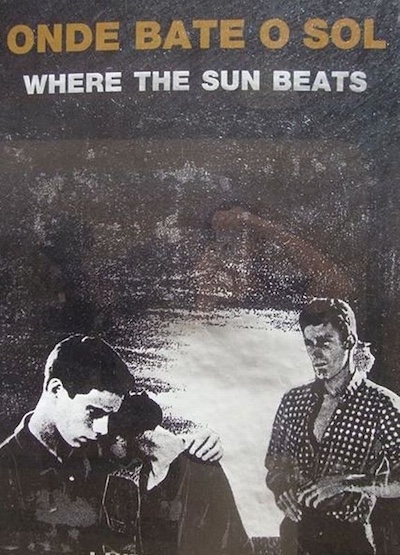
Laura lives in Vouzela with her husband, considerably older than her. When Nuno, her brother, come to visit, he realizes that Laura does not have a happy life. In turn, Nuno initiates a friendship with a helper on the farm of his brother.Read More »
Quote:
“A bio-doc about Micheline Presle changes into a thrilling investigation of the long hidden truth about European cinema. This mockumentary thriller uncovers Hollywood’s unsuspected plot against the European motion picture industry. Numerous directors and stars appear in the film, making it a choice morsel for all film lovers.”
– Written by Karlovy Vary Int’l Film Festival
ImdbRead More »
Quote: In Portugal, late in the night of April 24 to 25, 1974, the radio broadcast an outlawed song: “Grândola”. It could have just been an act of insubordination by a rebellious journalist. It was in fact the preplanned signal triggering the military coup which was to change the face of this country and the destiny of vast territories in Africa.Read More »
When novelist Alessandro Battavia commits suicide, a taxi driver named Evangile and her brother Nord believe they are characters imagined in a novel, probably one written by God. Because they see their lives as “merde,” they go in search of God to get their story rewritten. Along the way, believing everything is imaginary anyway, they shoot people, rob pharmacies, and tie up the residents of places they squat. They also gather a taxi full of eccentrics, including a priest, Battavia’s suicidal widow, and a policewoman; various couples pair off. Soon life imitates art: the events and ellipses seem lifted from modern fiction as the group’s quest for God continues. What’s real?Read More »
Quote: This Proustian documentary, made when Oliveira was 93 years old, explores the great Portuguese film-maker’s relationship with his home town, Oporto, the place which inspired his first film Douro, Faina Fluvial way back in 1931. Using old photographs and newsreels with dramatic reconstructions, he offers a vivid portrait of a city caught between the old and the new. When he was a child, Oporto didn’t even have proper cinemas, film shows were improvised in sheds, Oliveira (born 1908) recalls. Most of the landmarks familiar from his youth have vanished. The brothels and cafés where he and his artist friends used to while away their days are long since closed. Even the house where he grew up is in ruins. The city I remember only remains alive in my sad memory, he sadly reflects. Poignant and playful, this is one of the old master’s most accessible late films.Read More »
An aged and powerful magnate is dying. He offers Laura, his young and beautiful mistress, a birthday gift; a sophisticated display of virtual reality in which he will “come to life” for her after his death. But Laura much prefers that her mother, the Duchess, who has taken her place in the magnate’s heart and bed, dies instead.Read More »
Quote: The plot of the film is taken from two traditional Portuguese tales: A donzela que vai a guerra («The maiden who went war» 15th Century?), of Judeo-Iberian origin, and a novella, The dead one’s hand, orally transmitted, which forms part of the Bluebeard cycle.
Dom Rodrigo has two daughters, one legitimate, the other bastard, Silvia and Susana. Growing old, and without male heir, Dom Rodrigo decides to marry off Silvia to his neighbour, a rich nobleman, Dom Paio, with the aim of securing and expanding his domain. After a brief visit from the fiancé, a great glutton and skirt-chaser, Dom Rodrigo leaves for the court to invite the king to the nuptials. Upon his departure, he instructs the girls not to open the doors of the mansion to any stranger.Read More »
Quote: Directed by acclaimed Spanish filmmaker Jose Juan Bigas Luna, HUEVOS DE ORO (GOLDEN BALLS) stars Javier Bardem in his breakthrough role (for which he also received a Goya Award nomination). In this satire of Latin machismo and the excesses of the 1980s, Bardem plays Benito Gonzalez, who dreams of building a mighty skyscraper and thereby securing fame and wealth for himself. His main advantages are his uncontrollable self-assurance and skills as a lothario. He marries the daughter of a rich banker while keeping a mistress on the side, but his betrayal of both women begin to destroy his plans for the building as well as his chauvinist self-confidence. Bigas Luna brings his trademarks–an honest exploration of sexuality and surrealistic imagery–to this tale of male egotism and its undoing.Read More »
Quote:
Lisbon of the nineties. Three siblings, a girl and two boys, live together in a most close kind of relationship. The centre of the story is the girl, Maria, who hardly ever says what she thinks neither knows what she wants. “Teresa Villaverde re-states her sensitiveness in this portrait of a fragile girl in a film of high visual elegance of utmost sadness.”
Positif, November 1994Read More »