In a near future where artificial intelligence reigns supreme, human emotions have become a threat. To get rid of them, Gabrielle must purify her DNA by going back into her past lives. There, she reunites with Louis, her great love. But she’s overcome by fear, a premonition that catastrophe is on the way.Read More »
Quote:
A young couple marry in France in the 1940s and the film follows the arc of their marriage over the next decade. As France recovers from the trauma of the war, the wife finds herself increasingly caught up in acquiring material possessions while the husband prefers a more traditional lifestyle.Read More »
Florence wants to introduce David, the man she’s madly in love with, to her father. But David isn’t attracted to her and wants to throw her into the arms of his friend Willy. The characters meet in a restaurant in the middle of nowhere.Read More »
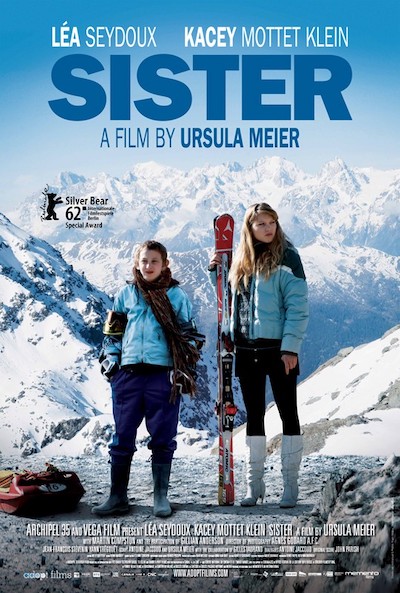
Every day, twelve-year-old Simon takes the cable car up to the mountains where the slopes bristle with the hustle and bustle of winter season tourists. He pokes about in hotel wardrobes and changing rooms looking for something to eat in rucksacks, but what he’s really after are skis that he can turn into cash. Whenever he talks to holidaymakers or hotel staff, he tells them that his parents died in a car accident and that he lives alone with his sister. Louis, the young woman who lives in the apartment in the valley has no idea what Simon gets up to all day long. Their odd relationship alternates between quarrels and tenderness.Read More »
Guy Lodge in Variety wrote: “One Fine Morning” sounds an innocuous title for a grownup relationship drama — destined, perhaps, to be confused on streaming menus with the George Clooney-Michelle Pfeiffer romcom “One Fine Day” — and in a sense, the mellow, melancholic cinema of French writer-director Mia Hansen-Løve is its own kind of comfort viewing. But as with many facets of her filmmaking, there’s a smarter, sadder, more literary undertow to the title’s sunny simplicity. “Un beau matin” in French, it’s lifted from a haunting poem by poetic realist Jacques Prévert, which describes in plain imagery the conflict of facing absence in your life, all while pretending there’s literally nothing there.Read More »
A young couple marry in France in the 1940s and the film follows the arc of their marriage over the next decade. As France recovers from the trauma of the war, the wife finds herself increasingly caught up in acquiring material possessions while the husband prefers a more traditional lifestyle.Read More »
Quote: As the human species adapts to a synthetic environment, the body undergoes new transformations and mutations. With his partner Caprice, celebrity performance artist Saul Tenser publicly showcases the metamorphosis of his organs in avant-garde performances. Timlin, an investigator from the National Organ Registry, obsessively tracks their movements, which is when a mysterious group is revealed. Their mission – to use Saul’s notoriety to shed light on the next phase of human evolution.Read More »
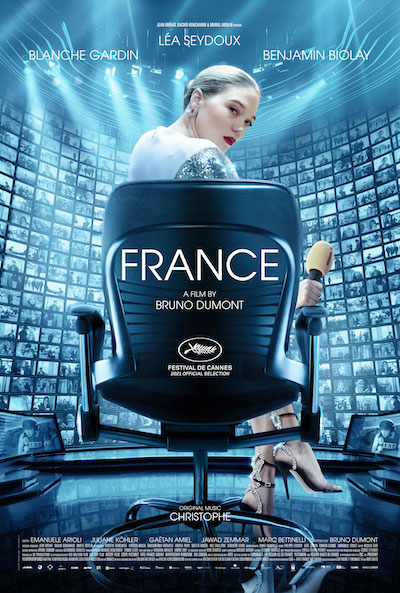
Lawrence Garcia, Cinemascope wrote: In the seven years since P’tit Quinquin, it has become impossible to continue tagging Bruno Dumont with the longstanding clichés of Bresson criticism. Epithets like “ascetic,” “severe,” “punishing”—already limited descriptors of his first two works, La vie de Jésus (1997) and L’humanité (1999)—have only become more obviously incapable of describing Dumont’s recent films, from the carnivalesque contortions of Ma Loute (2016) to the musical extremes of his Jeanne d’Arc movies. Still, as Dumont’s methods (particularly his increasingly frequent use of professionals alongside non-actors) have ostensibly moved away from those of Bresson, the deeper affinities between the two filmmakers have only become clearer. Read More »