

An aging actor remembers his past stage triumphs and contemplates a dim future on the stage of an empty theatre.Read More »
An aging actor remembers his past stage triumphs and contemplates a dim future on the stage of an empty theatre.Read More »

Harold Pinter’s 1975 play, adapted for television by Granada in 1978.
A legendary pairing for John Gielgud and Ralph Richardson, No Man’s Land is Pinter at his most ethereal and individual. Pinter’s obsession with memory making victims of us all is the starting point for this tale of Hirst, a wealthy writer haunted by his past, and Spooner, the man without a past who tries to rescue him. Spooner’s personality is built on a bundle of self-inventions that are likely to topple at any moment. It is a play of despair, of emptiness, vague in its diction and purveying an air of loneliness and waste. As a hypnotic treatise on the pipe dream of a past made good, it is a spellbinding, haunting cautionary tale.Read More »

A chronicle of events that led to the British involvement in the Crimean War against Russia and which led to the siege of Sevastopol and the fierce Battle of Balaclava on October 25, 1854 which climaxed with the heroic, but near-disastrous cavalry charge made by the British Light Brigade against a Russian artillery battery in a small valley which resulted in the near-destruction of the brigade due to error of judgment and rash planning on part by the inept British commanders.Read More »
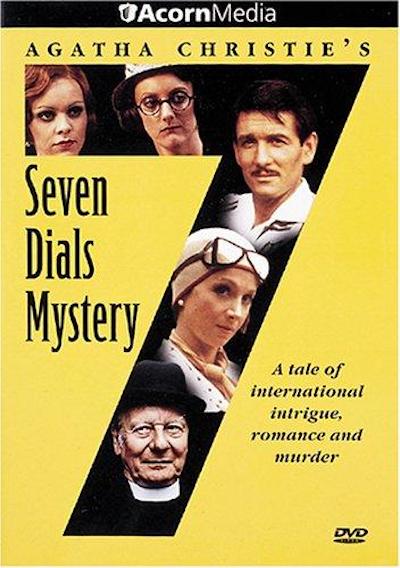
Lady Eileen “Bundle” Brent is a pert, aggressive young aristocrat that insinuates herself into a series of murders, stolen state secrets, and a mysterious secret society.
This film is based on a novel by Agatha Christie.Read More »
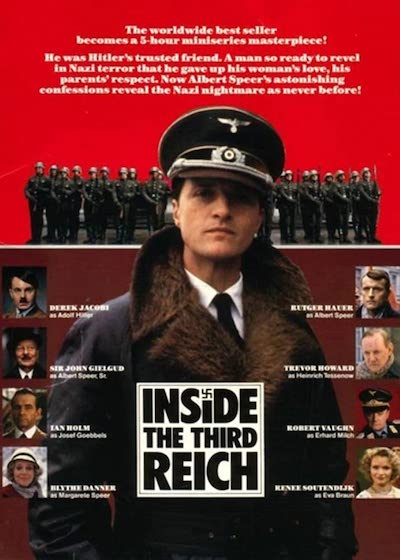
The two-part TV movie Inside the Third Reich was based on the extraordinary revelatory (if self-serving) autobiographical book by Albert Speer. Played herein by Rutger Hauer, Speer is a young man of privilege in pre-Hitler Germany who happens to be a brilliant architect. Becoming a member of Hitler’s inner circle, Speer is appointed the Nazi regime’s master builder. According to this film, Speer is egomaniacal and ambitious, but somewhat blinded to the inherent evils of Nazism. Though he’d later claim to be ignorant of Hitler’s horrific policies aimed at the Jews, he was certainly aware of the use of Jewish prisoners as slave labor: as Germany’s armaments minister during World War II, Speer exploited these enslaved unfortunates as much as anyone, if not more so. The cast includes Derek Jacobi as Hitler, Blythe Danner as Speer’s wife Margarethe, John Gielgud as Speer’s father, Ian Holm as Goebbels, Maurice Roeves as Hess, and George Murcell as Goering. Originally running 5 hours, Inside the Third Reich was filmed in Munich; it was first telecast on May 9 and 10, 1982. ~ Hal Erickson, RoviRead More »
Quote:
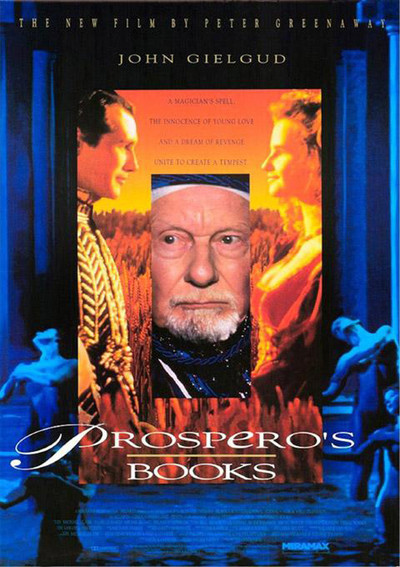
Peter Greenaway’s “Prospero’s Books” is not a movie in the sense that we usually employ the word. It’s an experiment in form and content. It is likely to bore most audiences, but will enchant others — especially those able to free themselves from the notion that movies must tell stories. This film should be approached like a record album or an art book. Each “page” is there to be studied in its complexity and richness, while on the soundtrack we hear one of the great voices in theater history, John Gielgud’s.Read More »
Synopsis:
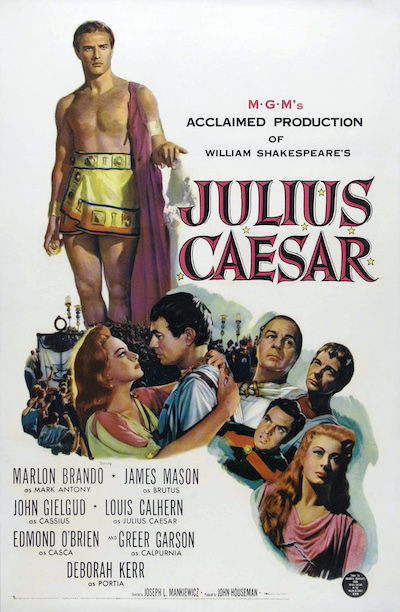
Brutus is convinced by a scheming band of Roman senators, led by Caius Cassius, that his dear friend Julius Caesar intends to dissolve the republic and install himself as monarch, and he joins a conspiracy to assassinate him. Brutus stirringly defends his actions, but when Mark Antony responds with a speech that plays upon the crowd’s love for their fallen leader, a battle between the two factions is assured.Read More »
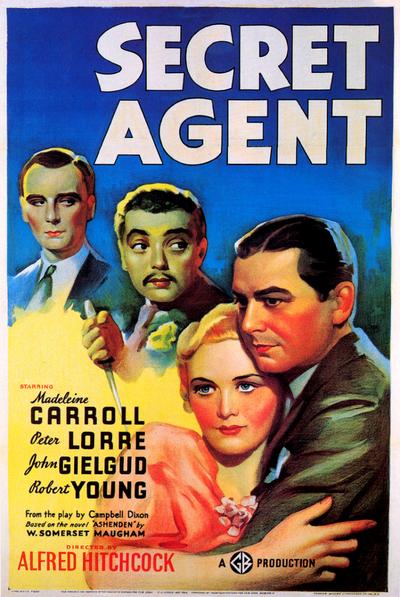
Synopsis:
‘In World War I, Brodie, a successful novelist and soldier, is pronounced dead and given a new identity by the Secret Service. Sent on an espionage mission in Switzerland, he is teamed with a fake ‘wife’, Elsa and an assassin, the General.’
– BFI ScreenonlineRead More »
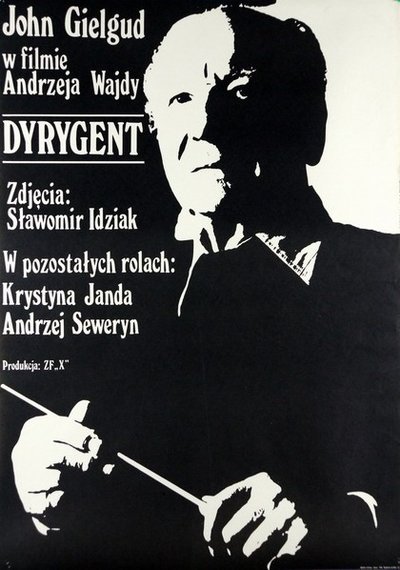
Quote:
A violinist in a provincial Polish orchestra, whose husband is the director of the ensemble, on a visit to the U.S., ties up with the world-renowned symphony conductor. As it turns out, he was once in love with the violinist’s mother. The conductor, a slightly unstable hypochondriac, returns to Poland to lead the provincial orchestra. He also tries to revive an old love affair using the violinist as a surrogate of her mother. Her husband is resentful of the conductor for personal and professional reasons.Read More »