Quote: Clemente Celidônio, known as Quelé, upon returning to his home in Pajeú das Flores (in Pernambuco), is shocked by the fact that his sister was raped by a stranger, identified only by a scar on his face and a missing finger. Overcome with hatred, Quelemente sets off in search of the stranger, swearing vengeance. But the road is long, and the journey holds decisive surprises for him.Read More »
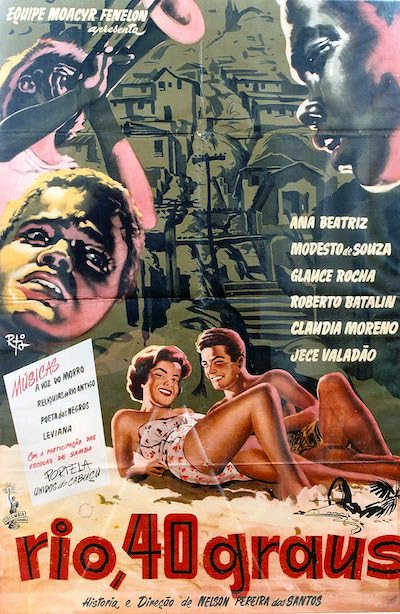
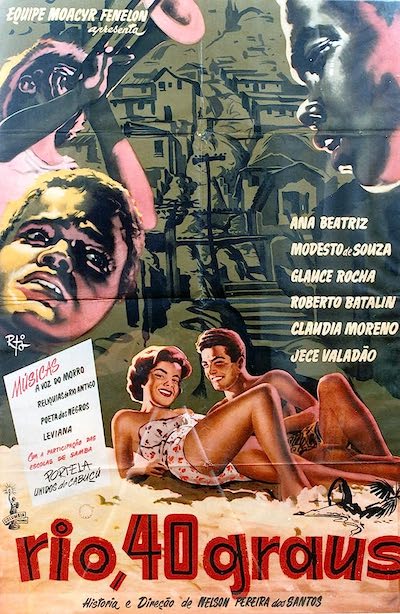
Synopsis A semi-documentary on the people of Rio de Janeiro. The camera follows boys from a hillside shanty town who sell peanuts at Copacabana, Sugar Loaf Mountain, and a soccer game. Various subplots, involving characters they meet along the way, are interspersed.Read More »
When powerful outlaw “Boca de Ouro” dies, a reporter interviews his former lover Guigui, to try to outline his personality. But the woman offers him three different versions of the facts, following the changes of her own personal feelings towards the man.
Quote: Nelson Rodrigues’ Rashomon-lite gangster melodrama gets a purposive physical rendering on the hands of Nelson Pereira dos Santos. The filmmaker always described this as gun for hire work, but it is one of his most dramatic exact films and the cast is terrific. (Filipe Furtado)Read More »
Four Third-World Christs try to stop the American industrialist John Brahms in Glauber Rocha’s experimental film inspired by Pier Paolo Pasolini’s murder.
The day that Pier Paolo Pasolini was killed, Glauber Rocha decided to make this film about the life of Christ in the Third World. Starting from a dialectical synthesis between capitalism and socialism, and a search of interracial relationships in Brazil, Rocha created a work of religious and prophetic tone that results in a kind of bewilderment contemplative, now lyrical, now frantic, soaked in a new messianism. In his last film, the director proposed a tune of sounds and images that build a picture of Brazil and a portrait of himself.Read More »
Banned by Brazil’s Federal Department of Public Safety, “Rio, 40 Grau”s is a landmark film that ushered in the wave of Neorealist cinema in Brazil – Cinema Novo. The film chronicles a day in the life of five peanut vendors from the favelas (shanty towns) of Rio de Janeiro. Other subplots involving characters they meet along the way are interspersed. This was one of the first Brazilian films to address the issues of race, poverty, and class. These themes would continue to be examined by dos Santos throughout his career.Read More »