Ingmar Bergman

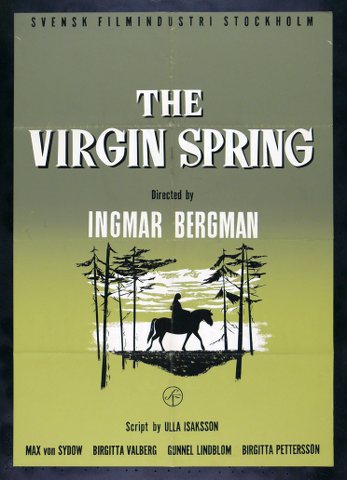
  • Ingmar Bergman – Jungfrukällan AKA The Virgin Spring (1960) (HD)

    1951-1960CrimeDramaIngmar BergmanSweden

    29f7c043f76a2bde437fd0d52a185152

    Set in beautiful 14th century Sweden, it is the sombre, powerful fable of wealthy land-owning parents whose daughter, a young virgin, is brutally raped and murdered by goat herders after her half sister has invoked a pagan curse. By a bizarre twist of fate, the murderers ask for food and shelter from the dead girl’s parents, who, discovering the truth about their erstwhile lodgers, exact a chilling revengeRead More »

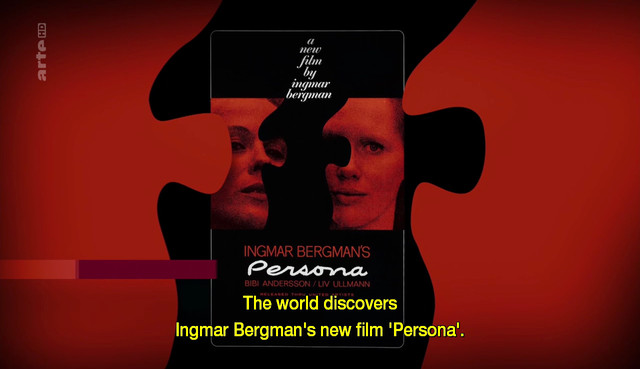
  • Manuelle Blanc – Persona, le film qui a sauvé Ingmar Bergman AKA Persona – The Film That Saved Ingmar Bergman (2018)

    2011-2020DocumentaryFranceIngmar BergmanManuelle BlancTV

    29f7c043f76a2bde437fd0d52a185152

    In 1965, Ingmar Bergman directed “Persona”, a cult film that sums up all the obsessions of the Swedish master, born a hundred years ago. This Arte TV documentary explores the film, based on interviews with film critics, collaborators and the maser himself. Read More »

  • Ingmar Bergman – The Serpent’s Egg [+ commentary / extras] (1977)

    Drama1971-1980ArthouseGermanyIngmar Bergman

    29f7c043f76a2bde437fd0d52a185152

    Following the suicide of his beloved brother and deaths of even the most distant acquaintances, Abel Rosenberg attempts to discover the truth while facing depression, alcoholism, and anti-semitism.

    Vincent Canby wrote:

    BERLIN, NOV. 3-11, is a city without sunlight. Mostly it rains. It snows occasionally but it’s the kind of snow that is already gray by the time it reaches the cobblestones. Everything is damp, chilled. No winter coats anywhere. People cling to one another for warmth, but there is none. In effect, life is over in Ingmar Bergman’s new film, “The Serpent’s Egg.” What we witness are involuntary twitches, the glazing of eyeballs—the onset of rigor mortis.Read More »

  • Ingmar Bergman – Misantropen AKA The Misanthrope (1974)

    1971-1980ComedyDenmarkIngmar BergmanPerformance

    29f7c043f76a2bde437fd0d52a185152

    ingmarbergman.se wrote:
    The Misanthrope

    Bergman took one of his favourite plays to Copenhagen for a guest performance, which was even broadcast on Danish TV.

    In his Copenhagen The Misanthrope, Bergman maintained a dual approach. On the one hand, a production of Molière’s play as a theatrical game performed in style and intellectually conceived; on the other hand, an exposure, through physical and psychological intensity, of the emotional tragedy in which Alceste and Celemine are both victims.Read More »

  • Ingmar Bergman – Ingmar Bergman Bris Soap Commercials (1951)

    1951-1960Ingmar BergmanShort FilmSweden

    In 1951 there was a conflict in the Swedish film industry. The production companies had declared a ban on filming in protest against the high rate of tax on entertainment. Recently remarried, Ingmar Bergman, found himself with three families to support, and his contract with the Gothenburg City Theatre had expired. In order to earn any income whatsoever that year, he agreed to direct nine commercial for Bris soap on behalf of Swedish Unilever. It seems more than a coincidence that Sweden’s most famous film director should be the one to take the country’s advertising to a higher plane: the Bris films were the most lavishly funded that the country had ever seen.Read More »

  • Ingmar Bergman – De två saliga AKA The Blessed Ones (1986)

    1981-1990ArthouseDramaIngmar BergmanSweden

    29f7c043f76a2bde437fd0d52a185152

    “Things are never crazy in and of themselves. They only seem so from the outside.”
    De två saliga (The Blessed Ones or The Blessed Pair) is a 1986 made-for-television film directed by Ingmar Bergman, with a screenplay by Ulla Isaksson, based on her novel of the same name made two decades earlier in 1962. Isaksson’s novel, heavy in Christian imagery, follows a psychologist as he becomes more and more obsessed by Viveka and Sune, a former patient and her husband.Read More »

  • Ingmar Bergman – För att inte tala om alla dessa kvinnor aka All These Women (1964)

    Arthouse1961-1970ComedyIngmar BergmanSweden

    Quote:
    Conceived as an amusing diversion in the wake of Ingmar Bergman’s despairing trilogy, this comedy is the director’s first film in color, and it is an opulent visual feast. Working from a bawdy screenplay he cowrote with actor Erland Josephson, about a supercilious critic drawn into the dizzying orbit of a famous cellist, Bergman brings together buoyant comic turns by a number of his frequent collaborators, including Jarl Kulle, Eva Dahlbeck, Harriet Andersson, and Bibi Andersson. All These Women, in which Bergman pokes fun at the pretensions of drawing-room art, possesses a distinctly playful atmosphere and carefree cadences.Read More »

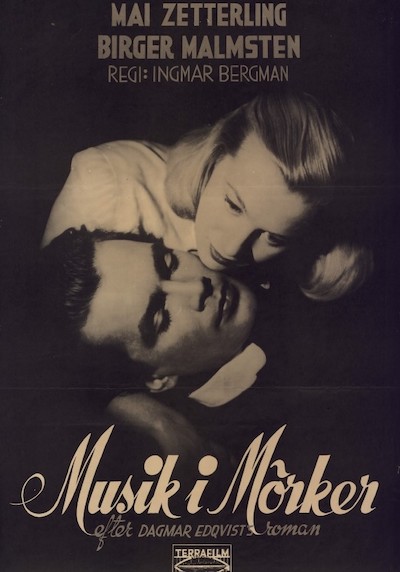
  • Ingmar Bergman – Musik i mörker AKA Music in Darkness (1948)

    1941-1950DramaIngmar BergmanSweden

    Blinded during a wartime training accident, aspiring-musician Bengt Vyldeke (Birger Malmstein) refuses all efforts by well-meaning outsiders to help him. Ingrid (Mai Zetterling) is hired as his companion and ‘eyes’.Read More »

  • Ingmar Bergman – Viskningar och rop AKA Cries and Whispers [+Extras] (1972)

    1971-1980ArthouseDramaIngmar BergmanSweden

    29f7c043f76a2bde437fd0d52a185152

    Quote:
    In his book Images, Ingmar Bergman has written: “All my films can be thought of in terms of black and white, except for Cries and Whispers. In the screenplay it says that red represents the interior of the soul. When I was a child, I imagined the soul to be a dragon, a shadow floating in the air like blue smoke – a huge winged creature, half bird, half fish. But inside the dragon, everything was red.”

    Certainly, Cries and Whispers marks the most sophisticated use of color in Bergman’s long career. It was only in 1963 that he turned, somewhat reluctantly, to color for All These Women, and even after that he continued to opt for black and white in such critical films as Persona, Hour of the Wolf, and Shame. With Cries and Whispers, however, Bergman for once – by his own admission – wants the work to be regarded in chromatic terms.Read More »
Back to top button