Haruko Sugimura

  • Keisuke Kinoshita – Ôsone-ke no ashita AKA Morning for the Osone Family (1946)

    1941-1950AsianDramaKeisuke Kinoshita

    A bitter look back at responsibility for the war, a new interpretation of democracy as popular justice instead of license, and encouragement for women to assert themselves. A widow with three sons and an outspoken daughter relies on her militarist brother-in-law to manage the family during the war. The oldest son is jailed for pacifist thoughts, and the uncle breaks his niece’s engagement as a result. The two younger sons are drafted and both die, and by the end of the war the widow realizes that her brother-in-law’s counsel has all been self-aggrandizement. She throws him out and joyfully receives her newly released pacifist son as morning dawns for the liberal family.

    Winner of Kinema Jumpo #1 for the year 1946.Read More »

  • Mikio Naruse – Bangiku AKA Late Chrysanthemums (1954)

    1951-1960DramaJapanMikio Naruse

    What is the life of a Geisha like once her beauty has faded and she has retired? Kin has saved her money, and has become a wealthy money-lender, spending her days cold-heartedly collecting debts. Even her best friends, Tomi, Nobu, and Tamae, who were her fellow Geisha, are now indebted to her. For all of them, the glamor of their young lives has passed; Tomi and Tamae have children, but their children have disappointed them. Kin has two former lovers who still pursue her; one she wants to see, and the other she doesn’t. But even the one she remembers fondly, when he shows up, proves to be a disappointment.Read More »

  • Keisuke Kinoshita – Nogiku no gotoki kimi nariki aka She Was Like a Wild Chrysanthemum (1955)

    1951-1960AsianDramaJapanKeisuke Kinoshita

    Criterion’s title for this film is “You Were Like a Wild Chrysanthemum.”

    From the Film Society of Lincoln Center’s “Films of Keisuke Kinoshita” program notes:

    Quote:
    Masao (Ozu regular Chishu Ryu) returns to his hometown after a successful career in business; the visit prompt memories of the time right before he left to study, when as a young man he fell in love with Tamiko, a beautiful, high-spirited young woman who also loved him but whom he was forbidden to marry as his family—and especially his mother—already had plans for him. Kinoshita brilliantly captures the flush of young love, played out against stunning landscapes—a love made all the more poignant as we know it will remain unrequited. Film scholar Donald Richie called it “one of the most nostalgically beautiful of Kinoshita’s films.”Read More »

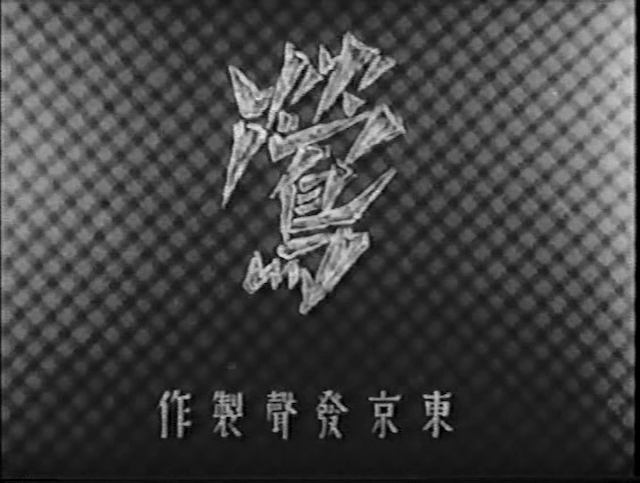
  • Shirô Toyoda – Uguisu aka Nightingale (1938)

    Drama1931-1940JapanShirô Toyoda

    Not much info on this film out there, but here is a nice little rundown by Keiko McDonald from her book, From Book to Screen: Modern Japanese Literature in Films:

    “Uguisu (The Nightingale) drew on a story of the same title published that year by Einosuke Ito. Here the frame of reference is a subgenre that called itself agrarian literature. Ito’s tale is an episodic account of peasants responding to poverty and depravation with cunning, simplicity, and often woeful ignorance.Read More »

  • Kaneto Shindô – Haha AKA Mother (1963)

    1961-1970DramaJapanKaneto ShindôWar

    Tamiko is a divorced mother with a seriously ill son, struggling to save him and give both a sense of their existence. She lives with her mother and brother, but will marry a man older than her. The dramatic shadow of Hiroshima bombs is always hovering over the fate of the characters.Read More »

  • Mikio Naruse – Haru no mezame AKA Spring Awakens (1947)

    1941-1950ClassicsDramaJapanMikio Naruse

    “Haru no mezame” was Naruse’s third full-lenth post-war film — and a delightful surprise. It turns out to be a slice of life film, centered around a couple of years in the life of a rural high school girl — played by 16 year old Yoshiko Kuga (future star in Portrait of Madame Yuki, Banka, Equinox Flower, Good Morning) — still a tiny bit plumpish — and not full grown. Almost no plot to speak of — just normal events of school and home life and hanging around with friends.Read More »

  • Keisuke Kinoshita – Koge AKA The Scent of Incense (1964) (HD)

    1961-1970ClassicsDramaJapanKeisuke Kinoshita

    Quote:
    The success of The River Fuefuki encouraged Kinoshita to return to period filmmaking once again with this “epic” chamber drama about a geisha mother and her daughter. Based on the popular novel by Ariyoshi Sawako, the story begins as Ikuyo (Nobuko Otowa) is forced into prostitution from poverty; she soon becomes known as a woman who will agree to her clients’ basest desires. Although shielded from her mother’s profession, her daughter Tomoko (Mariko Okada) is deeply ashamed by her mother’s degradation—while still accepting her financial support. But when Mariko attracts the attention of a boy from a well-to-do family, the danger arises that he might discover Mariko’s secret. Read More »

  • Daniel Schmid – Das geschriebene Gesicht AKA The Written Face (1995)

    Arthouse1991-2000Daniel SchmidDocumentarySwitzerland

    In Japanese theater women’s roles are traditionally played by men. The man playing the woman’s role, the Onnagata, does not imitate the woman, as in the West, but tries to capture her significance. He need not stick close to his model, but draws far more from his own identity – a shift of value takes place, which is nonetheless not a step beyond.

    THE WRITTEN FACE is an attempt to offer an insight into the Japanese Kabuki star Tamasaburo Bando, one of the last defenders of this ancient and disappearing performing tradition. The film consists of four continuous acts:Read More »

  • Daisuke Itô – Hangyakuji AKA The Conspirator (1961)

    Drama1961-1970ActionDaisuke ItôJapan

    Synopsis:
    During an era of civil wars, in the 7th year of Tenso, Yoshimoto Imagawa was overthrown by Oda Nobunaga with the help of Ieyasu Tokugawa. Ieyasu’s wife, Lady Tsukiyama, was of the ruined Imagawa clan. She was basically abandoned by Ieyasu lest his fealty with Oda Nobunaga be doubted. Ieyasu’s son, half Tokugawa & half Imagawa, was married to Oda’s first daughter Tokumine Gozen, to further assure Oda that there would be no attempt at revenge over the downfall of the Imagawa clan. Read More »

Back to top button