György Cserhalmi

  • Gábor Bódy – Nárcisz és Psyché AKA Narcissus and Psyche (1980)

    1971-1980ArthouseGábor BódyHungary

    Quote:
    Narcisus and Psyche is based on a novel by Sandor Weores which was adapted by Vilmos Csaplar and director Gabor Body for a feature-length, 261-minute film. Borrowing the character of Psyche from mythology and placing her in Europe in the 19th century, the authors give her a “modern” life. She is an attractive young woman – and remains so throughout the film, in spite of one hardship after another. Psyche is libidinous, and her prurient interests shock her staid contemporaries. For reasons that the viewer is left to ponder, her life is almost a living punishment for her sexual laxity. Her child is taken away and killed, and although she is in love with her tutor, who has syphilis, she marries another man. She is suffering herself from some affliction, which leads to hospital scenes that are acerbic commentaries on 19th c. Western medicine. Psyche is about to leave for America with her husband, when the story takes another abrupt turn.Read More »

  • Béla Tarr – Macbeth (1983)

    1981-1990Béla TarrDramaHungaryTVWilliam Shakespeare
    Macbeth (1982)
    Macbeth (1982)

    In this powerful short film, the renowned William Shakespeare play is stripped down to the bare essentials, consisting of two lengthy shots.Read More »

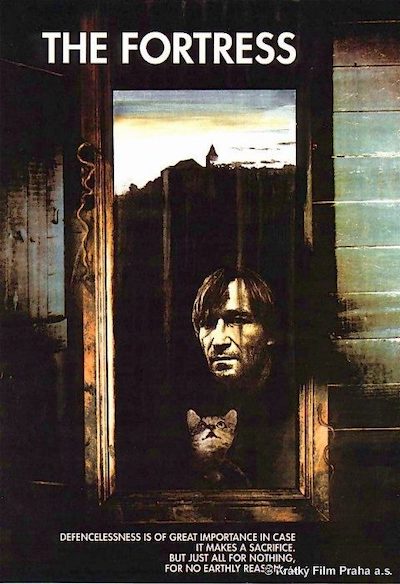
  • Drahomira Vihanova – Pevnost aka The Fortress (1994)

    1991-2000ArthouseCzech RepublicDrahomira VihanovaDrama

    kratkyfilm.com: The fortress in the setting of the landscape gives an impression of a den or a detention colony of Kafka’s fiction. The watch-towers, barbed-wire-fencing, severe guarding, all that in all-prevailin feeling of strangeness and mystery provoke fear. Immediately, the question will arise, what is it that is so strictly guarded. We witness the absurdity as expressed by Franz Kafka, and the nonsensicality of the bureaucratic and the barracklike spiritlessness as ridiculed by Jaroslav Hasek in his soldier Svejk. The story takes place in the second half of the eighties. The regime of power is tired, but any changes are out of sight. Some people are trying to find their asylum in their privacy, some defect. Who is not willing to get adapted, lives at the outskirts of the society. Read More »

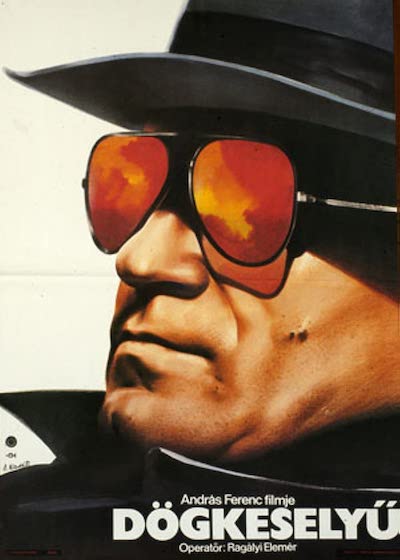
  • Ferenc András – Dögkeselyü AKA The Vulture (1982)

    1981-1990CrimeFerenc AndrásHungaryThriller

    Quote:
    Two old women who happen to be pickpockets stole money from Simon, the taxi driver. The police are unable to find the thieves, so Simon decides to find them himself. In his search he sinks deeper and deeper into the Hungarian crime world. He becomes a criminal and then his rampage begins until the unpredictable climax.Read More »

  • Miklós Jancsó – Jézus Krisztus horoszkópja AKA Jesus Christ’s Horoscope (1989)

    1981-1990ArthouseHungaryMiklós JancsóPolitics

    Jézus Krisztus horoszkópja (Jesus Christ Horoscope, 1988) was made as the second film of a tetralogy. This time the theme is directly an agony of Communism. Cserhalmi plays a demonic-looking poet named Josef K (who, contrary to the author of Der Process / The Trial, has his surname spelt “Kaffka”) who in a black hat and a waving coat walks through different flats and hotels in Budapest and has unclear relationships with three women: Márta (Ildikó Bánsági) and ex-policewoman Kata (Dorottya Udvaros) are murdered in mysterious circumstances; Josef K himself then vanishes in the presence of a meteorologist, Juli (Juli Básti).Read More »

  • Károly Makk – Magyar rekviem Aka Hungarian Requiem (1990)

    Károly Makk1981-1990ArthouseDramaHungary

    Quote:
    In 1956, there was an uprising of Hungarians against their Russian overlords, which the Russians briefly allowed to flower and then ruthlessly suppressed. One suspects that the country’s rulers knew about the uprising in advance and permitted it to continue so as to be able to identify who was most actively involved. In this film, it is 1958, and five very different men are waiting in their prison cells to be taken out and executed. Their dreams, fantasies and recollection relieve what might otherwise seem to be an unnecessarily repetitive situation. The internationally known French star Matthieu Carrière plays one of the condemned men. ~ Clarke Fountain, RoviRead More »

  • Ondrej Trojan – Zelary (2003)

    2001-2010Czech RepublicDramaOndrej TrojanWar

    Synopsis:
    A nurse and her surgeon-lover are part of a resistance movement in 1940s Czechoslovakia. When they are discovered, her lover flees and she must find a place to hide. A patient whose life she saved, a man from a remote mountain village where time stopped 150 years ago, agrees to hide her as his wife.Read More »

  • László Lugossy – Szirmok, virágok, koszorúk AKA Flowers of Reverie (1985)

    1981-1990ArthouseDramaHungaryLászló Lugossy

    Quote:
    A beautiful, melancholy film set in the nineteenth century but with obvious contemporary reverberations, Flowers of Reverie recently won the important Silver Bear (Special Jury Prize) at the Berlin Film Festival ’85. The story tells of a family divided by political antagonisms and allegiances in the years following the defeat of the 1848-49 Hungarian Revolution and War of Independence against imperial Austria. Ferenc Majlath, an ex-soldier who participated in the revolution, now allies himself with his exiled commanding officer to the dismay of his uncle, the family patriarch who is a supporter of the Emperor Franz Joseph. In a country littered with secret police eager to ferret out supporters of the failed rebellion, Ferenc is soon jailed; when he refuses to sign a confession and exhibits signs of extreme depression, he is committed to an insane asylum. Read More »

  • Gábor Bódy – Amerikai anzix AKA American Torso (1975)

    1971-1980ArthouseExperimentalGábor BódyHungary

    Free Image Hosting at www.ImageShack.us

    29f7c043f76a2bde437fd0d52a185152

    The experimental film takes place in North-Caroline. In the last days of the American civil war three characteristic figures of the 1849 Hungarian emigration fight: the geographer artillery officer Fiala János, the rational scientist, Vereczky Ádám, the heroic fatalist and the attendant of Fiala: the emotional Boldogh, who struggles with homesickness. The fate of all the “”slowed down”” revolutionaries is hopeless. The boasting Vereczky dies a meaningless death on a huge swing which he was able to survey with the theodolite. Boldogh longs for home, maybe to die, while there is only one possibility for Fiala: he can participate in the construction works of the Pacific railway.Read More »

Back to top button