

IMDB:
Yuri is a young musician. He is very afraid of death. For this reason, he hardly leaves his apartment. One day he meets a mysterious man who claims to be death. He takes him on an extraordinary journey.Read More »
IMDB:
Yuri is a young musician. He is very afraid of death. For this reason, he hardly leaves his apartment. One day he meets a mysterious man who claims to be death. He takes him on an extraordinary journey.Read More »

At the end of 1970, the Filmmuseum in the City Museum of Munich showed a small Sirk retrospective (six productions from All That Heaven Allows to Imitation of Life). Fassbinder watched all of the films in this showcase and was deeply moved: “That really breaks you up in the movie theater. You understand something about the world and what it is doing to you.” This cinematic experience must have been a revelation for him. He described his impressions vividly in an extensive essay, and came to the conclusion: “I have seen six films by Douglas Sirk. Among them are the finest films in the world.” The young filmmaker went to visit the Hollywood veteran, who was now living in the Swiss canton of Ticino. And when the almost eighty-year-old director was teaching at the Munich Academy of Television and Film (HFF/M), Fassbinder took on one of the parts in an academic production that Sirk was supervising. (He played in Bourbon Street Blues, the film adaptation of a one-act play by the well-known writer Tennessee Williams). Sirk’s work experienced a renaissance, not least of all thanks to Fassbinder’s essay, but the influence Sirk exerted on him has nevertheless been somewhat exaggerated.Read More »
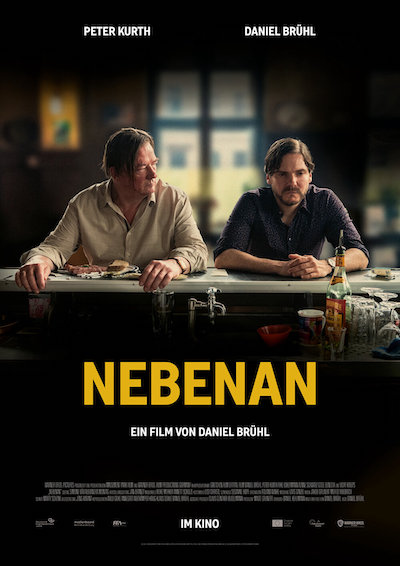
Berlin, the Prenzlauer Berg district. When this summer day is over, nothing will ever be the same again. Only Daniel doesn’t know that yet. The protagonist of this tragicomic scenario is as unsuspecting as he is accustomed to success. His loft apartment is stylish and so is his wife, and nanny has the children under control. Everything is tip-top, bilingual and ready for him to jet off to an audition where a role in a superhero film awaits the celebrated German-Spanish actor. Popping into the bar on the corner, he finds Bruno sitting there. As transpires by the minute, Bruno has been waiting for this moment for a long time. And so this eternally overlooked man – one of reunification’s losers and a victim of the gentrification of what was once East Berlin – takes his revenge. With Daniel as his target.Read More »

Encouraged by Fassbinder, with whom he became friendly after the then-enfant terrible of the German cinema visited him in Lugano, Sirk also did some teaching during the late 1970s at the film school in Munich, where he made three short films with his students. Sprich zu mir wie der Regen was the first of these films supervised by Sirk.Read More »
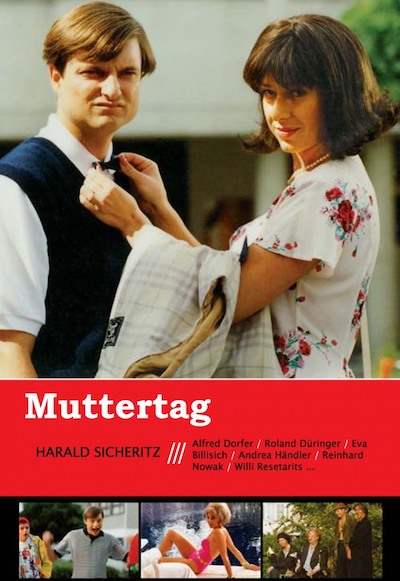
This film is best described with the words perfect absurdity. It has influenced a whole generation and will always remain a classic – due to its limited popularity abroad, at least in Austria. Almost every line of dialog has become a classic catchphrase. Many people in Austria know the movie by heart, because it’s getting quoted all the time.Read More »
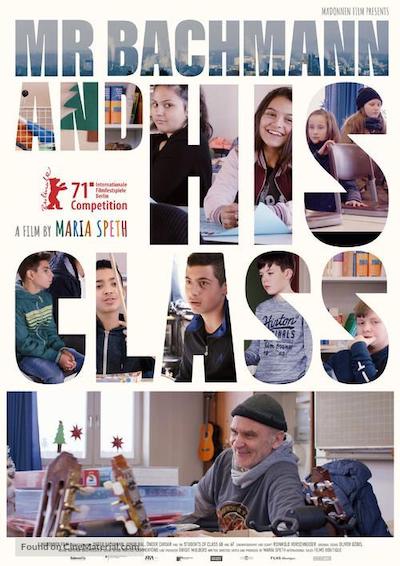
Mr. Bachmann and his pupils (aged between 12 and 14) live in Stadtallendorf, formerly the site of a secret Second World War munitions factory and now an industrial town that’s home to generations of economic migrants. The class is representative of this history, with several recent arrivals still struggling with the language of their new home. All the while, their sexagenarian, rock band T-shirt wearing teacher’s effortlessly egalitarian approach encourages students to develop empathy for one another through openness and listening. Shot over six months, Reinhold Vorschneider’s patient cinematography works with the spontaneity of the classroom environment to lend emotional weight to even the most fleeting moments. The pacing and observational method call to mind the work of Frederick Wiseman, yet Speth’s intimate approach creates an engaging and tender drama.
Silver Bear Jury Prize and Audience Award (Berlin 2021)Read More »

This satire of post re-unification Germany follows a couple investigating the disappearance of a German social worker and the Polish family in his care. Their search takes them to the town of Rassau, where the remaining hostage takers are living undercover as a priest and a furniture wholesaler.Read More »

The survivors of the old Fassbinder crew gather one last time to shoot a remake of Pasolini’s Salò. Meanwhile, the producer sends an agent to Hollywood to meet Udo Kier, Kitten Natividad and others on a mission to raise money and get ex-Visconti superstar Helmut Berger to appear in the film.Read More »

It starts straight away with our young hero trying to shoot a bullet into his head. No explanation whatsoever is given as to his motives – moviegoers in the Germany of 1931 obviously did not need any. He is disturbed by a burglar and puts a contract on himself, so to speak. The burglar tells him that he will hit him in the near future and dutifully makes a cross on his back with a piece of chalk – not unlike the ‚M’ in Fritz Lang’s movie of the same year. With the cross on his back the young hero goes to a nightclub – and falls in love with a young girl. Of course he tries to rescind from the contract and desperately looks for the burglar, only to learn that he had passed on the job to a subcontractor! Not just any subcontractor, but the very same Jim, the man with the scar, as he solemnly declares.Read More »