German

  • Danièle Huillet & Jean-Marie Straub – Klassenverhältnisse AKA Class Relations [+Extra] (1984)

    1981-1990ArthouseDanièle Huillet and Jean-Marie StraubGermany

    The Lincoln Center wrote:
    Straub and Huillet were frequently drawn to unfinished texts—Hölderlin’s The Death of Empedocles, Schoenberg’s Moses and Aaron—and for Class Relations, one of their supreme accomplishments, they turned to Kafka’s never-completed Amerika. “Kafka, for us,” Straub declared, “is the only major poet of industrial civilization, I mean, a civilization where people depend on their work to survive.” Kafka never did visit the America of his novel, so perhaps it’s fitting that the saga of Karl Rossmann, a teenage immigrant from Europe who arrives to a strange new land rife with swindlers and hypocrites, was largely shot in Hamburg. The style of Straub-Huillet, with their Brechtian performances, long takes, and static framing, is often characterized as “austere,” yet such a description belies the extraordinary richness of their images, the palpable weight of their direct-sound, and the invigorating clarity of their political commitment.Read More »
  • Eduard Tisse – Frauennot – Frauenglück AKA Women’s Misery – Women’s Happiness (1976 edition) (1930)

    1921-1930DocumentaryEduard TisseGermany

    Quote:
    First feature produced in Switzerland. Film deals with abortion, in two parts: first, fictional part addresses the social aspects; second, documentary part addresses the dangers of clandestine abortions. Film concludes with a eulogy to maternity.Read More »

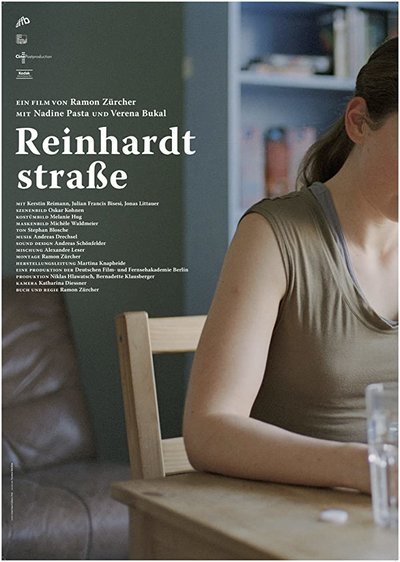
  • Ramon Zürcher – Reinhardtstraße (2009)

    Arthouse2001-2010GermanyRamon ZürcherShort Film

    “Janine and Nadine have a close and symbiotic friendship. They share a flat together with their friends Mark and Andreas. The flat share is a universe with its own rules, languages, manners and relationships. A stimulating place, where chaos is floating through corridors and rooms. Pending over everything is the approaching breakup of the community, which becomes more and more perceptible within short moments of silence. One of the flat mates, Janine, is going to leave. Janine’s farewell party affects each of her friends in a different way. A precise description of a fragile structure breaking apart.”Read More »

  • Fritz Lang – Die 1000 Augen des Dr. Mabuse AKA The 1,000 Eyes of Dr. Mabuse (1960) (HD)

    1951-1960CrimeFritz LangGermanyMystery

    Quote:
    In 1960s Germany, criminal mastermind Dr. Mabuse uses hypnotized victims and the surveillance equipment of a Nazi-era bugged hotel to steal nuclear technology from a visiting American industrialist.Read More »

  • Roland Klick – Bübchen AKA Little Vampire (1968)

    Drama1961-1970CrimeGermanyRoland Klick

    Synopsis:
    A strange case baffles the police and the citizens of a German small town. A two-year old girl has disappeared. There are suspects, innocents, guilty ones and a web of lies. It’s saturday afternoon, and Achim’s parents are invited for a topping-out ceremony. The neighbour’s daughter, Monika (Renate Roland), is the babysitter for Achim (Sascha Urchs) and his little sister Kathrin, but Monika doesn’t take the job too serious. She’d rather go for a ride with her boyfriend. Through a unforeseen row of circumstances, Achim becomes the murderer of his sister, and hides the body in a wrecked car on the scrapyard. When the parents return home, a frantic search for the little child begins. Only the father (Sieghardt Rupp) seems to know the truth…Read More »

  • Walter Heynowski & Gerhard Scheumann – Der lachende Mann – Bekenntnisse eines Mörders (1966)

    1961-1970Amos Vogel: Film as a Subversive ArtDocumentaryGerhard ScheumannGermanyPoliticsWalter Heynowski

    Amos Vogel, Film as a Subversive Art:
    Posing as a West German TV production crew, the two East German directors of this film persuaded a former leading German mercenary of the Congo civil war (one of many!) to discuss his activities and heroic achievements in what is surely one of the most sensational exposés of its kind. Continually smiling or laughing, this man, a self-acknowledged Nazi, proudly reveals that he went to the Congo to save Western civilization from Bolshevism – to complete the work of the Nazis. Dressed in his military jungle uniform (with his Second World War decorations) he waxes eloquent about the ‘colours’ of South Africa, ‘explains’ apartheid, and freely discusses his ‘adventures’. Shots of corpses, tortures, and executions of Blacks are intercut. It is not often that one can see and hear a real, ‘live’ Nazi in action, talking (more or less) freely because he presumed himself to be among friends instead of with two of the most clever political propagandists of our time, working for the other side.Read More »

  • Harun Farocki – Einschlafgeschichten (Brücken) AKA Bedtime stories (Bridges) (1977)

    1971-1980ArthouseGermanyHarun FarockiShort Film


    One of the five episodes of Bedtime stories for children by Harun Farocki
    Quote:
    The five Einschlafgeschichten are bed-time stories for children, made 1976/77, in which Farocki uses simple objects to elucidate cinematographic method. […]

    The stories deal with bridges, cable cars and ships crossing roads. What is worth saying? What is worth remembering? The two girls in the film imagine what is shown. Bridges that move. Something quite different to ‘bridges’. […]Read More »

  • Harun Farocki – Einschlafgeschichten (Schiffe) AKA Bedtime stories (Ships) (1977)

    1971-1980ArthouseGermanyHarun FarockiShort Film

    One of the five episodes of Bedtime stories for children by Harun Farocki.
    Quote:
    The five Einschlafgeschichten are bed-time stories for children, made 1976/77, in which Farocki uses simple objects to elucidate cinematographic method. […]

    The stories deal with bridges, cable cars and ships crossing roads. What is worth saying? What is worth remembering? The two girls in the film imagine what is shown. Bridges that move. Something quite different to ‘bridges’. […]Read More »

  • Jürgen Böttcher – Rangierer AKA Shunters (1984)

    1981-1990DocumentaryGermanyJürgen BöttcherShort Film

    Quote:
    A shunter’s job is to slow down, link, and unlink train wagons at a central station. The film documents – without any commentary – the working hours of few shunters at the shunting-station Dresden-Friedrichstadt, which was the largest such station in all of the former German Democratic Republic. They work day and night, amidst snow and fog at the railway tracks, speaking only as much as necessary.Read More »

Back to top button