

It describes the twilight of a sacred monster, Jules Maugin, an actor at the height of his glory. Under the famous personality, the big mouth, and the social shell, lies the intimate portrait of a man laid bare.Read More »
It describes the twilight of a sacred monster, Jules Maugin, an actor at the height of his glory. Under the famous personality, the big mouth, and the social shell, lies the intimate portrait of a man laid bare.Read More »

Time Out wrote:
Bernard (Depardieu) is a wealthy businessman, happily married to beautiful, elegant Florence (Bouquet). Much to his astonishment, he falls in love with his comparatively dowdy secretary, Colette (Balasko). It’s no office fling but the real thing, and – to Bernard – completely incomprehensible. Once again charting the outrageous repercussions of an obsessive love, Blier proceeds to explore the situation from every conceivable angle, merrily constructing and deconstructing alternative stories for all he’s worth. Although the film fails to sustain itself over 90 minutes, much of the first half is very funny and occasionally sharp; Buñuelian motifs are mischievously resurrected, and Blier’s parodies and fantasy sequences are brilliantly dovetailed in a series of waltzing, switchback camera movements that are a joy to behold. Blier is a classy, amusing film maker, but one suspects he is too fundamentally bourgeois to truly shock or surprise; and this movie ends dispiritingly with the most banal of all its potential options.Read More »

Gérard Depardieu has at last returned to his true form in THE SINGER, which was a huge hit in France. Xavier Giannoli has created a genuinely touching love story which displays humour and a sense of compassion for its characters.
Depardieu plays the part of Alain Moreau, a nightclub crooner in Clermont-Ferrand described by one critic as: “much lower in the food chain than Charles Aznavour, but cut from the same cloth.”Read More »

Since his early masterpiece Pain In The Arse [L’emmerdeur, as writer, 1973; remade as director, 2008], Francis Veber, primarily as writer, occasionally as director, has been the genius behind many of the funniest French comedies and filmed farces of the last four decades, including such cheeky pleasures as La cage aux folles, Three Fugitives, and Le dîner de cons. His stock-in-trade is PC-tickling, broad knockabout, duo- or trio-based character comedy tied to tightly-scripted narratives, spot-on timing and slaying reaction shots. These are all present and correct in his highly enjoyable Paris-set latest, a criminal caper that harps back in many ways to that first triumph, this time with cow-eyed Jean Reno and strawberry-nosed Gérard Depardieu as the hard man/idiot couple playing off each other with the same delicious stupidity as did Lino Ventura and Jacques Brel 30-odd years ago. Okay, Tai-toi! isn’t exactly sophisticated entertainment: if you don’t find Depardieu’s electric-shock hairdo funny, you’ll probably hate it. Among the excellent support, Richard Berry gives good deadpan as the police commissaire and André Dussollier is superb as the prison psychiatrist who unwittingly unites the fifth arrondissement’s sharpest, most silent, criminal brain with its dumbest, most talkative ox.
— Wally Hammond, Time Out LondonRead More »

Serge Pilardosse has just turned 60 and is about to retire from his job in a slaughterhouse. He has always worked from the age of sixteen, never been on sick leave. So, how will this man fill his days? He does not like reading; doing odd jobs about the house is not his cup of tea; shopping is not his passion … To make matters worse, his wife Catherine, who still works in a supermarket, notices that her husband will not get full retirement benefits since some of his former employers failed to do the requisite paperwork. So off goes Serge, riding his old Munch “Mammut” bike, in search of the missing documents … (IMDb)Read More »

Synopsis:
It’s late 17th century. The viola da gamba player Monsieur de Sainte Colombe comes home to find that his wife died while he was away. In his grief he builds a small house in his garden into wich he moves to dedicate his life to music and his two young daughters Madeleine and Toinette, avoiding the outside world. Rumor about him and his music is widespread, and even reaches to the court of Louis XIV, who wants him at his court in Lully’s orchestra, but Monsieur de Sainte Colombe refuses. One day a young man, Marin Marais, comes to see him with a request, he wants to be taught how to play the viol.Read More »
Quote:
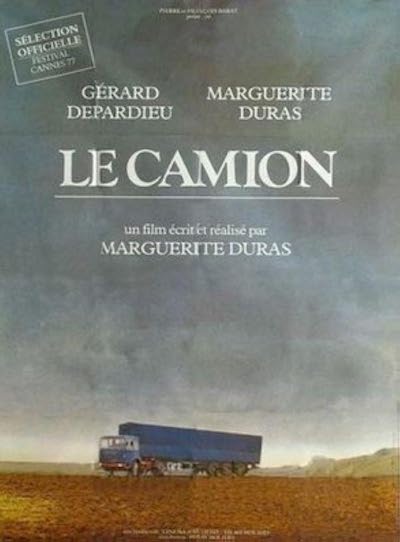
In this most talky and personal of films, director Marguerite Duras and actor Gerard Depardieu do an on-camera read-through of a movie script. Occasionally, the director comments about the characters or their motivations, and sometimes the actor does. That’s all — there is no action, there are no location shots, no one pretends to be anything else. The script itself tells about an encounter between a blank-slate of a woman hitchhiker, and a communist truck driver. As the reading progresses, Duras comments bitterly about the failed ideals of communism and the glorious revolution that will probably never happen.Read More »
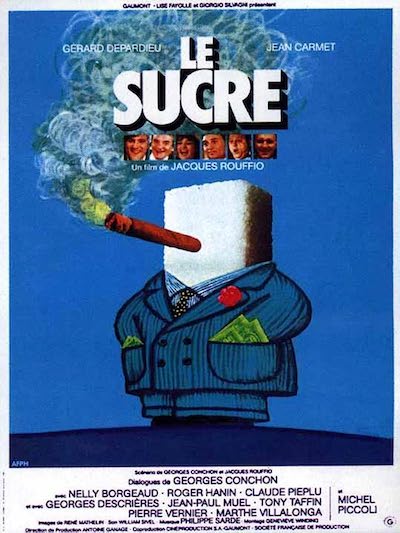
One influent person make the curves of the sugar price rocket up artificially on the stock market whereas on the other side of the power another person losses all his money when the market crash down after somebody advised him to invest on sugar.Read More »
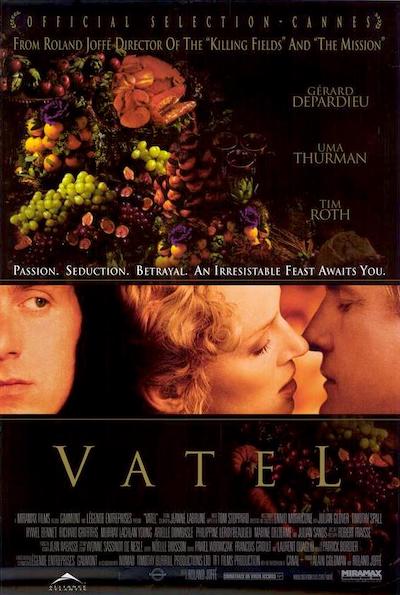
In 1671, with war brewing with Holland, a penniless prince invites Louis XIV to three days of festivities at a chateau in Chantilly. The prince wants a commission as a general, so the extravagances are to impress the king. In charge of all is the steward, Vatel, a man of honor, talent, and low birth. The prince is craven in his longing for stature: no task is too menial or dishonorable for him to give Vatel. While Vatel tries to sustain dignity, he finds himself attracted to Anne de Montausier, the king’s newest mistress. In Vatel, she finds someone who’s authentic, living out his principles within
the casual cruelties of court politics. Can the two of them escape unscathed?Read More »