
Quote:
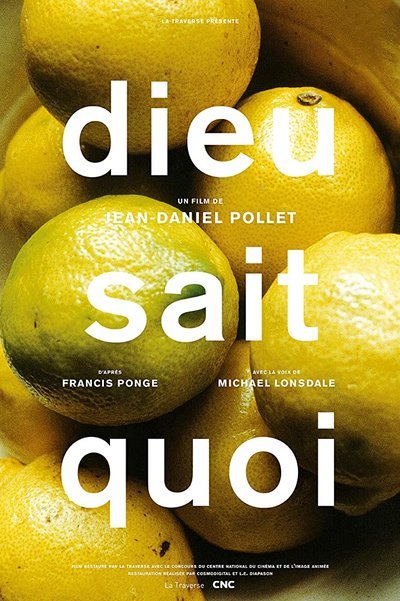
Dieu sait quoi can be described as a cinematographic essay managing to convey Francis Ponge’s approach to the world, his special relation between silent objects and speech, defining the space of life and knowledge.Read More »
Quote:
Dieu sait quoi can be described as a cinematographic essay managing to convey Francis Ponge’s approach to the world, his special relation between silent objects and speech, defining the space of life and knowledge.Read More »

Quote:
André Mercier, is a failed, embittered writer, working under the pen name Albin Mercier. On a journalism gig in Germany, his path crosses with that of Andreas Hartmann, another writer, who’s managed to make a living for himself. The successful Andreas is married to Hélène, a beautiful Frenchwoman, who quickly becomes the apple of Mercier’s eye. While Andreas is off on a business trip, Mercier tries to seduce Hélène to make her his lover and, eventually, take over Andreas’ life.Read More »
Quote:
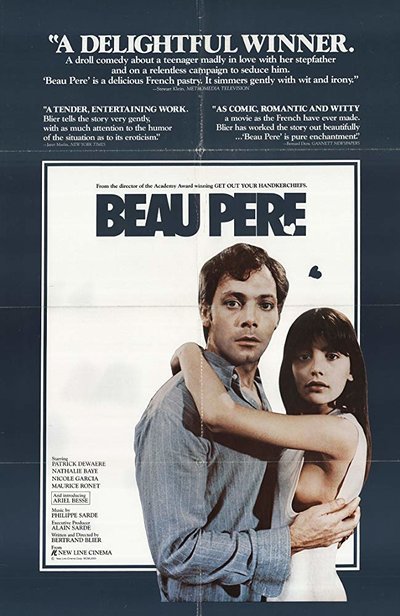
Remy is morose, nearing 30 with his career as a musician going nowhere and his eight-year marriage to Martine souring. Then, Martine dies in a car crash, and Marion, her 14-year-old, wants to stay rather than move to her father’s. Remy likes the idea: he loves her, he’s raised her, and she offers him emotional responsibility. Marion’s father objects, but she’s willful, so he relents. Soon, she tells Remy she finds him attractive, that she’s now “a woman,” and why can’t they be lovers. Remy is appalled, but weakens, missing her when she spends Christmas with her dad. What if they do become lovers? What next? And what if a woman more his age enters the picture?Read More »
Synopsis:
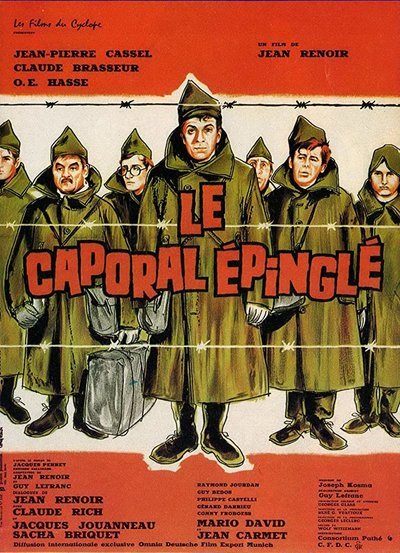
‘An upper-class corporal from Paris is captured by the Germans when they invade France in 1940. Assisted and accompanied by characters as diverse as a morose dairy farmer, a waiter, a myopic intellectual, a working-class Parisian, and a German dental assistant, the corporal tries to escape from prison camps, sometimes making it a few yards, sometimes reaching the French border.’
– [email protected] (IMDb)Read More »

Quote:
Although it is often described as a documentary, Land Without Bread is actually an early parody — some would say a Surrealist parody — of documentary filmmaking. The film focuses on the Las Hurdes region of Spain, the mountainous area around the town La Alberca, and the intense poverty of its occupants. Buñuel, who made the film after reading an ethnographic study (Las Jurdes: étude de géographie humaine (1927)) by Maurice Legendre, took a Surrealist approach to the notion of the anthropological expedition. The result was a travelogue in which a disinterested narrator provides unverifiable, gratuitous, and wildly exaggerated descriptions of the human misery of Las Hurdes.Read More »

A couple in crisis. He, disillusioned, sees his life upset the day an entrepreneur offers him to plunge back into the time of his choice.Read More »

The world and a life in four walls, and another portrait of a mother – selfish and generous, mercurial and unchanging. C’est la vie! (1980) takes Pagnol and Renoir’s experiments with open-air theatre to inspired and ecstatic conclusions, especially the latter’s love of depth-framing across windows and partitions, and lays the groundwork for Vecchiali’s later experiments with long-take space and time in Once More (1988). Also a pseudo-sequel to Marie-Claude Treilhou’s exquisite Simone Barbès ou la vertu (1980), reaffirming the Diagonale as not just a production model, but a kind of surrogate family, and a creative universe unto this forged community and itself. With Chantal Delsaux, Ingrid Bourgoin, Jean-Christophe Bouvet, and my beloved Hélène Surgère and Michel Delahaye.Read More »

Quote:
ne of Emmanuelle Beart’s less known part but one of her most emotionally intense ,”Les Enfants Du Desordre” is a work by Yannick Bellon,once nicknamed the female Andre Cayatte (which ,IMHO ,is no insult for Cayatte paved a reliable way to activist directors ),who was the first in France to tackle the burning subject of rape ,just like a woman would do (she was preceded by American Ida Lupino ).Her work dealing with cancer (“L’Amour Nu”) was not as convincing,taking place in privileged milieus whereas her “La Triche” about homosexuality was downright embarrassing :killing the gay at the end of her movie is not an improvement on the American works of the sixties such as “the fox” or “children’s hour” !Read More »

It is a film about motorway, tourists under transhumance, concrete picnic tables, lines to the restroom, tepid melon slices and carwashs. It is a film about a man who wants to leave and a kid holding him back. It’s a summer’s film.Read More »