French

  • Maurice Pialat – La maison des bois (1971)

    Maurice Pialat1971-1980FranceTVWorld War One

    Quote:
    Made in 1971 for French TV, the epic LA MAISON DES BOIS
    comes from early in the Pialat’s belated
    feature-filmmaking career. Rather like Loach’s DAYS OF
    HOPE (Cinémathèque 2004) or Edgar Reisz’s HEIMAT
    series, it begins in costume drama and an ethnographic
    view of rural French life during World War One, and in
    an apparently sentimental tale of war orphans. But
    then it irises out from costume drama conventions into
    the transcendental, exploring Pialat*s spiritual
    themes, as well as the social dynamics, trauma and
    collective experiences of war.Read More »

  • Robert Enrico – Le vieux fusil AKA Vengeance One by One AKA The Old Gun (1975)

    Robert Enrico1971-1980FranceThrillerWar

    In Montauban in 1944, Julien Dandieu in a surgeon in the local hospital. Frightened by the German army entering Montauban, he asks his friend Francois to drive his wife and his daughter in the back country village where Julien has an old castle. One week later, Julien decided to meet then for the week end, but the Germans are already occupying the village.Read More »

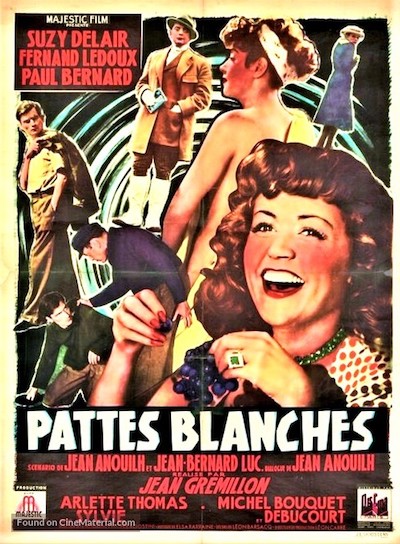
  • Jean Grémillon – Pattes blanches AKA White Paws (1949)

    Jean Grémillon1941-1950ClassicsDramaFrance

    The “white paws” of this noirish melodrama are the gaudy white spats sported by a reclusive French aristocrat in a fishing village on the coast of Normandy. Scripted by French playwright Jean Anouilh, who was originally to have directed it, Pattes blanches was ultimately brought to the screen by Grémillon, who accepted the project after the commercial failure of his Le ciel est à vous. The moody plot concerns the relationship of the aristocrat (Bernard) and his vengeful half-brother (Bouquet) and their rivalry over a promiscuous flirt from the city (Delair) who has married the local innkeeper. Although produced within the framework of the commercial cinema, Grémillon’s film manages to imbue the melodrama with a sharp sense of class divisions and his characteristic visual harmonies. (Harvard Film Archives)Read More »

  • Julien Duvivier – Marianne de ma jeunesse AKA Marianne of My Youth (1955)

    Julien Duvivier1951-1960DramaFantasyFrance

    In a Bavarian forest, the pupils of a boarding school are about to have their lives changed by the arrival of Vincent, a young man who can charm wild animals with his guitar. One day Vincent ventures across the lake and meets the mysterious Marianne…Read More »

  • Rita Azevedo Gomes – Altar (2003)

    Rita Azevedo Gomes2001-2010ArthouseDramaPortugal

    Quote:
    René, an actor, who has long lived withdrawn from reality after the death of his wife, Hélène. Proud in his isolation, he rarely sees anyone, yet enjoys spending hours on the phone with friends. His ghosts from a distant past haunt him. The deep restlessness of a first love remain indecipherable as before. Like Hermann Hesse’s short story Juin, from which the film is freely inspired by, it is about the mysteries of memory, about the strength of its expression through the spoken word. On the strength of the word as cinematic image.Read More »

  • Thierry Zéno – Bouche sans fond ouverte sur les horizons (1971)

    1971-1980ArthouseBelgiumDocumentaryThierry Zéno

    Quote:
    Bouche sans fond ouverte sur les horizons (1971, 26′)
    In 1971 Thierry Zéno creates a fascinating portrait of artist Georges Moinet in the form of a 16 mm medium-length film. A schizophrenic who lives in a psychiatric hospital near Namur, Moinet paints. After being mute for 24 years he chooses this cinematic encounter to explain his artist approach, revealing what lies behind his personal cosmogony. But this long logorrhoea proves disturbing and fails to provide possible clues to understanding his work, gradually becoming a form of music that blends in with the sounds and distant, invisible hubbub of the hospital. With Alessandro Ussai behind the camera and Roger Cambier responsible for the sound, Zéno gets up close to Moinet to better capture him in all his demiurgical excessiveness, his existence on the fringes but also his humanity, deconstructing in a series of very tight shots the man and his canvasses.Read More »

  • Jean Rouch – Ispahan: lettre persane (1977)

    Jean Rouch1971-1980DocumentaryIran

    Jean Rouch’s camera follows his friend, filmmaker/actor/critic Farrokh Ghaffari, as he walks and talks us through the famous Shah Mosque in Esfehan. While guiding him and answering his questions, Ghaffari makes Rouch discover the beauties of the architecture of the mosque and its impact on the city. Throughout the tour, they discuss Islam’s complex relationship with death, sex and cinema.Read More »

  • Med Hondo – Les Bicots-Nègres vos voisins (1974)

    Med Hondo1971-1980ArthouseFrance

    Quote:
    Arguably an outgrowth of Soleil Ô, Les Bicots-nègres analyses the living conditions of African migrant workers in France in the mid-1970s. The film has the potential to be a classic case study of cinematic over-determination. It comprises seven sequences exploring, respectively, the conditions of possibility of cinematic representation in Africa (the opening sequence), historical dissonance through the dialectic of past and present (the post-credit sequence), a flashback to the eve of African independence (the imaginary garden party sequence), the predicaments of the post-colony, an assessment of the living condition of migrant workers and the actions taken to transform these conditions, and a final sequence in a circular mode, which returns to the new cinema.
    In Les Bicots-nègres, Med Hondo engages the dual front of cinema and history through the production of what might be referred to as an indocile image. In the cinema of Med Hondo, the indocile image purports to do, undo and sometimes outdo both cinema and history.Read More »

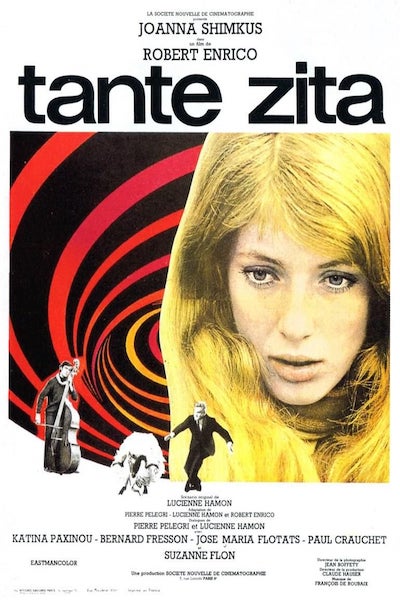
  • Robert Enrico – Tante Zita aka Aunt Zita (1968)

    Robert Enrico1961-1970ComedyFranceRomance

    A lonely young woman discovers life, love and death (and a runaway sheep) in one eventful night in Paris. Director Robert Enrico charms a delightful performance from Joanna Shimkus.Read More »

Back to top button