Françoise Christophe

  • Vittorio Cottafavi – Una Donna Libera AKA A Free Woman (1954)

    Vittorio Cottafavi1951-1960ClassicsDramaItaly
    Una Donna Libera (1954)
    Una Donna Libera (1954)

    Liana, a young architecture student from a wealthy family, is about to get married to an engineer. Everything in her life seems well until she is confronted with the idea she is sacrificing the rest of her life for a man she barely knows and a mediocre lifestyle. So begins a series of romantic encounters in which Liana tries to find her freedom and happiness, but which will ultimately lead her to a tragic fate.

    Selected as one of the “100 Italian Films To Be Saved”Read More »

  • Antonio Margheriti – La morte negli occhi del gatto AKA Seven Deaths in the Cat’s Eye (1973)

    1971-1980Antonio MargheritiGialloHorrorItaly

    When a fractious aristocratic family gathers at an ancestral Scottish castle, a straight razor-wielding murderer is also an unwelcome guest in Seven Deaths in the Cat’s Eyes (1973, aka Corringa or La morte negli occhi del gatto), a blood-laced thriller – complete with giallo flourishes, tantalizing sexuality, a pet gorilla and an omnipresent ginger tabby – from genre filmmaker Antonio Margheriti (aka Anthony M. Dawson).Read More »

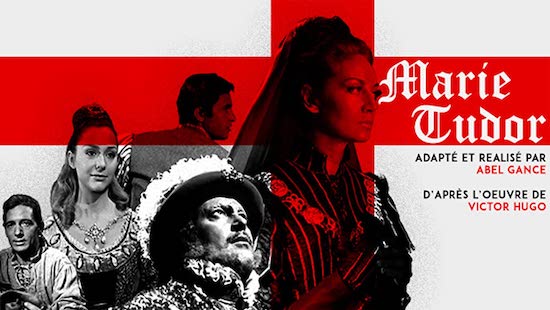
  • Abel Gance – Marie Tudor (1966)

    Abel Gance1961-1970DramaFranceTV

    Abel Gance’s Marie Tudor was produced by ORTF and broadcast on French television in two parts, on 23 and 30 April 1966. It is an adaptation of Victor Hugo’s play of the same name (1833), and was the first of two productions Gance made for French television – the second being Valmy (1967). Marie Tudor mines historical and literary material familiar from Gance’s earlier work. He had already turned to sixteenth-century history for his Lucrèce Borgia (1935) (which also echoed another Hugo play) and for his script for Jean Dréville’s La Reine Margot (1954) – likewise a literary adaptation (Alexandre Dumas’ novel of 1845). Though modest fare by Gance’s standards, Marie Tudor was one of the projects that marked his return to critical and commercial visibility in the 1960s – starting with Austerlitz (1960) and ending with his last film, Bonaparte et la Révolution (1971). This copy comes from the digital archive of the Institut national de l’audiovisuel (INA).Read More »

Back to top button