

Civil rights lawyer Chase Strangio’s courtroom battles against anti-trans laws intertwine with exposing media narratives impacting public perception of transgender rights.Read More »
Civil rights lawyer Chase Strangio’s courtroom battles against anti-trans laws intertwine with exposing media narratives impacting public perception of transgender rights.Read More »
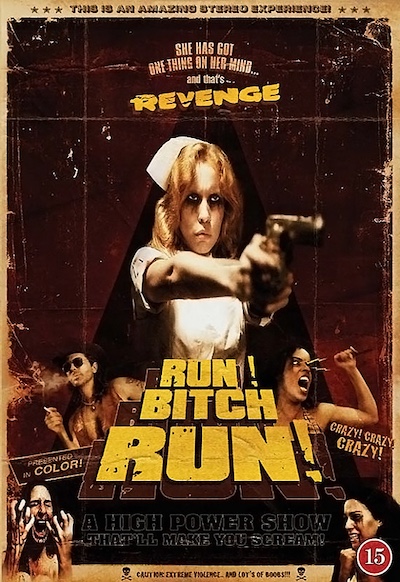
Things go horribly wrong when Catherine and Rebecca, two Catholic schoolgirls, knock on the wrong door while selling religious paraphernalia.Read More »

Blaise Dumas, war correspondent, covers an armed conflict in Eastern Europe. When he wakes from a temporary coma in his home town of Quebec City, Blaise discovers that his long time collaborator and photographer has not come back with him. He then sets out to recapture the events that led to his friend’s disappearance and his own narrow escape from the war zone.Read More »

Synopsis wrote:
A man faces police questioning after helping a drunk girl the night before.Read More »

A London police inspector becomes attracted to a ship’s radio operator and discovers smuggled gems. He must arrest her if guilty, protect her from the smuggling gang, and protect her from the silenced gang.Read More »
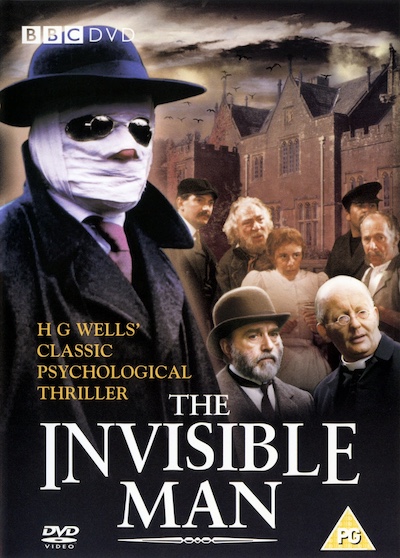
This most seminal of stories has given birth to many inferior versions too numerous to count, but it takes the BBC once again to be faithful to the original masterwork.
The underlying theme of which stresses that, not all scientific discoveries are beneficial to mankind.
The eponymous character is a brilliant but obsessive researcher, who’s experiments in Optical Densities lead him eventually into a downward spiral of crime, violence and Death.
Although made in 1984 the special effects are rather good, the scenes of Griffin becoming Invisible, layer by layer are worthy of a big budget film.
This is as close as you’ll get if you haven’t read the book.
And if not why not? it’s excellent.
Produced by Barry Letts, screenplay by Terrance Dicks.
Story first publised 1897. Review: Keith SnowdonRead More »
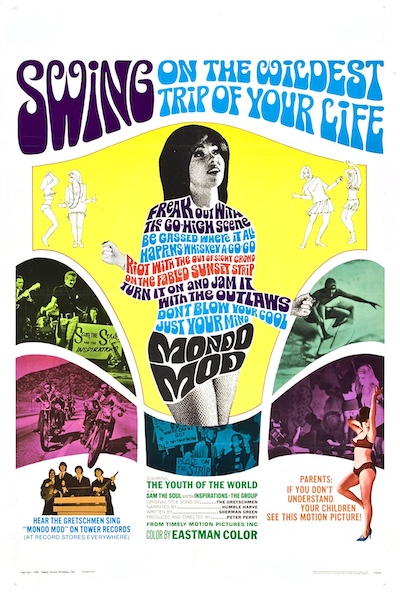
Beginning with the title song, “It’s a Mod Mod World” by the Gretschmen, “Mondo Mod” explores West Hollywood, California’s famous Sunset Strip in 1966. We journey from discotheques to dirt bike competitions, taking in surfing, karate, go-carting, the Hell’s Angels, political protests, pot parties and all the other trappings of the Now Generation. Along the way, we’re treated to priceless footage of Pandora’s Box, Gazzarri’s, the Whisky A Go-Go, the Fifth Estate, and countless other forgotten haunts of “the neon Neverland that the mod set calls home.” Starring, according to the credits, “The Youth of the World,” “Mondo Mod” features a pot-smoking, bongo-blasting finale during which these hipsters and flipsters start to strip down. Both the film’s cinematographers became world-famous: Laszlo Kovacks for “Easy Rider,” and Vilmos Szigmond for “Close Encounters of the Third Kind.”Read More »

Quote:
Cleopatra situates itself in the same relationship to Hollywood as the Warhol/Morrisey films of the
period. It corresponds to Joseph Mankiewicz’s 1963 Cleopatra, starring Elizabeth Taylor and
Richard Burton which Auder’s cast watched and used as the starting point for scene by scene
improvisation Auder drew his cast from Warhol’s ensemble – including not only Viva and Louis
Waldon, but also Taylor Mead, Ondine, Andrea Feldman, Gerard Melanga and others.
The film revels in epic excess like Mankiewicz’s cinematic debacle which succumbed to vast length,
a bloated budget, multiple revisions and a scandal occasioned by the extramarital escapades of its
co-stars.Read More »

In 16th-century England, Agnes, deeply attuned to the natural world, and Will defy expectations to build a life together. When the loss of their child shatters the family, sorrow strains their bond, as Will retreats into his work, transforming mourning into the tragedy Hamlet.Read More »