Czech

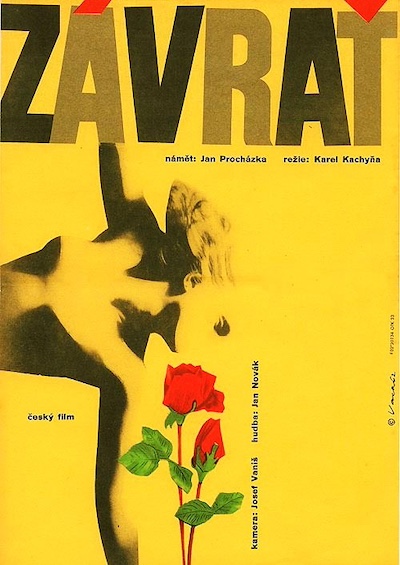
  • Karel Kachyna – Závrat AKA Vertigo (1963)

    Karel Kachyna1961-1970Czech RepublicDrama
    Závrat (1963)
    Závrat (1963)

    Psychological study of Jitka, daughter of a widower. The girl helps her father run a small hotel. A group of geologists is staying at the hotel and Jitka falls in love with one of them, Gaba. However he regards her as only a child, goes out on the town every night and doesn’t think about her. She intercepts the phone calls of the women with whom Gaba has been involved and plays power games with him. His adventurous life means that Gaba also gets into trouble with his boss. It becomes increasingly clear to Gaba that Jitka’s feelings for him are true love. At first he rejects her – she is after all only a child – but gradually starts to feel more for her. However it is too late: Jitka goes to study in Prague and leaves the hotel. The power of the film is in its visual aesthetics. The emptiness of the landscape, accentuated by impressive drilling rigs, is beautifully expressed by the cinemascope format and the high-contrast black & white. This serves to make the loneliness of the characters overwhelming.Read More »

  • Jirí Menzel – Kdo hledá zlaté dno aka Who Looks for Gold? (1975)

    Jirí Menzel1971-1980Czech RepublicDrama

    From ce-review.org
    Menzel could not work in films for some time after Skřivánci na niti. It was a period when he had to decide if he would accept the rules dictated by the regime or leave his profession yet keep his “artistic freedom.” This difficult situation was also faced by other members of the Czech New Wave. Miloš Forman, Jan Němec and Ivan Passer decided to emigrate, while Věra Chytilová and Evald Schorm stayed in Czechoslovakia even though they could not work as film directors (Chytilová for seven years, Schorm for 17 years).Read More »

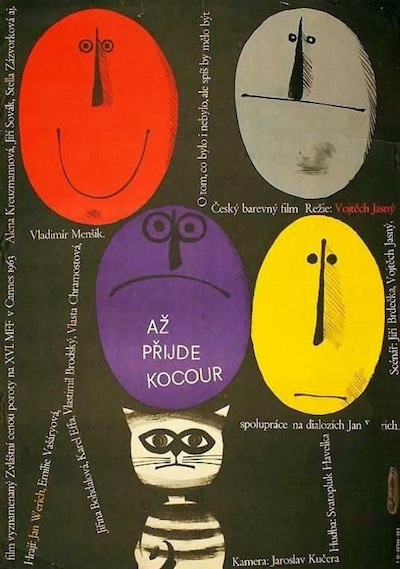
  • Vojtech Jasný – Az prijde kocour AKA The Cassandra Cat AKA When the Cat Comes (1963)

    1961-1970ComedyCzech RepublicFantasyVojtech Jasný

    Quote:
    Some people with a strange cat arrive in a small village. The cat wears glasses, and when someone takes them off, she can colour people, according to their nature and mood. The grown-ups of the village consider the cat to be dangerous, but the kids just love her…Read More »

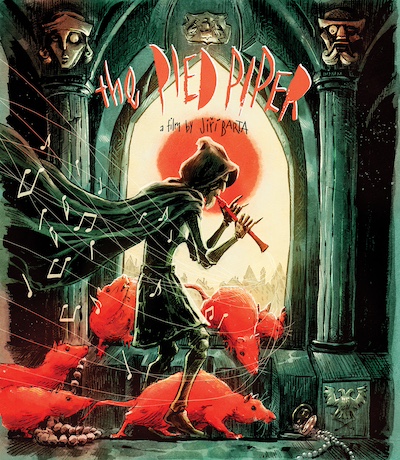
  • Jirí Barta – Krysar AKA The Pied Piper (1986)

    Jirí Barta1981-1990AnimationCzech RepublicHorror

    THE PIED PIPER (KRYSAŘ), 1986, Czechoslovakia, 53 min. Director Jiří Barta’s stop-motion animated masterpiece, based on The Pied Piper of Hamelin, is set in a dark and twisted medieval village of narrow streets and weird Gothic arches, half-CABINET OF DR. CALIGARI and half-Jan van Eyck. The money-obsessed citizens, carved out of wood blocks and speaking in an onomatopoeic babble, are like George Grosz caricatures, literally spouting coins from their mouths instead of words. The rats are far more organic and sympathetic, made of real fur and whiskers, constantly tunneling and burrowing under the towering arches and cobblestone streets above. (In one of the film’s many surreal moments, a rat emerges from a gargoyle’s gaping maw.) Fans of fellow Czech animation legend Jan Švankmajer and the Brothers Quay will adore Barta’s eerie, Expressionist gem, recently restored for its first-ever U.S. Blu-ray release through Krátký Film Praha, Deaf Crocodile and Comeback Company. “Barta’s mastery of all aspects of filmmaking are evident: staging, production design, lighting, animation, editing, sound and music combine into dark worlds of repression and revolt with ironic conclusions.” – Phil Tippett (MAD GOD).Read More »

  • Shivendra Singh Dungarpur – CzechMate: In Search of Jirí Menzel (2018)

    2011-2020DocumentaryIndiaShivendra Singh Dungarpur

    The filmmaker and film preservationist Shivendra Singh Dungarpur (who, according to his IMDB page, also belongs to the former royal family of Dungarpur State in Rajasthan, India) fell in love with Jirí Menzel’s Czech new wave classic Closely Observed Trains (a.k.a. Closely Followed Trains) back when he was a film student. He longed to meet the man behind this wonderful film and many years later his dream came true.Read More »

  • Karel Zeman – Pohádka o Honzíkovi a Marence AKA The Tale of John and Mary (1980)

    1971-1980AdventureAnimationCzech RepublicKarel Zeman

    From nytimes
    The Fairy Tale of Honzik and Marenka employs an ingenious animation technique using cut-out figures that is typical of the creative genius of Karel Zeman, the writer and director of this 66-minute film. The sophistication of the technique, and a sprinkling of puns and twists in the story line that bring out a moral parable on the meaning of liberty, justice, and other social issues, make the fairy tale enjoyable for adults as well as children.Read More »

  • Jan Hrebejk – Kawasakiho ruze AKA Kawasaki’s Rose (2009)

    2001-2010Czech RepublicDramaJan Hrebejk

    Renowned psychiatrist Pavel Josek is singled out to receive a “Memory of the Nation” medal, however, it transpires that this reputedly morally irreproachable dissident once collaborated with state security agencies, informing on a former friend of his wife, Borek, and ultimately being responsible for the latter’s forced emigration. Josek’s family and close friends try to come to terms with these new facts.

    *Czech official submission to 83rd Academy Award’s Foreign Language category (2011)Read More »

  • Jirí Menzel – Postriziny AKA Cutting it Short (1981)

    1981-1990ComedyCzech RepublicJirí Menzel

    Synopsis wrote:
    Short Cut is a comedy revealed more in the acting and witty dialogue than in the simple premise of the story itself: how the Czech writer Bohumil Hrabal was born. Actually, the story is, in many ways, the writer’s conception.Read More »

  • Juraj Herz – Petrolejové lampy AKA Oil Lamps (1971)

    1971-1980Czech RepublicDramaJuraj Herz

    Czech filmmakers have several times been galvanised by the writings of Jaroslav Havlíček. The result in most cases was a film that merged the quality of the literary template and the personality of the particular filmmaker, whether it be Barbora Hlavsová (1942) directed by Martin Frič, Prokletí domu Hajnů (The Curse of the Hajns’ House, 1988) directed by Jiří Svoboda, or Jaromil Jireš’s Helimadoe (1992). However, the most famous adaptation of a Havlíček novel is the psychological drama Petrolejové lampy (Oil Lamps). The film is based on an eponymous novel first published in 1935 as Vyprahlé touhy (Parched Desires) and released again in 1944 following revisions and a change of title. The motion picture was made in 1971 according to a screenplay from Lubor Dohnal, Václav Šašek and Juraj Herz, the last of whom also directed the film.Read More »

Back to top button