

One day a company executive learns that his younger brother, whom he recommended, embezzled company funds. To save the situation he withdraws his life savings and gives money to his younger brother. He then suddenly disappears…Read More »
One day a company executive learns that his younger brother, whom he recommended, embezzled company funds. To save the situation he withdraws his life savings and gives money to his younger brother. He then suddenly disappears…Read More »

Criterion’s title for this film is “You Were Like a Wild Chrysanthemum.”
From the Film Society of Lincoln Center’s “Films of Keisuke Kinoshita” program notes:
Quote:
Masao (Ozu regular Chishu Ryu) returns to his hometown after a successful career in business; the visit prompt memories of the time right before he left to study, when as a young man he fell in love with Tamiko, a beautiful, high-spirited young woman who also loved him but whom he was forbidden to marry as his family—and especially his mother—already had plans for him. Kinoshita brilliantly captures the flush of young love, played out against stunning landscapes—a love made all the more poignant as we know it will remain unrequited. Film scholar Donald Richie called it “one of the most nostalgically beautiful of Kinoshita’s films.”Read More »

Quote:
Noriko, 28, is a secretary in a small company in Tokyo. She is a modern young woman but she still lives with her parents, just like her brother, his wife and their two children. She is under great pressure from her family; in fact, it is not reasonable at this age not to have yet married. But the young girl rejoices in her independence. Her boss offers her a good deal of his knowledge but Noriko hesitates until a sort of illumination solves the problem for her, at least…Read More »
Quote:
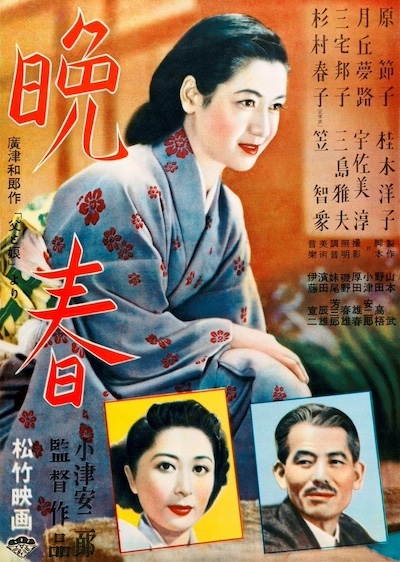
Shukichi is a professor, a widower, absorbed in his work. His unmarried daughter, Noriko, runs his household for him. Both are perfectly content with this arrangement until the old man’s sister declares that her niece should get married. Noriko is, after all, in her mid-20s; in Japan in 1949, a single woman that old is approaching the end of her shelf life. His sister warns the professor that after his death Noriko will be left alone in the world; it is his duty to push her out of the nest and find a husband who can support her. The professor reluctantly agrees. When his daughter opposes any idea of marriage, he tells her he is also going to remarry. That is a lie, but he will sacrifice his own comfort for his daughter’s future. She marries.Read More »
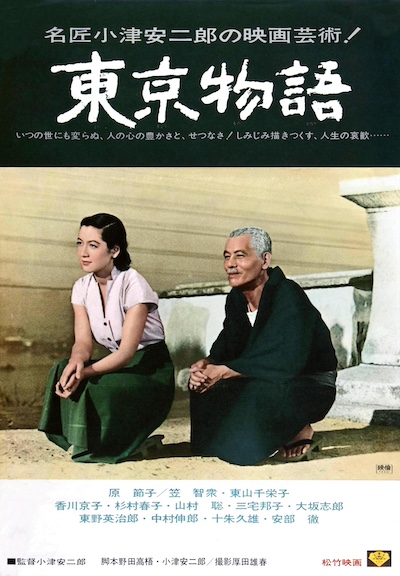
東京物語
They one hot beautiful summer day joyfully left home
She one hot sad day stumbled sideways
He strangely found himself back home
one of those so beautiful noisy hot summer days one saysRead More »
Quote:
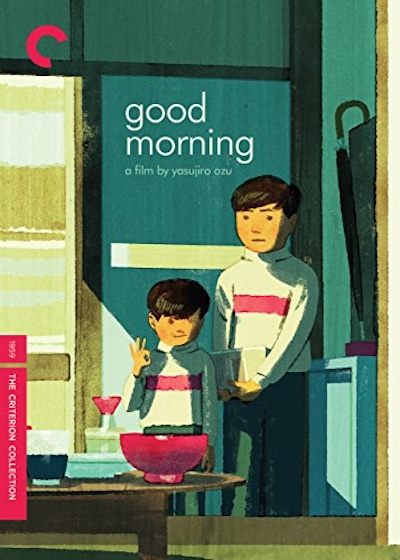
“Sooner or later, everyone who loves movies comes to Ozu. He is the quietest and gentlest of directors, the most humanistic, the most serene.” — Roger Ebert
It took long enough, but I sampled my first Yasujiro Ozu film, Good Morning (Ohayo), and will soon indulge myself with as many of his works as I can locate. At one time, his films were thought to be “too Japanese” and weren’t available in the West, but if Good Morning is any indication of his craft and appeal, Ozu deserves a much wider audience. It’s a film that works at multiple levels, and only artistic geniuses like Shakespeare have been able to pull off such a universal work that works with both down to earth people and with the upper levels of critical audiences equally.Read More »
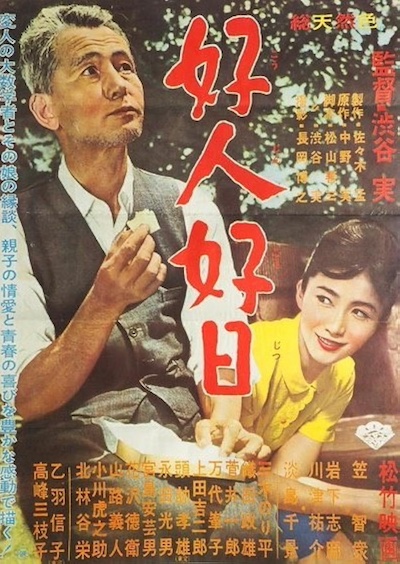
The university professor Ozeki Hitoshi is considered by those around him to be an eccentric. When his daughter Tokiko receives a marriage proposal from a colleague, she and her mother are ecstatic. Hitoshi, however, is less than pleased…Read More »

There’s no place like home:even with four children,the Uemura family is able to live
a modest but happy life in their cramped, rented flat. The parents support the two elder daughters’ artistic ambitions to the best of their ability, using all the means at their disposal to make it possible for Tomoko to paint and Nobuko to sing in a choir.
There is much rejoicing when the father is honoured for 25 years of service at his
company and awarded a cash prize to boot. Yet the family must make the painful discovery that joy and sorrow are often not far apart: not only does recognition as a painter continue to elude Tomoko, the Uemuras also learn that they will have to leave their home.
One of Tomoko’s paintings finally restores their lost happiness.Read More »

Quote:
Based on the moving true story of a senior high school student named Michiko (Sayuri Yoshinaga) who contracted a terminal illness and spent the following three years exchanging over 400 letters with her boyfriend Makoto (Mitsuo Hamada).Read More »