

A CIA agent tries to infiltrate Soviet intelligence to stop a murderous diabolical plot.Read More »

The Future of Emily (Flügel und Fasseln) is the work of Helma Sanders-Brahms, one of the original New German Cinema directors of the early 1970s. Unlike some of her more caustic films about the German experience, this is a relatively conventional drama of generational jealousy and bitterness, a picture that could well be a stage play. It’s also reminiscent of American movies about strong women in conflict, pitting famous German star Hildegard Knef against French actress Brigitte Fossey. Knef’s big break came with the very first post-war German success The Murderers Are Among Us. Fossey’s best-known picture remains René Clément’s Forbidden Games, where she played a Parisian tot orphaned by the war. The film’s original German title translates as “Wings and Shackles”, which apparently refers to the predicament of its movie star heroine Isabelle, a woman adored by fans but hobbled by family disapproval.Read More »

Susumu Hani’s six-year-old daughter Mio plays an orphaned Japanese girl who, for some reason, ends up in Sardinia. She starts going to school, quickly learns Italian, and befriends a boy named Raphael. One of Hani’s stranger concepts for a film, made enjoyable by the great naturalistic acting that’s found in most of his work.Read More »
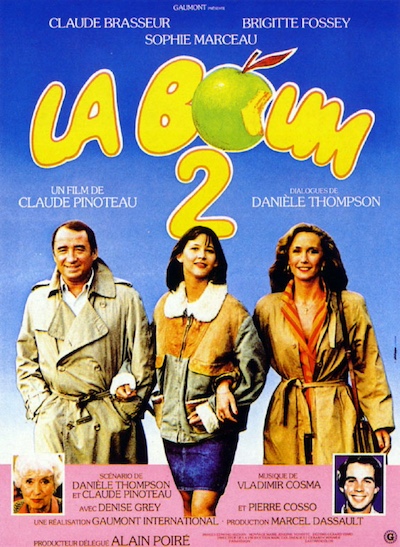
Two years after the first “Boum”, Vic – now 15 and a half years old – has a very calm love life, actually no boyfriend at all. Her parents are happily together again, Grandma Poupette thinks about finally marring her long-term boyfriend. But then Vic meets Philippe and is overcome by his charm. She’s in heaven again and considers going all the way this time – a step, that her girlfriend Penelope already has taken.Read More »
Susumu Hani’s six-year-old daughter Mio plays an orphaned Japanese girl who, for some reason, ends up in Sardinia. She starts going to school, quickly learns Italian, and befriends a boy named Raphael. One of Hani’s stranger concepts for a film, made enjoyable by the great naturalistic acting that’s found in most of his work.Read More »

Quote:
The conflict between the generations is a recurring theme in the cinema of Claude Sautet. Often as not, it is peripheral to the main drama, but in Un mauvais fils it is absolutely central, the lightning conductor in a raging emotional thunderstorm. The fraught relationship between a middle-aged father and his estranged son Bruno is mirrored by one of a gentler hue, that between a gay bookshop owner and his attractive employee Catherine, who is his adopted daughter in all but name. Bruno appears to have more in common with Catherine, a perfect stranger, than with his father, and so whilst one relationship withers, another flourishes.Read More »
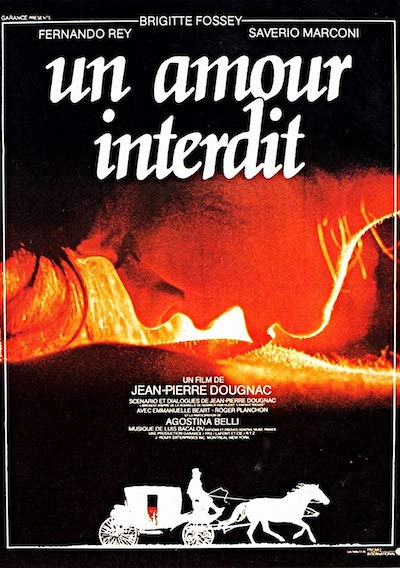
Romantic melodrama set in 18th century plague-ridden Italy. Elvire (Brigitte Fossey) enters a loveless marriage with the elderly Piacchi (Fernando Rey) and finds herself becoming attracted to their adopted son Nicolo, who reminds her of a man who once sacrificed his life for her.Read More »

Synopsis
1935. Jacques and Simon live by their wits, from the hold-up in jewelry theft. When war broke out, the two friends and Lola, a prostitute, make the traffic with the Germans, but by discovering the methods of the Gestapo, they give up and enter the Resistance. At the end of the war, Jacques is decorated and returned to his first occupations. 1935 Flying the new model of Citroën, a man invented the gang des tractions avant. Thus begin ten years of tracking down an infernal, good between the band and the gang of bad guys. A continuous suspense on WWII base where the good are not always the nicest, and not necessarily the most wicked cruel …Read More »

Quote:
“No film is so enchanting but ultimately tragic as Le Grand Meaulnes, based on the classic novel of the same title written by Alain-Fournier, his only novel published the year after he was killed in the first World War.
I’ll need to start with the novel since it is so fundamental to the film. Whoever read it in their youth can never forget it. It influenced Jack Kerouac, and thus became the only book that Sal Paradise carried with him in On the Road. Author John Fowles considered it “the greatest novel of adolescence in European literature.” In the U.S, it is usually translated as The Wanderer, a fitting title.Read More »