Quote: Photographer Alix Cléo-Roubaud shows her photos to a young man (Boris Eustache), talking about them as they look at them together. Each of the photos appears as a countershot. Yet after awhile, doubts emerge: we are not really seeing what is being described.Read More »
Quote:
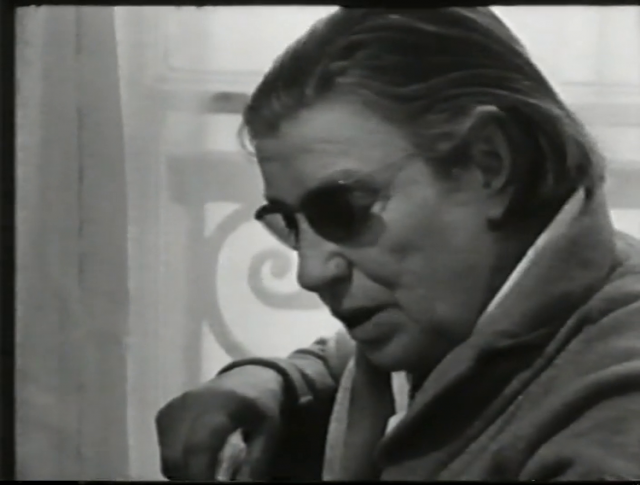
Almost the entire hour and three-quarters of Jean Eustache’s 1971 film “Numéro Zéro” is filled with the director’s interview of his grandmother Odette Robert on Feb. 12th of that year. Eustache includes in the film the conditions of its production—the director himself is seated at the table with her, pours her some whiskey, speaks with the camera operator, manipulates the clapboard at the head and tail of the reels, and even takes a phone call from a foreign firm that wants to distribute one of his early short films. Odette Robert had come from her home in the provinces to live with Eustache in Paris and help care for his son Boris (who is seen, at the beginning of the film, helping guide her through the streets of Paris—she had recently had eye operations and had to wear dark lenses, including on-camera).Read More »
Alix Cléo Roubaud, a photographer, describes her images to Eustache’s son Boris. An “essay in the shape of a hoax”, Eustache’s last film wittily questions the relationship between showing and telling as it gradually shifts Alix’s narration out of sync with what we see.Read More »