Avraham Heffner

  • Avraham Heffner – Doda Clara AKA Aunt Clara (1977)

    1971-1980Avraham HeffnerDramaIsrael

    Clara, a Polish born Jew, living in Tel Aviv of the 1970’s, has her ideas about how people should behave, and runs everybody’s life accordingly: her husband, her sisters, their husbands, their children, her brother who lives in London (probably because it was the only way to get away from her…). Whenever something “improper” does happen, Clara’s way of handling it is simply to shove it under the carpet and ignore it completely, as if it never happened. 3 basic rules, are, of course: 1. Never marry some one “under” your class (Or the class you think you are). 2. Never become pregnant out of wedlock and 3. No Abortions. As one may expect, everything crumbles when her niece gives her no option, but to break at least one of those rules.Read More »

  • Avraham Heffner – Le’an Ne’elam Daniel Wax? AKA But Where Is Daniel Wax? (1972)

    1971-1980Avraham HeffnerDramaIsrael

    10 years after he left Israel and “played it big-time in America”, Benny Shpitz returns for a visit, self-exploring his youth, friends, dreams, beliefs and idol, Daniel Wax, who symbolized the “beautiful Israeli”. Shpitz finds out his friends are melancholic, unsatisfied with marriage life, hiding a vast hole in their sole. In a wider context, Israel post 67′ will no longer be the society that it was meant to be.Read More »

  • Uri Zohar – Hor B’Levana AKA Hole in the Moon (1964)

    1961-1970CampExperimentalIsraelUri Zohar

    http://img848.imageshack.us/img848/2074/o6gsj.jpg

    29f7c043f76a2bde437fd0d52a185152

    Quote:
    I can’t stress enough how wonderful, anarchic and unique is this early Israeli film. It blends lots of genres and pokes
    fun at many sacred cows while dealing with connections between cinema, reality and its ideological representations.
    There simply isn’t any other film like that, and it’s the first time it’s on the net, with subs.
    Not much information in English, so I edited an article I’ve found, but it dosen’t do the movie justice:
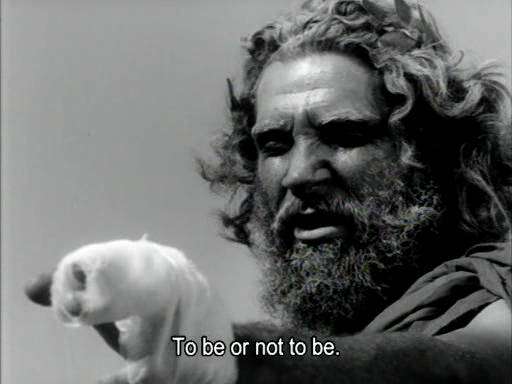
    A comic and episodic satire, the film uses improvization to ilustrate the clash between fantasy and reality in real life. Although conceived in the style of Mekas’ “Hallelujah the hills” (1962), it’s an authentically Israeli satire, an openly rebellious and individualistic expression that poked fun at the sacred myths of earlier zionist films. The technique of film within the film is used to portray film as reflection of the imagination, a miracle based on dreams and fantasies that take on concrete characteristics- parallel to the miracle of Israel, the dream that has become reality (?). Although not a commercial success, there’s no equal to it in all of the Israeli films made since then.Read More »

Back to top button