

From his rise to power in 1922 to the coming of WWII in 1939, Benito Mussolini ‘s dictatorial career is documented, with entire unedited speeches from newsreels of the time.
“A beautiful film. But also dangerous.” –Pier Paolo PasoliniRead More »
From his rise to power in 1922 to the coming of WWII in 1939, Benito Mussolini ‘s dictatorial career is documented, with entire unedited speeches from newsreels of the time.
“A beautiful film. But also dangerous.” –Pier Paolo PasoliniRead More »

From Amos Vogel’s Film as a Subversive Art:
Though entirely based on “authentic” newsreel materials, this is a splendidly distorted “record” of the Nazi Blitzkrieg against Poland, designed to terrorize (particularly foreign) viewers into accepting the Nazis’ god-like military superiority. Kracauer’s profound analysis stresses the magic, irrational core of the film, its reliance on graceful over-simplifications, clever amalgams, a pseudo-narration that professes to inform, and insidious comparisons. Particularly frightening are its terrifying maps of encirclement and destruction from above. Strength and decisiveness are constantly stressed; suffering is, at most, cartographic, and death entirely absent.Read More »

“We shall make sure that this work will not be separated from those who built it.” (Adolf Hitler)
Legend has it that Hitler came up with the idea of the autobahn while he was in prison in the twenties, and for this reason it was also called “Adolf Hitler’s road”. But neither Hitler nor any other Nazi invented the autobahn – the industry had already worked out the plans before 1933. What the Nazis, however, did invent was the “aesthetic of the autobahn”: it was supposed to be a cultural monument – “not the shortest but the noblest connection between two points”. The autobahn was planned as an artistic work of construction and was elevated to an object of art.Read More »
Quote:
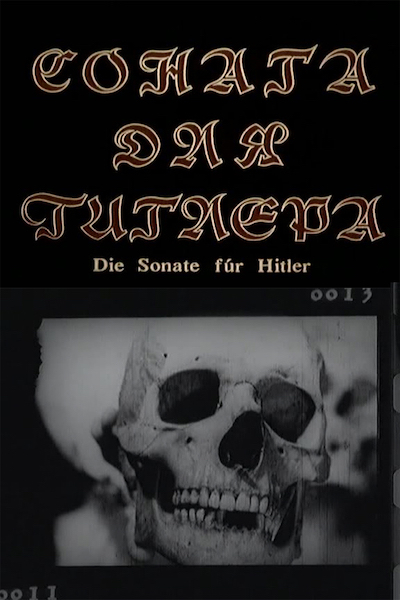
Set to the music of Bach and Penderecki, Sonata for Hitler weaves together a bank of images from German and Soviet archive footage, drawing out a psychological dimension from the historical landscape at the end of World War II.Read More »