2010s

  • Rolf de Heer – Charlie’s Country (2013)

    Drama2011-2020AustraliaRolf de Heer

    29f7c043f76a2bde437fd0d52a185152

    Blackfella Charlie is out of sorts. The intervention is making life more difficult on his remote community, what with the proper policing of whitefella laws now. So Charlie takes off, to live the old way, but in so doing sets off a chain of events in his life that has him return to his community chastened, and somewhat the wiser.Read More »

  • Duncan Campbell – It for Others (2013)

    2011-2020DocumentaryDuncan CampbellExperimentalIreland

    29f7c043f76a2bde437fd0d52a185152

    ‘It for Others’, 2013, (16mm film transferred to digital video, 54 minutes)

    Duncan Campbell produces films that look at representations of the people and events at the heart of very particular histories – figures such as John Delorean and Bernadette Devlin. Combining archive material with his own footage, his work questions the authority, integrity and intentions of the information presented. For Scotland + Venice 2013, Campbell has taken Chris Marker and Alain Resnais’ 1953 film ‘Les Statues meurent aussi’ (Statues also Die) as both source and artefact, to pursue a meditation on the life, death and value of objects.  In the exhibition, Campbell presents the older film alongside his new work, a social and historical examination of cultural imperialism and commodity that combines filmed footage, animation and archive footage.  ‘It for others’ includes a performance made in collaboration with Michael Clark Company that seeks to illustrate the basic principle of commodities and their exchange.Read More »

  • Joaquim Pinto – E Agora? Lembra-me AKA What Now? Remind Me (2013)

    2011-2020DocumentaryJoaquim PintoPortugalQueer Cinema(s)

    Joaquim Pinto, who has been living with HIV for more than two decades, looks back at his life in cinema, at his friendships and loves, at the mysteries of art and nature – while undergoing an experimental drug treatment.Read More »

  • Ramon Zürcher – Das merkwürdige Kätzchen AKA The strange little cat (2013)

    2011-2020ComedyDramaGermanyRamon Zürcher

    29f7c043f76a2bde437fd0d52a185152

    Synopsis:
    Siblings Karin and Simon are visiting their parents and their little sister Clara. That evening, other relatives will be joining them for dinner. Over the course of the day, the washing machine is repaired, people sit together at the kitchen table, carry out an experiment with orange peel, talk about lungs, and sew on a button that was deliberately torn off. This sequence of family scenes in a Berlin flat complete with cat and dog creates a wondrous world of the everyday: Coming and going, all manner of doings, each movement leading to the next, one word following another. It is a carefully staged chain reaction of actions and sentences. And in between, silent gazes and anecdotes about experiences. The people act oddly even-temperedly; their dialogues are direct and unemotional. Even the pets and the material surroundings play a part. Some objects seem alive as if by magic. Commonplace actions and familiar items appear absurd and eerie in this narrative cosmos. Putting the absurdities of daily life on display and translating unspectacular events into an exciting choreography of everyday life, this film is no small feat.
    (Written by Birgit Kohler)Read More »

  • Sergei Loznitsa, Cristi Puiu, Neil Young – Focus Sergei Loznitsa (panel discussion) (2014)

    2011-2020Cristi PuiuDocumentaryNeil YoungRomaniaSergei Loznitsa

    The 2014 Astra Film Festival’s Focus Loznitsa now presents his latest documentary Maidan, alongside three of his earlier works—The Train stop(2000), Landscape (2003) and Blockade (2005)—as well as a panel discussion related to the concept of “authorship” within film-making between Sergei Loznitsa and Cristi Puiu, moderated by Neil Young (film critic, UK).

    Questions arising include:

    * What happens when the texture of the film is composed of images recorded directly from the immediate mundanity of the world around us?
    * What happens to the position of the filmaker as author engaged in an existential understanding of the world while, for example, shooting in the central square Kiev amid full revolutionary turmoil?
    * Can the film-maker avoid or resist the direct expression of his/her own political stance?
    * Cinema is established as a very strong medium and, throughout its history, has been misused as a dangerous means of mass manipulation, especially when the language of the film espouses and expresses a particular political position. What is the correct standpoint of a filmmaker as an author in this situation?
    * What is the role of a filmmaker concerned with the controversies of a society undergoing dramatic transformation?

    The panel discussion takes place after the screening of the film MaidanRead More »

  • Miroslav Krobot – Díra u Hanusovic (2014)

    2011-2020Czech RepublicDramaMiroslav Krobot

    29f7c043f76a2bde437fd0d52a185152

    When she’s not serving regulars in a pub in a sleepy northern Moravian village, thirtysomething Maruna spends time with indecisive mayor Jura, soft-hearted outsider Olin and philandering roofer Kódl. Or she fights with her domineering mother, who is more inclined towards sister Jaruna, the one who gets the chance to leave this godforsaken place. Lightened with a touch of black humor, Krobot’s laconic village drama develops from a superb script, whose authors drew on their familiarity with the people and the region that made their protagonists who they are. Particularly today, when the word “waiting” is perceived entirely negatively, Krobot’s heroes, quite happy to continue living a fairly humdrum existence, might appear to have come from another planet. A powerful element of the film, gradually and carefully built into the plot, is the human respect which Krobot, aided by leading Czech actors, is able to convey to his audience. Somewhere in Moravia betrays a certain affinity with the work of the Czech literary classics, the Mrštík brothers, and with the absurd dramas of the 1960s.Read More »

  • Krzysztof Skonieczny – Hardkor Disko (2014)

    Drama2011-2020Krzysztof SkoniecznyPoland

    29f7c043f76a2bde437fd0d52a185152

    A contemporary, multi-faceted metropolis. Nouveau-riche parents and their hedonist, live-in-the-moment children, surrounded by a reality where anger and tension pulsate almost to the brink of explosion. This is where we meet Marcin, a young man who comes to the city and meets Ola, a couple of years his junior. Fascinated, the girl lets him into her world of drugs, endless, bohemian parties and illegal car races. However, neither she nor her parents know that Marcin has a well-guarded secret and a plan for revenge…Read More »

  • Jean-Luc Godard – Adieu au langage AKA Goodbye to Language (2014)

    2011-2020ArthouseExperimentalFranceJean-Luc Godard

    SUMMARY: “It’s a simple subject. A married woman and a single man meet. They love each other, fight, blows rain down. A dog wanders between town and countryside. Seasons pass. The man and woman get back together. The dog comes between them. The other is in one of them. One of them is in the other. And then there are three people. The ex-husband makes everything explode. A second film begins. The same as the first. And yet, not. From the human species, we move on to metaphor. It will end in barking. And a baby’s cries.” JLGRead More »

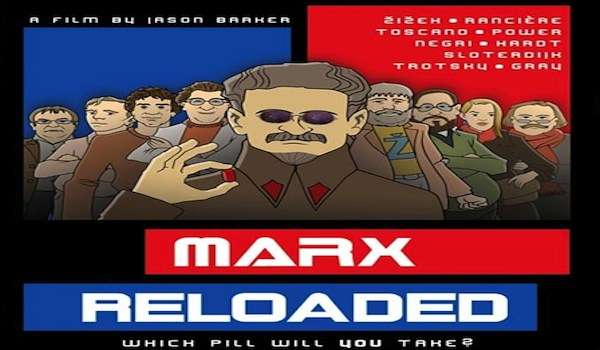
  • Jason Barker – Marx Reloaded (2011)

    2011-2020DocumentaryGermanyJason Barker

    http://img840.imageshack.us/img840/3175/marxreloaded.jpg

    29f7c043f76a2bde437fd0d52a185152

    “Marx Reloaded”

    a film by Jason Barker

    Produced by Medea Film – Irene Höfer in coproduction with Films Noirs for ZDF

    TV premiere: 11 April 2011, 11.20 pm, arte

    “Marx Reloaded” is a cultural documentary that examines the relevance of German socialist and philosopher Karl Marx’s ideas for understanding the global economic and financial crisis of 2008—09. The crisis triggered the deepest global recession in 70 years and prompted the US government to spend more than 1 trillion dollars in order to rescue its banking system from collapse. Today the full implications of the crisis in Europe and around the world still remain unclear. Nevertheless, should we accept the crisis as an unfortunate side-effect of the free market? Or is there another explanation as to why it happened and its likely effects on our society, our economy and our whole way of life?Read More »

Back to top button