The Khmer Rouge slaughtered nearly two million people in the late 1970s. Yet the Killing Fields of Cambodia remain unexplained. Until now. Enter Thet Sambath, an unassuming, yet cunning, investigative journalist who spends a decade of his life gaining the trust of the men and women who perpetrated the massacres. From the foot soldiers who slit throats to Pol Pot’s right-hand man, the notorious Brother Number Two, Sambath records shocking testimony never before seen or heard. Having neglected his own family for years, Sambath’s work comes at a price. But his is a personal mission. He lost his parents and his siblings in the Killing Fields. Amidst his journey to discover why his family died, we come to understand for the first time the real story of Cambodia’s tragedy.Read More »

Yukie and two of her girlfriends are being haunted by the ghost of a classmate, they once heavily bullied. When the other two die under mysterious circumstances, Yukie sees only one chance for herself. With the help of the Nightmare Detective (Ryuhei Matsuda) she hopes to escape her hopeless situation.Read More »

Quote:
While the Holocaust is certainly a legitimate topic of inquiry for the committed filmmaker, most contemporary treatments of the Nazi camps betray their mission by allowing the viewer to feel altogether too comfortable as they take in the on-screen atrocities. Whether through the establishment of a mitigating historical distance, the adoption of standard genre tropes or the repetition of an established catalog of horrors, films like The Boy in the Striped Pajamas and A Secret tend to overly familiarize the events of World War II, allowing the viewer to safely assimilate that conflict’s genocidal horrors. But whatever the flaws of Adam Resurrected, and despite the fact that no physical violence is perpetrated on screen, Paul Schrader never allows the viewer to get comfortably situated, relying on an absurdist central conceit and a rapidly shifting array of intellectual and moral concerns—whose superficial treatment unfortunately leads to a certain diffuseness in the work—to continually de-familiarize his subject.Read More »
Quote:
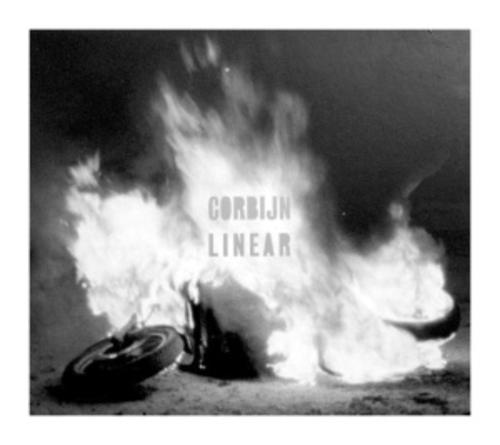
“Late May 2008 – at a band meeting I was introduced to the new songs. The reason for letting me in so early on this sonically and lyrically different U2 record is that the band have this idea for me to make some kind of moving imagery to go with the record. The thinking is that as a lot of people buy music from the internet and are likely to hear this on a computer or mp3 player, their listening pleasure could be heightened by visuals. Instead of just seeing a pack shot of the record sleeve, or a still photograph of the band for 45 plus minutes, as is often the case now, why not have a moving image for the duration of the record? It is not essential to the record, you can either watch it or ignore it. Brilliant! As always, U2 are thinking ahead, not so much having one foot in tomorrow’s door, as having built the house to which that door is the entrance.Read More »

Synopsis
Most societies consider incest to be the ultimate taboo. Yet, a strange phenomenon called ‘Genetic Sexual Attraction’ has been known to affect adults who meet long-lost blood relatives for the first time.
This program features several brother/sister couples (along with one mother/son couple) who’ve developed sexual relationships and insist on maintaining them in spite of pressure from society and, sometimes, criminal prosecution.Read More »

Reviews
‘ . . .the greatest living cinematic artist, the wisest, most transformative, most original agent provocateur at work in the fields of cinema? The short answer: sans doute. Godard is to his medium what Joyce, Stravinsky, Eliot, and Picasso were to theirs: rule-rewriting colossi after whom human expression would never be quite the same.’
The Village Voice
‘It’s possible to hate half or two-thirds of what Godard does – or find it incomprehensible – and still be shattered by his brilliance.’ Pauline Kael
Read More »