

“Idioterne is the cinematic equivalent of a knife in your gut. The Idiots is altogether a complex, maddening, devastating, kaleidoscopic one-of-a-kind viewing experience.”Read More »
“Idioterne is the cinematic equivalent of a knife in your gut. The Idiots is altogether a complex, maddening, devastating, kaleidoscopic one-of-a-kind viewing experience.”Read More »
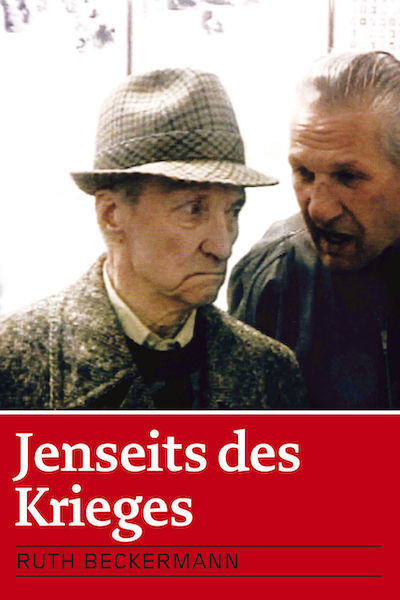
Synopsis
White-tiled rooms, neon lighting; on the walls black and white photographs from an exhibition entitled ,Vernichtungskrieg’ (War of Extermination) documenting the atrocities committed by the Wehrmacht on the Eastern Front. Against this background, Ruth Beckermann and cameraman Peter Roehsler have filmed former soldiers talking about their experiences beyond the bounds of ,normal’ warfare. With a mixture of helplessness, impotence, shame, opportunism and undiminished fanaticism, witnesses from that time tell of atrocities such as the shootings of Russian prisoners-of-war, the murder of Jews and abuse of women. The differing accounts of these events demonstrate how selective perception was even in this most inhuman and brutal of environments.Read More »

A snapshot of a young woman who feels deeply the value and vulnerability of everyone’s life but her own. Pica, our hero, is a girl with a mission. Armed with a Polaroid camera, and charming savvy, she is determined to document the existence of young black men. She, like many, is convinced that they are an endangered species – soon to be extinct. Her obsessive snaphots lead her to many eccentric neighborhood characters who force her to recognize the value of her own life and work.Read More »

“THE ORCHESTRA”
(as seen on TV: “Stairway to Lenin”, “Funeral March”, “Ave Maria” and more)
This production received following awards:
“EMMY®”
“Outstanding Achievement in Special Effects” 1990
“Prix Italia”
1990
“Grand Prix”
International Electronic Cinema Festival, Tokyo-Montreux 1990
“Grand Prix”
A.V.A. Festival in Tokyo 1991
“Hi Vision Award”
Tokyo 1990Read More »

The story of this film began 16th of November, 1974. When a encrypted radio transmission was sent from Earth to inhabitants of extraterrestrial world…
The film’s name Kobrin took from Hegel’s “Philosophy of Religion”. But now, Kobrin granted the ability to speak to the “kitchen” philosopher – Semen Semenych.
From nothing to… Homo Insanicus.Read More »

Quote:
Cahiers du Cinéma chose Oublie-moi as its no. 5 pick of 1995 on its annual Top 10 list. Oublie-moi is directed by award-winning director Noémie Lvovsky (whose Les Sentiments was recently recognized as one of the greatest films of 2003 by long-standing Cahiers rival, Positif). Along with being one of the most accomplished and critically well-regarded new directors from France Lvovsky has also had her scripts filmed by the likes of Arnaud Desplechin and Philippe Garrell. Oublie-moi is also one of her original scripts.Read More »

The struggles of a group of immigrant outcasts living in an alternative-future, xenophobic Japanese metropolis.
After a young girl’s mother dies, she is cared for by Glico, a brassy hooker, who gives the girl the name “Ageha” (Butterfly). Ageha goes to work for a collection of oddballs who run a junkyard and salvage business.Read More »

About the film
Following his promising debut in the 1960s with the documentaries Moravian Hellas (1963) and Elective Affinities (1968), director Karel Vachek spent the majority of the 1970s and 1980s as a political persona non grata, at times working various blue-collar jobs and at times in emigration, without completing a single film project. He was rehabilitated only following the events of 1989, which permitted him to return to Prague’s Krátký Film studio. The societal events surrounding Vachek’s return to filmmaking in 1990 have much in common with those over twenty years earlier, in 1968, that allowed him to make Elective Affinities. In 1990, Czech and Slovak society was facing its first democratic parliamentary elections since 1945.Read More »

Quote:
“Filipinas, farewell! Long live the Republic and may our independence be born in the future!”
Those were Macario Sakay’s last words before he was executed by hanging on September 13, 1907 for treason. His real crime was patriotism, breaking rank with the leaders who sold out the Philippine Revolution to the United States and waging a guerrilla resistance against the American colonial government. They called he and his soldiers “banditos,” a label which has stuck in the minds of many Filipinos generations later (that is, if they even remember his name). His existence in Philippine history negates the official narrative that the Philippine-American war ended in 1902. True patriots continued to invoke his name as a symbol of the unfinished revolution. It would take nearly 90 years after his death before director Raymond Red’s “Sakay” (1993), one of the most accessible and well-crafted bio-pics ever made in the Philippines.Read More »