

Synopsis
Winterkind tells a tragic story of the Russian Yelena, who after seven years of captivity learns that her son Boris, born in the camp, has been adopted by a German couple.Read More »
Synopsis
Winterkind tells a tragic story of the Russian Yelena, who after seven years of captivity learns that her son Boris, born in the camp, has been adopted by a German couple.Read More »

letterboxd wrote:
Toyoichi Otomo suffers from psychological and spiritual troubles after a horrific industrial accident. He lives with his elderly mother and wife near Mt. Aso in rural Kyushu. He seeks solace in a small religious group run by Buddhist nun Chishu-bo who claims to be the 68th descendant of famed 11th century poet Izumi Shikibu. The members of her sect regard her as a living saint. Yet instead of balming his soul, she riles his libido by playing a sexual cat-and-mouse game with the fragile Toyoichi. When she does bed him, it leads to a miracle healing – followed by a terrible calamity.Read More »
Quote:
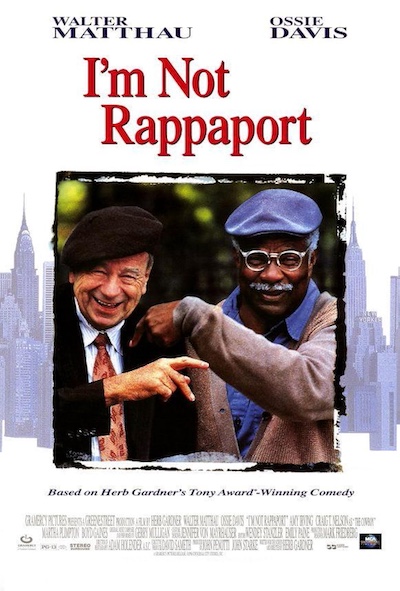
from wikipedia: Inspired by two elderly men Gardner met in New York City’s Central Park, the play focuses on Nat Moyer, a cantankerous Jew, and Midge Carter, a feisty African-American, who spend their days sitting on a bench. The both mask the realities of aging, sharing tall tales that Nat spins. The play touches on several issues, including society’s treatment of the aging, the difficulties dealing with adult children who think they know what’s best for their parents, and the dangers that lurk in urban areas.Read More »

Synopsis:
Powal is a boatman in Nemuguri village that is situated on the bank of the river Dihing. Since there is no bridge at that point of the river, Powal’s job is assured. For some three generations his forefathers have been ferrying people to and fro. Life goes on smoothly until Powal begins to hear persistent reports about a bridge to be built across the river.Read More »

Synopsis:
Enver Hoxha ruled Albania with an iron fist for nearly 40 years and for a long time Albania was the only Maoist regime and by far the most isolationist society in Europe – politically, psychologically and physically. This film is about Colonel Muro Neto, the man Hoxha charged with constructing the bunkers throughout the country which ostensibly protected Albania from its enemies both without and within. He became known as “Kolonel Bunker.”Read More »

From topdocumentaryfilms:
Unreported and almost unseen approach that capital and capital markets have taken since 1945 to gradually take control of the political systems of the USA and the United Kingdom. Adam Curtis outlines several key points and analyses at great length various events and personalities.
These so called market movers were all members of the Clermont Club in Mayfair, London. What at first seemed to be an audacious and unrealistic strategy to take control of the market economy turned into something almost unstoppable, destructive, cruel and completely bereft of feeling or scruple.Read More »

Anna tries to give her children everything,
although her husband’s lack of employment and their indebtedness are becoming increasingly oppressive.
When it transpires that she is pregnant again, she is faced with a tremendously difficult decision.
On the other hand, Teréz has everything in life except what she most yearns for: a baby.
The wealthy woman offers to resolve all Anna’s financial troubles,
if she will go through with the birth and then hand over the child.
Márta Mészáros’s emotional drama positions the spotlight on surrogacy and the moral dilemmas that surround the subject.Read More »

Quote:
Yuri Illyenko, the master Ukrainian cinematographer who shot Sergei Paradjanov’s Shadows of Our Forgotten Ancestors (1965) and directed the long-banned A Spring for the Thirsty (1965) and The Eve of Ivan Kupalo (1968), based this striking 1990 allegorical film on stories by Paradjanov that were inspired by his long sojourns in prison. The film was shot at the prison where Paradjanov was confined, using contemporary prisoners as extras, and it might be said that the documentary and poetic-symbolic aspects of this movie are equally germane to its overall impact. Three days before his sentence is to end, a prisoner (Victor Solovyov) escapes and hides out inside a giant hammer and sickle that borders the prison grounds, where he is discovered and nursed back to health by a beautiful woman (Liudmyla Yefymenko, Illyenko’s wife) who becomes his lover. One of the first independent Soviet productions, partially financed in Sweden and Canada, the film tells its story with a minimum of dialogue and very striking imagery. – Jonathan Rosenbaum, Chicago ReaderRead More »

Synopsis
Hannes, a shy, lonely beer lorry driver, has one passion in life: train timetables. He dreams of winning the first prize at the first international competition for readers of train timetables, to be held in the Finnish town of Inari. His special leave is canceled, he knocks his boss unconscious, and meets a woman on his way there. What he doesn’t know is his boss has been found dead and he is the prime suspect. An experienced police inspector starts to track Hannes down, and finds himself being drawn deeper and deeper into the world of timetables. Ignorant of who is looking for him, Hannes manages to stay one step ahead of his pursuer, but the woman pops in and out of his life at unexpected moments, with surprising results.Read More »