1980s

  • Bille August – Pelle erobreren AKA Pelle the Conqueror (1987)

    1981-1990Bille AugustDenmarkDrama

    When his wife dies, Lassefar takes his 12-year-old son Pelle from their home in Sweden to Denmark in search of a better life. Signing on as laborers at a large farm, father and son undergo numerous trials, including prejudice against immigrants and run-ins with those more powerful than themselves in both the physical and the social sense. Over the course of a year, young Pelle learns what it takes to survive in a harsh and unforgiving world.Read More »

  • Lamberto Bava – Macabro aka Macabre (1980)

    1971-1980CultItalyLamberto BavaThriller

    Synopsis:
    A New Orleans housewife leaves her daughter and son home alone to meet her lover. While with him, she receives a call that her son has died. Wreckless driving rushing to her house results in a horrible accident. The lover dies and she is sent to a mental institution to recover from the psychological trauma. Upon her release a year later she moves into the boarding house where they would rendezvous. The landlord has passed away and her blind son is left to maintain the house. With every day that passes, his lust for her grows while she remains true to her lover. The situation comes to a “head” on a weekend visit with her daughter. All secrets will be revealed and no one will be the same. Inspired by actual events.Read More »

  • Nikos Papatakis – I Fotografia AKA La Photo (1986)

    1981-1990DramaGreeceNikos Papatakis

    Quote:
    Ilias Apostolou, a young furrier who has had a hard time under the dictatorship, leaves Castoria in 1971 to emigrate to France, where he hopes to join a distant relative of his, Gerassimos Tzivas, who has been living there since 1950. With him, he takes nothing from his homeland but a photograph of a person that he finds on the pavement. He asks Gerassimos to help him in finding work in Paris. A misunderstanding around the photograph, however, sets off a series of dramatic events.Read More »

  • Pat O’Neill – Water and Power (1989)

    1981-1990DocumentaryExperimentalPat O'NeillUSA

    ”This rarely screened 1989 masterpiece by Pat O’Neill is a moving meditation on industrialization, focusing on the dystopic desert created by Los Angeles’s vast water consumption. O’Neill conceived the film partly as an answer to Godfrey Reggio’s mind-numbing Koyaanisqatsi (1983), a hypnotic inventory of touristy landscapes showing a world out of balance. In contrast O’Neill creates images full of internal contradictions, using optical printing to collage different locales and suggest the inevitable conflict of industry and nature. One slow dissolve between the Owens Valley desert and Los Angeles at night suggests a direct cause and effect: the city flourished only by despoiling the land. Using time lapse to make weather changes visible, O’Neill renders people as fleeting shadows whose power to alter the landscape fails to mitigate the fragility and shortness of human life on a geologic scale.” – Fred Camper, The Chicago ReaderRead More »

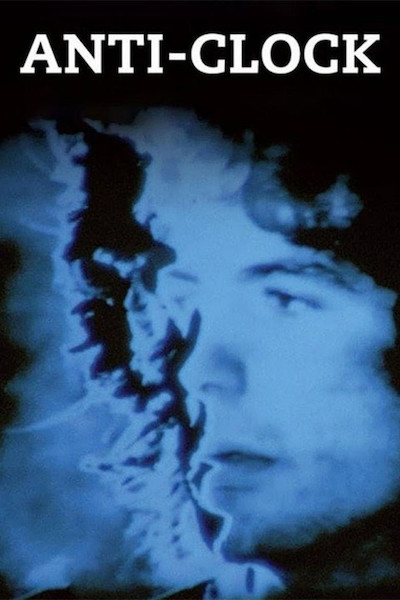
  • Jane Arden & Jack Bond – Anti-Clock (1979)

    1971-1980CultExperimentalJack BondJane ArdenUnited Kingdom

    Quote:
    A complex and fascinating experimental exploration of time and identity. Anti-Clock is a film of authentic, startling originality.

    Brilliantly mixing cinema and video techniques, Arden and Bond have created a movie that captures the anxiety and sense of danger that has infiltrated the consciousness of so many people in western society.

    Filled with high tension and high intelligence, Anti-Clock is mysterious, disturbing, fascinating and exciting’. (Jack Kroll, Newsweek)Read More »

  • Alejandro Jodorowsky – Santa Sangre [+ director’s commentary] (1989)

    Arthouse1981-1990Alejandro JodorowskyArchitectureCultMexico

    Quote:
    Santa Sangre is the surreal horror story about a young man, Fenix (Axel Jodorowsky) who has grown up in a circus with his mother Concha (Blanca Guerra) and his philandering father. Fenix witnesses a brutal fight between his mother and father, at the end of which his mother loses both of her arms and his father commits suicide. Fenix spends years in an insane asylum, before his mother persuades him to act as her hands in her bizarre nightclub act. Soon, Concha is having Fenix perform a variety of murders, where he is killing every female in sight. Though the film has some of the hallucinatory qualities of Jodorowsky’s earlier films, Santa Sangre doesn’t quite have the same punch, particularly in terms of cerebral and emotional impact, despite its fine visuals. Santa Sangre is available in both R-rated and NC-17 edits.Read More »

  • Joris Ivens – Une histoire de vent AKA A Tale of the Wind (1988)

    1981-1990ArthouseDocumentaryFranceJoris Ivens

    Premiere: Filmfestival Venice 1988
    Awards: Golden Lion (Filmfestival Venice), Félix (European Filmaward of the European Film Academy)

    Joris Ivens’ last film, made with Marceline Loridan, is a testamentary view on his own life and the changes in the world. After Pour le Mistral this film is his second attempt to film the invisible: the wind. On location in China they try to capture the wind as a natural phenomenon, and as metaphor for the constant changes in Culture and Society. In 1988 the film premiered at the film festival of Venice, where Joris Ivens received the Golden Lion for his complete oeuvre.Read More »

  • Kihachi Okamoto – Jazz Daimyo (1986)

    Arthouse1981-1990AsianJapanKihachi Okamoto

    Quote:
    A Nutshell Review: Dixieland Daimyo, 26 October 2006
    Author: DICK STEEL from Singapore

    My initial reaction was, this sure is one strange movie. Set in the late 19th century and after the end of the American Civil War, three slaves decided to make their way back to Africa, but en route, found themselves on the shores of Japan after a shipwreck. From then on, it’s a weird mix of Japanese shogun intrigue and jazz music fused into a somewhat nonsensical end.Read More »

  • Rene Daalder – Population: 1 (1986)

    1981-1990CultMusicalQueer Cinema(s)Rene DaalderUSA

    Quote:
    Like fellow Dutchmen Paul Verhoeven and Jan De Bont, Rene Daalder was drafted by Hollywood to make genre films, though his inclinations ran a little artier. Daalder achieved some cult success with the 1976 drive-in classic Massacre At Central High; then Russ Meyer asked him to work on the star-crossed Sex Pistols movie Who Killed Bambi? Newly infatuated with punk rock, Daalder struck up a friendship with Tomata Du Plenty, leader of the theatrical L.A. synth-punk act The Screamers. Throughout the first half of the ’80s, Daalder and Du Plenty tried and failed to get multiple music-video projects off the ground, until in 1986, they finally released Population: 1, a quasi-science-fiction art-punk musical cobbled together from pieces of footage Daalder shot with Du Plenty over the years, cleverly layered with the help of state-of-the-art image-manipulation effects.Read More »

Back to top button