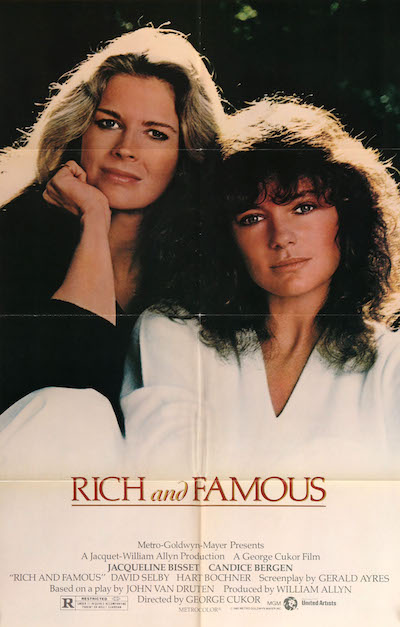
Liz and Merry Noel become friends as college roommates and their friendship endures over the years. Liz becomes a respected “serious” novelist. Merry Noel marries, has a daughter and writes, too: “trash” fiction which becomes enormously successful. Their story begins in college and jumps ahead some years at a time to show their relationship with each other and those in their orbits as they grow and mature.Read More »
1980s
-
George Cukor – Rich and Famous (1981)
George Cukor1981-1990DramaUSA -
Philippe Grandrieux – Le Labyrinthe – le temps, la memoire, les images (1989)
Philippe Grandrieux1981-1990ExperimentalFrancePhilosophyPhilosophy on ScreenThird part of an experimental television program led by Grandrieux questionning TV flux aesthetic, this film focuses on a single interview with Jean-Louis Schefer who delivers his hypothesis on man-made images of itself.Read More »
-
Federico Fellini – Intervista (1987)
Federico Fellini1981-1990ArthouseComedyItaly

Federico Fellini accepts the request of a television crew to be interviewed about his career, narrating memories, dreams, realities and fantasies.Read More »
-
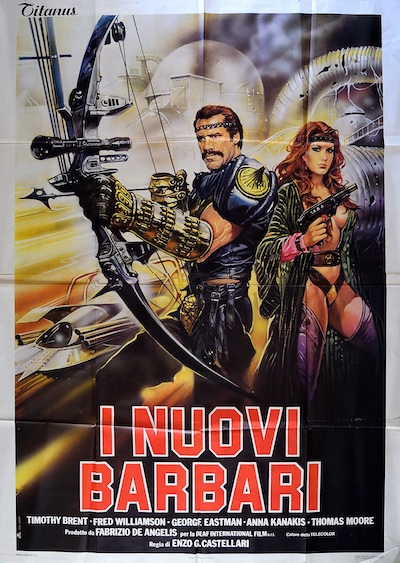
Enzo G. Castellari – I nuovi barbari AKA The New Barbarians AKA Warriors of the Wasteland (1983)
Enzo G. Castellari1981-1990ActionItalySci-Fi

Two mercenaries help wandering caravans fight off an evil and aimless band of white-clad bikers after the nuclear holocaust.Read More »
-
Jacques Rivette – La bande des quatre AKA Gang of Four (1989)
Jacques Rivette1981-1990ArthouseDramaFranceQuote:
Gang of Four (French: La Bande des quatre) is a 1989 French drama film directed by Jacques Rivette. It was entered into the 39th Berlin International Film Festival, where it won an Honourable Mention.La Bande des Quatre (domestically known as Gang Of Four) is Jacque Rivette’s 1988 film that meanders through the close knit lives of a group of female acting school students in Paris. When I say meander, I REALLY mean meander, because Rivette chooses to let his film gradually unfurl at a hypnotically slow pace that at times borders on the voyeuristic, with it’s long, static shots of breakfast and dinner conversations and the like. At first, this style of filmmaking straddles the line between dull and engaging, but Rivette’s film is saved by a quartet of strong young actresses.Read More »
-
Babette Mangolte – The Sky on Location (1983)
1981-1990Babette MangolteDocumentaryUSATHE SKY ON LOCATION, 1982, 16mm 78 min. Color
On location in the American West,
Co-produced with Zweites Deutches Fernsehen, West Germany.“Is it possible to confront nature with a real purity of vision? The Sky on Location is a personal meditation on the landscape of the American west that tracks the ruling conception in nature in the 19th and 20th centuries from the pioneers through the instamatic tourists, at the same time that it obsessively follows the four seasons. The elemental vicissitudes of the weather, the exact moment of the day, the color of the light and the soil and the trees form an acute visual record of the constantly changing mood of the landscape. The film successfully attempts, with quiet, passionate, almost single-minded firmness, to confront us as nakedly as possible with our cultural inability to see nature whole, without preconceptions.” – Ernest LarsenRead More »
-
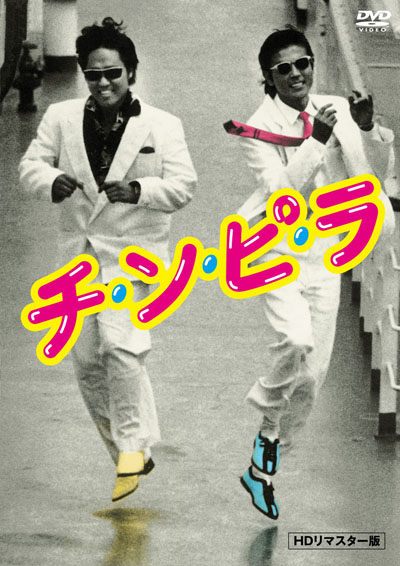
Tôru Kawashima – Chi-n-pi-ra (1984)
Tôru Kawashima1981-1990ActionAsianJapanBased on the script by the late Shoji Kaneko, director Toru Kawashima turned it into a buddy movie that has quite the cult following in Japan. The two already collaborated on the, in my opinion, excellent Ryuji a year earlier and shortly before Kaneko’s death.Read More »
-
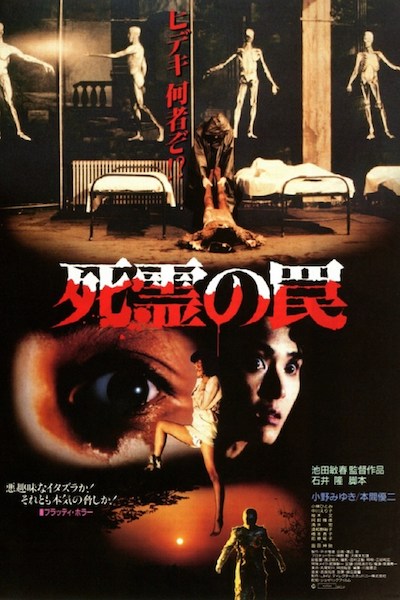
Toshiharu Ikeda – Shiryô no wana AKA Evil Dead Trap (1988)
Toshiharu Ikeda1981-1990HorrorJapan

A late night TV presenter receives a snuff tape, in which a woman is brutally killed. She decides to take a crew out to a location indicated in the tape, but only death and despair await them.Read More »
-
Alexander Kluge – Der Angriff der Gegenwart auf die übrige Zeit aka The Blind Director [+extras] (1985)
Alexander Kluge1981-1990ArthouseDocumentaryGermany

Quote:
In this “film essay,” director Alexander Kluge handles two different stories with both fictional and documentary aspects. In one story, a foster parent cares for a traumatized young girl who is now an orphan after witnessing a car crash that killed both her parents. After the foster-parent does the right thing and takes the girl to her aunt — her court-appointed guardian — she is shocked to see that neither the wealthy aunt nor her servants are very interested in the girl. An unusual decision follows. In the other story, a director goes blind in the middle of a film project but has to be kept on because of his contract. This situation leads to some philosophizing on the nature of film and art in the modern world. ~ Eleanor Mannikka, All Movie GuideRead More »