Shannon Kelley wrote:
A nun in Uganda weighs the emptiness she finds in her supposed union with Christ. Adapted from a short story by Alice Walker, the film was a deliberate first move by its director toward narrative filmmaking, though its graphic simplicity and pantomimed performance by Barbara O. Jones give it an intensity that anticipates Julie Dash’s work on Daughters of the Dust.Read More »
1970s
-
Julie Dash – The Diary of an African Nun (1977)
1971-1980DramaJulie DashShort FilmUSA -
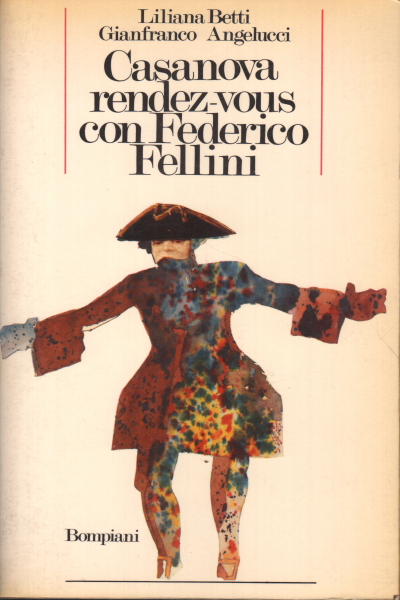
Gianfranco Angelucci & Liliane Betti – E il Casanova di Fellini? aka And Fellini’s Casanova? (1975)
Documentary1971-1980Federico FelliniGianfranco AngelucciItalyLiliane BettiQuote:
…the “crypto-documentary” by Gianfranco Angelucci amd Liliana Betti E il Casanova di Fellini? (And Fellini’s Casanova?) made for the RAI, in which Federico submits some friends to a screen test for the part of Casanova: Mastroianni, Tognazzi, Gassman, Alain Cuny and an exhilarating Alberto Sordi deeply involved in the part.Read More » -
Richard Myers – 37-73 (1974)
1971-1980ExperimentalRichard MyersUSA“I think 37-73 is an extraordinary work, and the best of [Myers’] long films. I am astonished by his skill in image making, and his power to evoke the crazy pain of being an artist. It is a haunting work, with unforgettable scenes ….” – James Broughton
“Richard Myers’ 37-73 was far and away the most noteworthy film in the Exposition (9th Annual Independent Filmmakers Exposition). In fact, Richard Myers is, in my opinion, one of the few innovative conceptually oriented filmmakers in the country. As powerful and complex as is AKRAN, 37-73 is more taut, richer in associative meaning …. 37-73 is about dreams, about memory and its associations with nightmare and magic.” – Owen Shapiro
“Through Myers’ so eloquently expressed dream world we’re able to perceive the entire panorama of the specifically American imagination. It’s as if he’s tapped our collective subconscious.”—Kevin Thomas, LA Times.Read More »

-
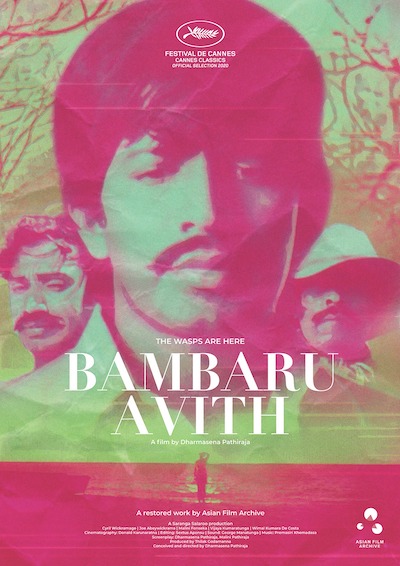
Dharmasena Pathiraja – Bambaru Avith AKA The Wasps Are Here (1977)
Drama1971-1980AsianDharmasena PathirajaSri LankaSet in a fishing village named Kalpitiya, explores tradition and exploitation because of capitalism in this small village.Read More »
-
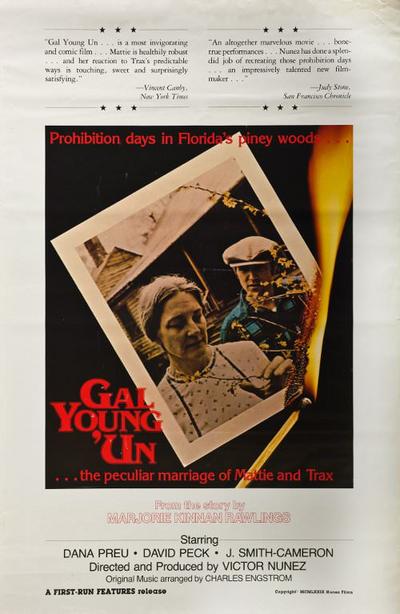
Victor Nunez – Gal Young ‘Un (1979)
1971-1980DramaUSAVictor NunezQuote:
An obvious labor of love for producer/ director/ writer/ photographer Victor Nunez, Gal Young ‘Un was blessed with almost unanimous critical praise, and as such received a much wider distribution than might otherwise have been possible. The film, set in Florida in the 1930s, involves an independent woman (Dana Preu) who marries a charming but wastrelly man (David Peck) much younger than herself. She tries to maintain equilibrium in the relationship despite her husband’s obvious preoccupation with the “gal young’un” (J. Smith) who works as their housekeeper. Director Nunez brilliantly conveys the isolation and loneliness inherent in the story with his evocative use of genuine backwater Florida locations. This was based on a story by Marjorie Kinnan Rawlings.Read More » -
Dharmasena Pathiraja – Ponmani AKA Younger Sister (1977)
1971-1980AsianDharmasena PathirajaDramaSri LankaPonmani comes from the highest caste in Tamil society, but her family has fallen on hard times and can’t even pay what they owe on her married eldest sister’s dowry, let alone find dowries for her and her middle sister. Her father sits idly by, reflecting on past glories, while her brother works to pay the money owed and preserve the family honor. When she takes matters into her own hands and elopes with a boy from the lower fisherman caste, the family honor takes a deathblow. The difficulty of life for a Tamil woman whatever her caste, religion or marital status is given a feminist analysis. This black and white film from Sri Lanka’s rebel Sinhalese auteur, Dharmasena Pathiraja, shows the beauty of Jaffna, an ancient city of temples, churches and beaches, and gives us an idea of the forces behind the civil war that broke out later. Festivals: Singapore International Film Festival 2003.Read More »
-
John Cassavetes – Cassavetes Gazzara Rowlands 1978 Interview (1978)
USA1971-1980ArthouseDocumentaryJohn Cassavetes
This is a raw-footage version of a group interview for some unspecified TV station at a restaurant from 1978 with Cassavetes, Gena Rowlands, Ben Gazzara, Seymour Cassell and Paul Stewart on the occasion of Opening Night being released. It starts out with some general career-spanning questions to Cassavetes and then eventually gets into Opening Night with Cassavetes exhorting people to go see it in his own inimitable way. Mostly we hear from Cassavetes, Rowlands, Gazzara and Paul Stewart, with just a few reactions from Seymour Cassell who is sitting by listening and smoking.Read More »
-
Michel Lemoine – Les Week-ends malefiques du Comte Zaroff AKA Seven Women for Satan (1976)
1971-1980CultEroticaFranceMichel LemoinePete Tombs’ Mondo Macabro label has been unearthing cinematic obscurities for almost two years now, digging up such oddball entries as Pakistan’s THE LIVING CORPSE, Italy’s THE NUDE PRINCESS (with transsexual superstar Ajita Wilson), and Indonesia’s MYSTICS IN BALI. Now, they have uncovered a long-lost French sexploitation film, SEVEN WOMEN FOR SATAN, directed by Franco regular Michele Lemoine and starring familiar Franco face Howard Vernon, and reportedly banned in its home country.
Read More » -
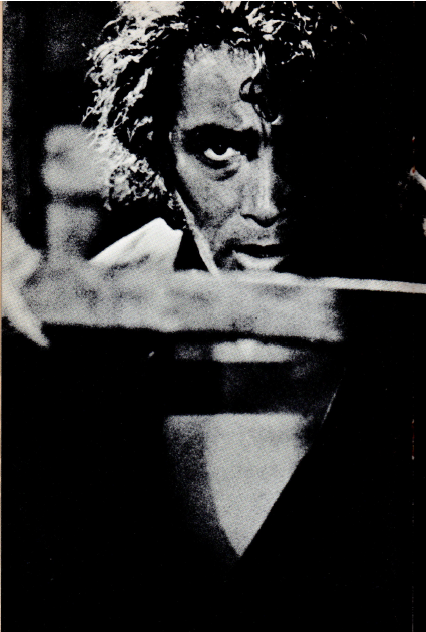
Kazuo Kuroki – Ryoma ansatsu aka The Assassination of Ryoma (1974)
1971-1980ActionAsianJapanKazuo KurokiThis was also voted No.55 on 1999’s Kinema Jumpo Poll of Top 100 Japanese Films of All Time.
It’s a samurai film but its style is rather different from those Toei & Daiei jidaigeki in 50s & 60s (probably not surprising as an ATG production), It has a non-heroic (or at least, unorthodoxy) portrait of the protagonist: Ryoma, at times even a parody, with the wry humor everywhere in the film. But it also looks a bit like a documentary, as the film is very grainy and the cinematographer is Masaki Tamura, who’s responsible for the look of many Shinsuke Ogawa & later, Kiyoshi Kurosawa’s films. Read More »