

A plot to steal money from gangsters leads to trouble.Read More »
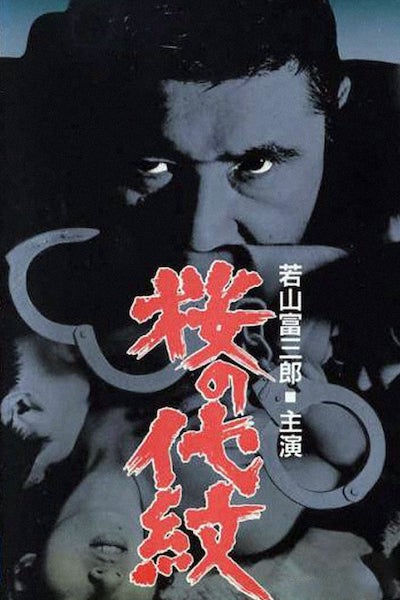
When 150 guns are lost from the Iwakuni base and two police officers are shot dead, a detective tries to find out the truth.
Review by kagetsuhisoka:
Kenji Misumi’s nihilistic cop movie has finally been subbed. This is an amazing (and in my opinion) superior companion piece to Shintaro Katsu’s The Big Boss, which I uploaded not long ago. dimax9 provided me with a copy of the movie. Subs were timed and commissioned by me (thanks TheCatacomb as always). chapaev patched the DVD.Read More »

Quote:
Why Not is hypnotic, compulsive and claustrophobic. It is bathed in a cold, pervasive eroticism, which, oblique and displaced at first, finally becomes explicit in one of the most bizarre masturbation sequences ever filmed. For almost two hours, we observe a young, strikingly pretty girl, nude most of the time and alone in an apartment, engaged in a sonambulistic and sensuous attempt at coming to terms with herself.Read More »
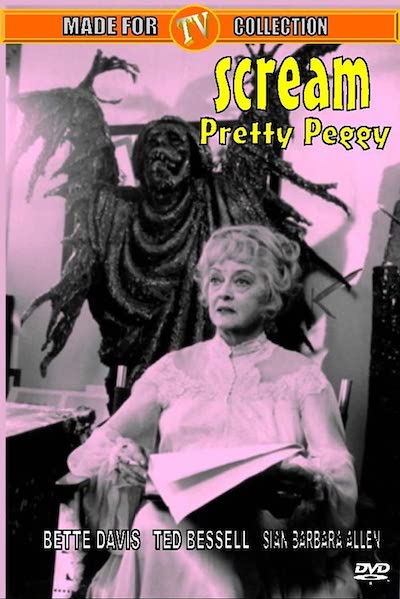
A sculptor hires young college girls to take care of his elderly mother and his supposedly insane sister, both of whom live in the old family mansion with him.Read More »

Quote:
María Sabina is a Mexican indian. She was born in 1894 according to the church records Huautla, Oaxaca.
Huautla is inhabited by Mazatecan indians. They preserve the ancient religious ritual of eating mushrooms in nocturnal ceremonies.
These are provided by a shaman. Shamanism has existed in Mexico since pre-Colombian times. María Sabina is a shaman. She uses mushrooms to communicate with tribal gods.
The ethnobotanical R. Gordon Wasson knew her in 1955. She has given rise to a new discipline: ethnomycology.
This is the only documentary on María Sabina, an intimate portrait of the world-renowned Mazatec curandera and her extensive use of Psilocybe mushrooms as a healing aid. Narrated by Maria’s biographer, Alvaro Estrada; directed by Nicolas Echevarria.Read More »

A Jewish WWII survivor revisits the ruins of a hellish concentration camp, and the memories are still vivid. How did she escape the humiliation, the tortures, and the destruction of human flesh? How did she flee from Gestapo’s last orgy?Read More »

Based on old slovak ballads, it tells of fiddlers who with their magic violins spread evil and destruction all over the world.
From Skritek’s film journal:
A girl is transformed into a maple tree by her impulsive and angry mother. Three poor wandering musicians come by the tree and create instruments from it. Walking around the country instead of happiness they bring death everywhere with their cursed instruments. However they cannot get rid of them, unless they bury the wooden instruments at the place of the tree. The three are anything but harmonious, each taking in their disputes various stances. In the end they are enlisted to go to war, because they hardly survive as unlucky musicians and bring the instruments back. That’s when the story takes an even more tragic turn for all.Read More »

Quote:
British working-class youth are realistically portrayed in this rare, mod film. A group of delinquent teenagers in London’s East End circa 1969 roam the streets “bored as usual” because “there’s nothing to do ’round here.” A very good ’60s soundtrack by “The Audience,” adds nicely to the atmosphere of black & white photography, mod clothes and haircuts, motorbikes and just hanging around. Del, a 17 year old welder’s apprentice meets Irene, a 15 yr old girl, still at school. Del’s father and Irene’s mother both object to the relationship and want them to stop seeing each other. Del and his mates run into Bronco Bullfrog, a lad who’s just out of juvenile reformatory and they agree to assist him in a robbery. Del gets a motorbike and falls in love with Irene. Still bored with life, the couple decides to run away. But the police are soon in pursuit. Although made in 1969, there is still a very “mod” and “swinging 60s” feel and style about this film.Read More »
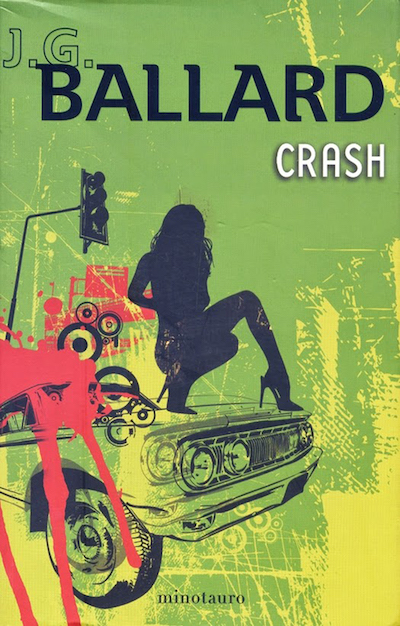
A surreal, moody short about the fetishization of automobiles and auto accidents.
Short film produced by the BBC about JG Ballard’s Crash. “The film was a product of the most experimental, darkest phase of Ballard’s career. It was an era of psychological blowback from the sudden, shocking death of his wife in 1964, an era that had produced the cut-up ‘condensed novels’ of Atrocity plus a series of strange collages and ‘advertisers’ announcements’. […] After Freud’s exploration within the psyche it is now the outer world of reality which must be quantified and eroticised.’ Later there were further literary experiments, concrete poems and ‘impressionistic’ film reviews, and an aborted multimedia theatrical play based around car crashes. After that came an actual gallery exhibition of crashed cars, replete with strippers and the drunken destruction of the ‘exhibits’ by an enraged audience.”Read More »