Quote:
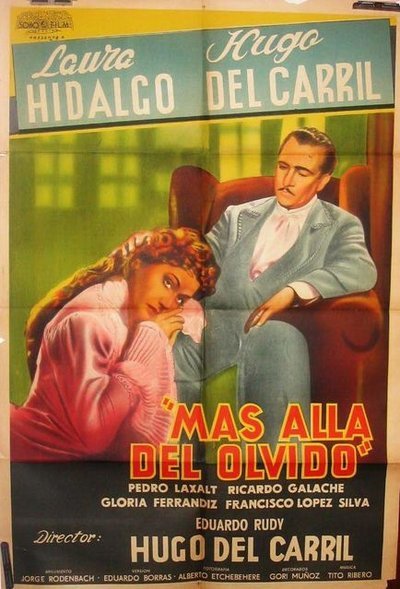
Más allá del olvido (Beyond Oblivion) is one of the best films made in Argentina and the best Hugo del Carril directed. Based on the novel Bruges-la-Morte by Georges Rodenbach, this melodrama tells the story of Fernando (del Carril) that cannot get over the premature death of his beloved wife Blanca, so he decides to embark on an extended trip to Paris. There, he meets Monica (Laura Hidalgo), in every way an exact duplicate of his late wife, except that she’s a brazen woman of the streets. No matter; Fernando is soon hopelessly in love and intent on bringing her back home and making her into the woman she’s supposed to be; for her part, Monica imagines that she may have stumbled upon a very good deal.Read More »
1950s
-
Hugo del Carril – Más allá del olvido AKA Beyond Oblivion (1956)
1951-1960ArgentinaCrimeDramaHugo del Carril -
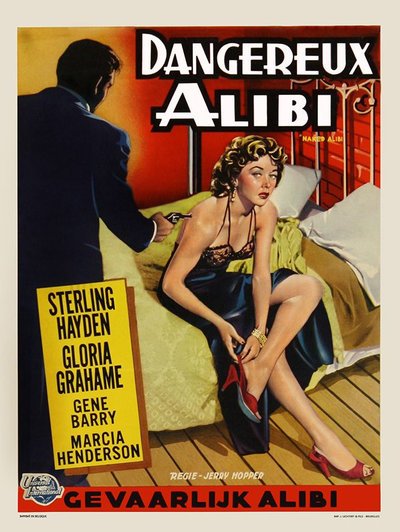
Jerry Hopper – Naked Alibi (1954)
USA1951-1960CrimeFilm NoirJerry HopperQuestioned as a murder suspect, solid (but drunk) citizen Al Willis attacks his police questioners, is beaten, and swears vengeance against them. Next night, Lieut. Parks is murdered; Willis is the only suspect in the eyes of tough Chief Conroy, who pursues him doggedly despite lack of evidence. The obsessed Conroy is dismissed from the force, but continues to harass Willis, who flees to a sleazy town on the Mexican border. Of course, Conroy follows. But which is crazy, Conroy or Willis? Written by Rod CrawfordRead More »
-
Robert Breer – Jamestown Baloos (1957)
USA1951-1960Amos Vogel: Film as a Subversive ArtExperimentalRobert BreerShort FilmAn experimental short film from Robert Breer with animated and live-action scenes cut together.Read More »
-
Robert Breer – Form Phases IV (1954)
1951-1960ExperimentalRobert BreerShort FilmUSAForm Phases IV is the last film in Form Phases, the first series made by Robert Breer to lend movement to the abstract forms in his paintings. Breer was a self-taught practitioner of animated film, focusing particularly on the demystification of the screen space. This was a theme already touched on in the 1920s by Hans Richter, one of the references for avant-garde European cinema. Richter’s work, specifically his film Rhythmus 21 (also in the Museo Reina Sofía collection), the starting point of abstraction in film, was a decisive influence on Breer’s cinematographic output.
Here, Breer applied, in a particularly sophisticated way, the principle by which a static screen is animated by the appearance of a moving shape which then changes as another shape appears, and then disappears, leaving the screen blank, to return once more to its static state.Read More » -
François Villiers – L’eau vive (1958)
Drama1951-1960FranceFrançois Villiers
Synopsis (courtesy of the IMDB):
Old Félix, a prosperous land owner in Haute Provence, will be expropriated because a dam is being built on the River Durance and his estate is to be flooded. He receives thirty million francs in compensation but dies soon after. Hortense, his only daughter, inherits the money but the trouble is that Félix has hidden the loot somewhere and it is nowhere to be found. All of Hortense’s next of kin suddenly take an interest in the “poor orphan” and those greedy ones – with the exception of kind-hearted uncle Simon – put pressure on the girl, and try – through wile, threat and even murder, to inveigle her inheritance. But however young and frail Hortense is, she is nobody’s fool.L.eau.vive.AKA.Girl.and.the.River.1958.DVDRip.x264-HANDJOB.mkv
General
Container: Matroska
Runtime: 1 h 30 min
Size: 1.35 GiB
Video
Codec: x264
Resolution: 700x410 ~> 758x410
Aspect ratio: 1.85:1
Frame rate: 25.000 fps
Bit rate: 1 930 kb/s
BPP: 0.269
Audio
#1: French 2.0ch AC-3 @ 192 kb/s (Stereo)Language:French
Subtitles:French, English -
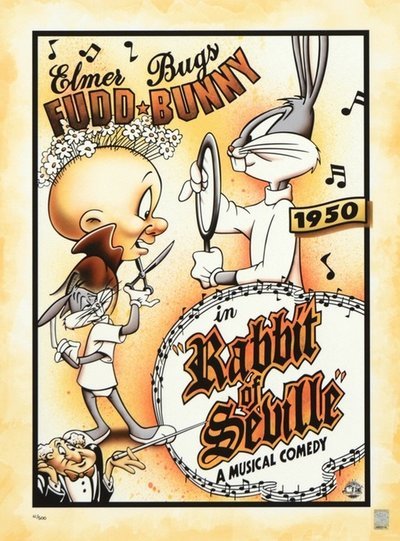
Chuck Jones – Rabbit of Seville (1950)
1941-1950AnimationChuck JonesShort FilmUSAQuote:
Behind the Hollywood Bowl stage which is playing the opera, The Barber of Seville, Bugs Bunny flees into the backstage area with Elmer Fudd in close pursuit. Seeing his opportunity to fight on his terms, Bugs raises the curtain on Elmer, trapping him on stage. As the orchestra begins playing, Bugs comes into play as the barber who is going to make sure that Elmer is going to get a grooming he will never forget.Read More » -
Delbert Mann – Marty (1955)
Drama1951-1960Delbert MannUSA
This slice-of-life drama scripted by Paddy Chayefsky originated as a live 1953 television broadcast directed by Delbert Mann and starring Rod Steiger and Nancy Marchand. The movie version retained Mann as director but replaced the two leads with Ernest Borgnine and Betsy Blair. A kind of proto-Before Sunrise, it examines a watershed 24-hour period in the lives of two lonely people.Read More »
-
Lindsay Anderson – O Dreamland (1956)
1951-1960Amos Vogel: Film as a Subversive ArtDocumentaryExperimentalLindsay AndersonUnited KingdomUnsparing candid-camera work and astute juxtaposition of natural sound provide a scathing, angry and wordless comment on modern popular culture as seen at a British amusement park. No attempt is made to poke fun at the people shown; they are portrayed as victims — Orwell’s 1984 “proles”. A visual and aural barrage of cheap pleasures and angry social comment by the later famous director of If and O Lucky Man.
– Amos VogelRead More » -
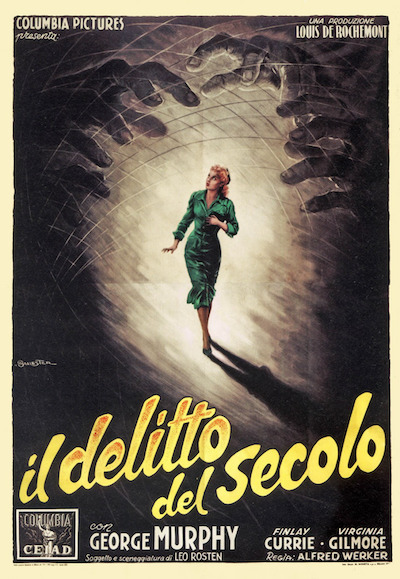
Alfred L. Werker – Walk East On Beacon (1952)
Drama1951-1960Alfred L. WerkerThrillerUSALouis de Rochemont, former March of Time producer whose docudrama films proved so popular in the 1940s, offers more of the same in Walk East on Beacon. Based on an article written – or ghostwritten – by J. Edgar Hoover, the film concerns the efforts by the FBI to plug up a dangerous security leak. Federal agent Belden – George Murphy- is assigned to locate the communist mastermind behind the leak, and to trace all avenues of informational access utilized by the Bad Guys. Finlay Currie co-stars as an Einstein-like scientist who is being blackmailed by the Reds into cooperating with them, while Karel Stepanek is slime personified as the top Eastern-Bloc spy. Largely filmed on location in New York, Walk East on Beacon makes good use of several Manhattan-based actors, few of whom were seen in films either before or since.Read More »